

Key Takeaways
Start here
The Asking Price vs. Market Value Gap
Next
Key Listing Fields and What They Signal
Then
Dealer Add-Ons and Fee Line Items
Apply it
Using Listing Data to Negotiate
The Asking Price vs. Market Value Gap
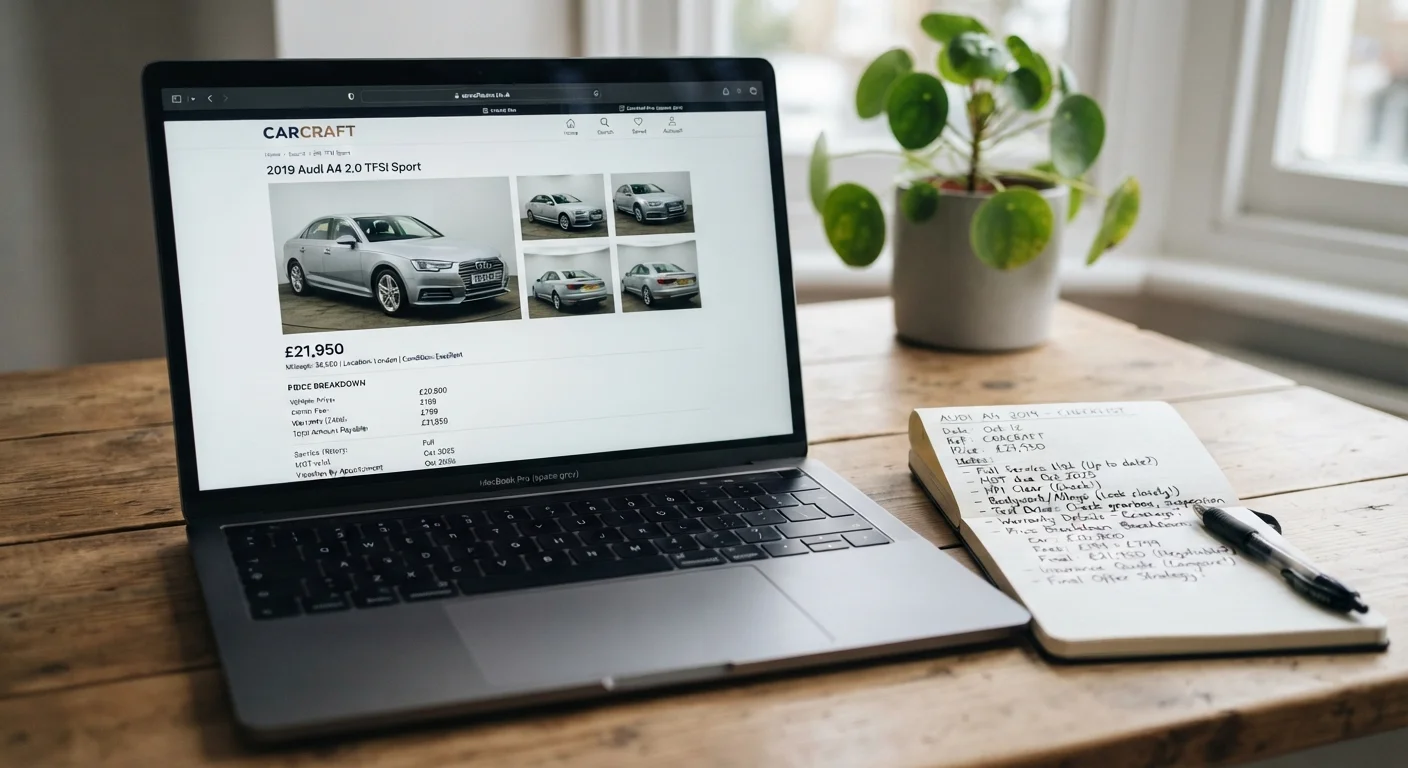
Every used car listing leads with an asking price, but that number is not an objective assessment of what the vehicle is worth — it is an opening position. The gap between asking price and true market value can run from negligible to several thousand dollars, depending on how the seller arrived at their figure.
Market value is what similar vehicles in comparable condition, mileage, and trim are actually selling for in your region. Asking price reflects what the seller wants. Those two numbers rarely align perfectly, and understanding why is the foundation of smart used car shopping.
Sellers — private and dealer alike — typically reference one or more valuation tools, then factor in their own costs, profit targets, or simply what a neighboring lot is charging. That means a listing's price carries the seller's assumptions baked in. Your job as a buyer is to test those assumptions with independent data. For a structured approach, the complete used car valuation reference guide covers how depreciation curves and condition grading actually work.
Valuation Tools Use Different Data
No single pricing tool has a monopoly on accuracy. Each draws from different data sources — dealer transactions, auction records, private sales — and weights factors differently. A price that looks high on one tool may appear fair on another. Use multiple sources and look for the range where they converge, not just the single number each tool returns.
Key Listing Fields and What They Signal
Beyond the price, a listing contains several data points that directly influence value. Reading them together — not in isolation — gives you a far more accurate picture.
Asking price
The price a seller sets on a listing. It is their opening position, not a verified assessment of the vehicle's market value.
Market value
What similar vehicles in comparable condition are actually selling for in your area, based on recent transaction data.
Trim level
A manufacturer-defined configuration of a model that specifies which features and equipment are included — base, mid, and top trims can differ significantly in value.
Out-the-door price (OTD)
The total amount a buyer pays including the vehicle price, all dealer fees, taxes, and registration costs. The only reliable number for comparing deals.
Branded title
A title designation (salvage, rebuilt, flood, lemon) indicating the vehicle has a significant history event. It permanently reduces the car's market value.
Days on market
How long a listing has been active without selling. Longer days on market often signals the asking price is above what local buyers are willing to pay.
Mileage
Odometer reading is one of the most visible value drivers, but average annual mileage matters more than raw mileage alone. A five-year-old vehicle with 75,000 miles is close to the national average; the same car with 110,000 miles warrants a steeper discount. How mileage interacts with age and physical condition is explored in detail at how mileage, age, and condition interact.
Trim Level
Trim is frequently misrepresented or omitted. A base trim and a top-spec trim of the same model can differ in value by $4,000–$8,000 or more. Always verify the trim against the VIN before comparing prices. Confusing trims is one of the most common ways buyers pay above fair value — see hidden factors that inflate asking prices for more examples.
Accident and Title History
A clean title does not guarantee a clean history. Check whether a vehicle history report is included or linked in the listing. A branded title (salvage, rebuilt, flood) is a fundamental value driver that should immediately lower your ceiling price. Learn what each entry in a history report means at decoding a vehicle history report.
Days on Market
This field, when visible, is one of the most underused buyer signals. A listing that has been active for 45–60 days without a price reduction suggests the market has already rejected the asking price. It is a quiet, data-backed reason to open negotiations below list.
Dealer Add-Ons and Fee Line Items
Private-party listings are generally priced as a single number. Dealer listings frequently break into components — or, more problematically, roll hidden charges into the headline price. Here are the lines worth scrutinizing:
- Documentation fee (doc fee): A charge for processing the sale paperwork. Capped by state law in some markets, but often $200–$700+. It is not a government fee and is sometimes negotiable within the overall deal.
- Market adjustment: An above-MSRP or above-book premium added during periods of high demand. Always ask for local comps to justify it. If the dealer cannot produce them, treat the adjustment as a negotiating item.
- Dealer-installed accessories: Window tint, paint protection film, or cargo liners added after acquisition. These rarely add equivalent resale value and are frequently priced with a large markup. Request an itemized list and decline items you did not request.
- Certification fee (CPO): Covers the inspection and warranty backing of a certified pre-owned designation. Whether the premium is worth it depends on the specific warranty terms. Our analysis of CPO vs. standard used pricing breaks down what you are and are not getting.
Always Compare Out-the-Door Prices
Never compare listings using the headline price alone. Request the full OTD figure — including all fees, dealer add-ons, taxes, and registration — before drawing any conclusions. Two listings priced identically can differ by $1,500 or more once all costs are accounted for.
Always ask for the out-the-door (OTD) price — the total amount you will pay including all fees, taxes, and add-ons — before entering serious negotiation. Comparing OTD prices across listings is the only apples-to-apples method.
Using Listing Data to Negotiate
Once you can read a listing accurately, you have the raw material for a grounded negotiation. The process is straightforward: build a price range from independent data, identify the listing's weaknesses (high mileage, long days on market, trim mismatch, prior accident), and make an offer that references specifics rather than feelings.
Valuation tools each use different data sets and have different strengths. How major pricing tools compare — and where each falls short — is worth reviewing before you commit to a single benchmark number. Use at least two sources and treat the overlap as your defensible range.
For the full negotiation framework — including how to present comps and handle counter-offers — see negotiating a used car price with market data. And if you want an end-to-end process covering everything from first listing to final paperwork, the complete used car evaluation guide ties all of these steps together.
This article provides general educational information about used car listings and pricing. It does not constitute financial or legal advice. Pricing, fees, and regulations vary by state and seller. Always verify information independently before making a purchase decision.