

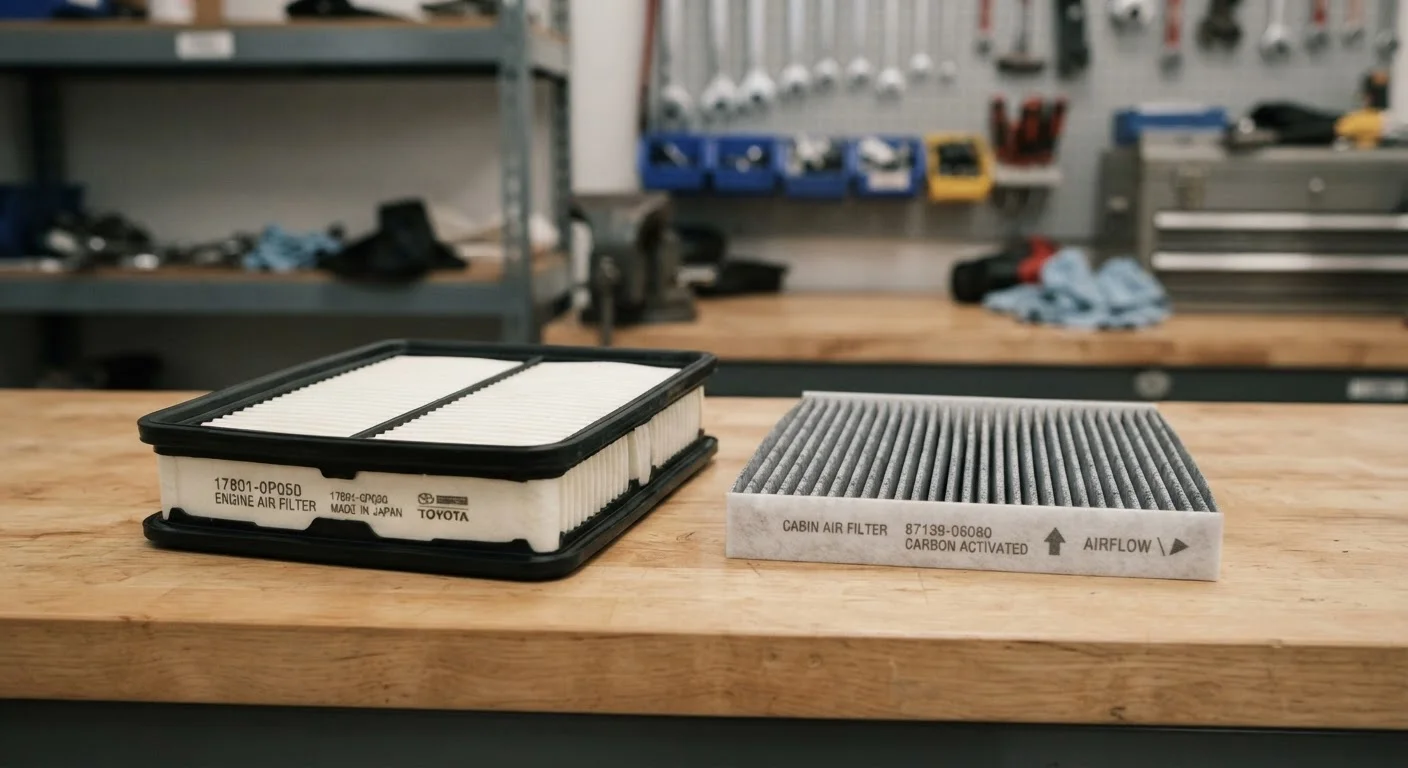
Key Takeaways
Option A
Engine Air Filter
The engine's first line of defense against airborne debris.
Best for: Protecting the engine from dust, dirt, and particulates that could cause internal wear.
Option B
Cabin Air Filter
The occupant comfort and air-quality component of your HVAC system.
Best for: Filtering pollen, dust, exhaust particles, and odors from the air entering the passenger compartment.
If your vehicle feels sluggish or fuel economy has dropped noticeably
Engine Air Filter
A restricted engine air filter limits airflow to the combustion chamber, which can reduce power output and fuel efficiency. Check and replace it per your owner's manual schedule.
If your AC or heat output seems weak or musty odors appear when the fan runs
Cabin Air Filter
A clogged cabin air filter chokes HVAC airflow and can trap mold-promoting moisture. Replacing it typically restores normal fan performance and air quality.
If you drive in high-dust, high-pollen, or urban environments
Cabin Air Filter
Urban pollution, pollen seasons, and dusty roads accelerate cabin filter loading. Shortening your replacement interval is a reasonable precaution in these conditions.
What Each Filter Actually Does
Despite sitting in the same vehicle, the engine air filter and the cabin air filter serve completely unrelated systems. Understanding their distinct roles removes the confusion drivers often have at the service counter.
Engine air filter: Internal combustion engines require a precise mixture of fuel and air. The engine air filter sits in the air intake path - typically in a plastic housing near the top of the engine bay - and traps dust, insects, and debris before that air reaches the throttle body and cylinders. Without it, abrasive particles would enter the combustion chamber and gradually wear cylinder walls, pistons, and rings.
Cabin air filter: This filter is part of your vehicle's HVAC (heating, ventilation, and air conditioning) system, not the engine. Most commonly located behind the glove box or under the dashboard, it cleans the air drawn from outside before it flows through the vents into the passenger compartment. It captures pollen, road dust, exhaust particles, and in some vehicles, odors.
| Criterion | Engine Air Filter | Cabin Air Filter |
|---|---|---|
| System served | Engine / combustion | HVAC / passenger cabin |
| Location | Engine bay intake housing | Behind glove box or under dash |
| What it filters | Dust, debris entering engine | Pollen, dust, pollutants entering cabin |
| Typical replacement interval | 15,000-30,000 miles | 12,000-15,000 miles |
| Neglect symptom | Reduced power, worse fuel economy | Weak airflow, musty odors |
| Interchangeable? | No | No |
Replacement Intervals and Warning Signs
Both filters degrade over time, but on different schedules and with different symptoms when neglected.
15,000-30,000 mi
Typical engine air filter replacement range
Manufacturer-recommended intervals vary by vehicle and driving conditions; consult your owner's manual for your specific model.
12,000-15,000 mi
Typical cabin air filter replacement range
Drivers in high-dust or high-pollen environments may need to replace cabin filters more frequently than this general guideline suggests.
Engine Air Filter
Most manufacturers recommend inspection every 15,000 miles and replacement somewhere between 15,000 and 30,000 miles, depending on driving conditions. A visibly gray or brown filter - versus a clean white or off-white one - is a reliable visual indicator. Symptoms of a restricted engine air filter can include reduced throttle response, a drop in fuel economy, or in severe cases, a rough idle. Always verify your specific interval in your owner's manual rather than relying solely on generic guidelines.
Cabin Air Filter
Cabin filters typically need replacement every 12,000 to 15,000 miles, though drivers in high-pollen regions or urban environments with heavy particulate pollution may need to replace them more often. Signs of a clogged cabin filter include noticeably reduced airflow from the vents even at high fan settings, musty or stale odors when the HVAC runs, and increased dust accumulation on the dashboard. Neither filter replacement is mechanically complex, but if you are unsure, a qualified technician can inspect both during a routine service visit.
High-Mileage and Severe-Duty Driving
If you regularly drive on unpaved roads, in construction zones, or in areas with heavy wildfire smoke or agricultural dust, both filters will load faster than standard intervals assume. In these conditions, visual inspection at every oil change is a practical precaution. Your owner's manual often includes a separate 'severe duty' maintenance schedule that addresses this.
Why Confusing Them Is a Costly Mistake
Because both filters deal with air and both look superficially similar - flat, rectangular, and made of pleated filter media - it is easy to assume they are interchangeable or that replacing one covers the other. They are not the same part, do not fit the same housing, and are not sold or serviced the same way. Replacing only the cabin filter when the engine filter is overdue (or vice versa) leaves one system unprotected.
A useful habit is to treat them as a pair during annual or mileage-based service checkpoints. Many technicians will inspect both when performing an oil change, so asking specifically about each filter's condition is a reasonable step at your next visit.
Just as vehicle safety systems such as seatbelts and airbags perform distinct, non-overlapping functions - see our guide on seatbelts vs. airbags for a comparable look at complementary systems - engine and cabin filters each do a job the other cannot. Maintaining both on schedule is one of the lower-cost ways to protect both your engine and your passengers.
This article is for general informational purposes only. Always consult your vehicle's owner's manual for manufacturer-recommended service intervals and follow qualified mechanic guidance for any maintenance work.