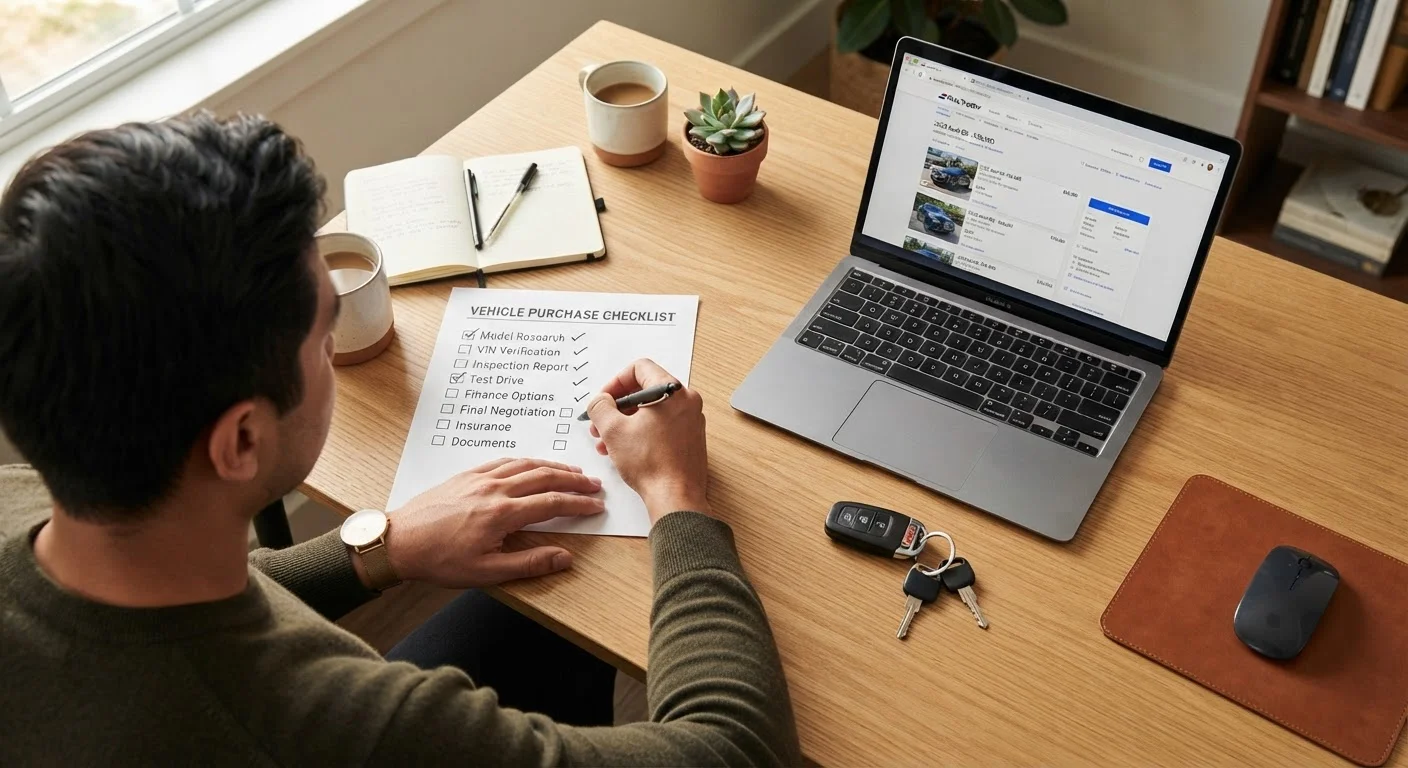
Setting a firm budget before arriving prevents emotion-driven overspending at the lot.
A vehicle history report (such as Carfax or AutoCheck) should be reviewed before any in-person visit.
Knowing your must-have features versus nice-to-haves keeps your shortlist manageable.
Arranging pre-approved financing gives you leverage when discussing price.
Scheduling a third-party inspection is one of the most protective steps a used car buyer can take.
30–60 min
Summary
22 items · 30–60 minutes
Why Preparation Beats Impulse Every Time
Walking onto a dealership lot without a plan hands the advantage to the seller. Prices are negotiable, vehicles have hidden histories, and a compelling test drive can override rational decision-making. The buyers who consistently get better deals and fewer post-purchase surprises are the ones who completed their due diligence at home — before they ever touched a door handle.
This checklist is designed to be worked through in your own time, away from the pressure of the lot. It covers four stages: financial groundwork, vehicle targeting, history verification, and inspection planning. Use it sequentially or dip into the sections most relevant to where you are in the process.
Calculate your all-in budget, including taxes, registration fees, insurance, and any immediate maintenance costs — not just the sticker price.Must
Get pre-approved for an auto loan from your bank or credit union before visiting a dealership so you have a benchmark interest rate.Must
Research current fair market values for your target vehicles using multiple pricing references to establish a credible price range.Must
Set a firm walk-away number and write it down — having a hard ceiling reduces the risk of in-lot emotional overspending.Must
Factor in the cost of a third-party pre-purchase inspection (typically $100–$200) as a non-negotiable line item in your budget.Should
Vehicle Targeting
List your non-negotiable requirements (seating capacity, drivetrain, fuel type, towing capacity) separately from preferences.Must
Research ownership costs — insurance rates, average repair costs, and fuel economy — for each model on your shortlist.Must
Check reliability data for your target model years using consumer research databases to identify known problem areas or recall history.Must
Narrow your shortlist to two or three specific model years to keep comparisons focused and prevent analysis paralysis.Should
Search listings across multiple platforms (dealer sites, private sellers, certified pre-owned programs) to understand supply and typical asking prices.Should
Identify any active or unresolved recalls for your target vehicles via the NHTSA recall database (nhtsa.gov) using the VIN or model details.Must
History Verification
Obtain a vehicle history report using the VIN before visiting — review it for title issues, accident records, odometer discrepancies, and number of previous owners.Must
Confirm the title is clean (not salvage, rebuilt, or flood-damaged) and that the seller's name matches the title.Must
Cross-reference the reported mileage on the history report against the odometer reading in listing photos.Must
Check whether the vehicle has been used as a rental, fleet, or commercial vehicle — these use patterns affect wear patterns differently than private ownership.Should
Request available service records from the seller and note any large gaps in maintenance history.Should
Inspection Planning
Identify a licensed independent mechanic or a reputable mobile inspection service in your area before making contact with any seller.Must
Confirm you have the right to bring the vehicle to an independent mechanic — a seller who refuses this is a significant red flag.Must
Review our used car inspection points guide so you know what the mechanic should be checking and can ask informed questions.Should
Schedule your inspection appointment in advance so you're not dependent on the seller's availability to delay or rush the process.Should
Prepare a list of specific questions about the vehicle's history and any concerns flagged in the history report to raise with the seller before the inspection.Nice to have
Tools You'll Need to Work Through This Checklist
None of these steps require specialist software or paid subscriptions beyond the vehicle history report. However, having the right resources at hand will save time and improve the quality of your research.
Required
NHTSA Recall Database
Look up open safety recalls by VIN or model year at nhtsa.gov — free and authoritative for US vehicles.
Required
Vehicle History Report Service
Retrieve a full report covering title status, accident records, odometer readings, and ownership history using the vehicle's VIN.
Required
Auto Loan Pre-Approval (Bank or Credit Union)
Establish a benchmark interest rate before visiting a dealership so you can evaluate any dealer financing on equal terms.
Required
Independent Mechanic or Mobile Inspection Service
Conduct a professional pre-purchase inspection covering mechanical, structural, and safety systems before you commit.
Optional
Used Car Pricing Reference Tools
Check fair market value ranges for your target model and year to establish a credible price baseline for negotiation.
Once you've completed this checklist, your next step is a structured in-person evaluation. Our guide on reading a used car inside and out walks first-timers through exactly what to look for, even without a mechanical background. If you're focused on sedans specifically, the used sedan inspection checklist is worth bookmarking before your visit.
Never Skip the Independent Inspection
A seller or dealer discouraging a third-party inspection is one of the clearest warning signs in used car buying. Certified pre-owned programs offer manufacturer inspections, but those are not a substitute for an independent assessment by a mechanic you select. Budget for this step from the start and treat it as non-negotiable, regardless of how clean the history report looks.
Finally, if you want to verify whether the asking price is actually justified by the car's condition and history, the checklist for verifying a used car's claimed value is your reference once you have a specific vehicle in front of you.
Used Cars Editorial Team is the collective byline for our editorial team and contributor network. Articles published under this byline or an editorial pen name are researched, written, and reviewed according to our editorial standards for clarity, consistency, and independence before publication.
Disclaimer: The content on this site is for informational purposes only and is not a substitute for professional advice. Always consult a qualified professional for guidance specific to your situation.