

Used Cars

The Pre-Purchase Inspection Checklist Every Used Car Buyer Needs

Share
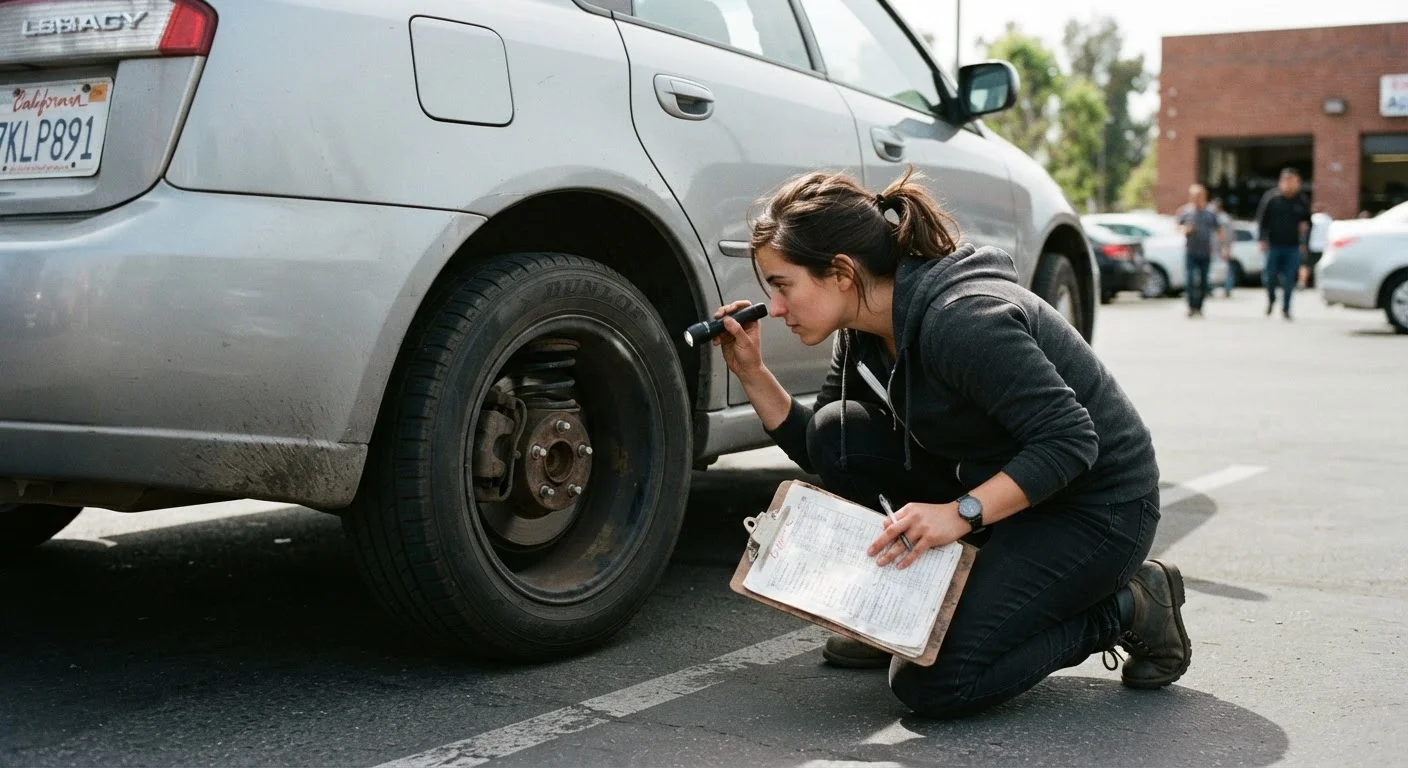
A used car buyer conducting a pre-purchase inspection on a sedan in a parking lot.

Key Takeaways

Skipping a pre-purchase inspection is one of the costliest mistakes a used car buyer can make.
Exterior, interior, mechanical, and documentation checks each reveal distinct categories of risk.
A professional mechanic inspection is strongly recommended before finalizing any used car purchase.
Title status, odometer disclosure, and service history are non-negotiable documentation items.
Red flags in any single category are grounds to walk away or renegotiate price.
45–90 min

Summary

28 items · 45–90 minutes on-site, plus additional time for a mechanic inspection

Why This Checklist Exists

A used car transaction is one of the largest discretionary purchases most households make — and the seller almost always knows more about the vehicle than the buyer. This checklist levels the information gap. It is organized into four domains — exterior, interior, mechanical, and documentation — so you can work through a vehicle systematically rather than reactively.

Before you arrive at the lot or a private seller's driveway, review what to prepare before you visit so your budget, must-have features, and vehicle history report are already in hand. For a broader walkthrough of every stage from search to signature, see the complete used car buying journey.

Exterior Checks

Walk the full perimeter in good daylight, looking for panel gaps wider than a finger's width that suggest prior collision repair or poor reassembly. Must
Crouch at each corner and sight along the body panels for waves, ripples, or paint texture differences indicating filler or respray. Must
Check all four doors, the hood, and trunk lid for color-match consistency — slight hue variation often signals a repainted panel. Must
Inspect rubber door seals and window gaskets for cracking, compression failure, or signs of water intrusion. Should
Examine all glass for chips, cracks, and delamination at the edges, particularly the windshield. Should
Check tire tread depth on all four corners using a tread-depth gauge, and look for uneven wear patterns that indicate alignment or suspension issues. Must

Interior Checks

Test every powered feature — windows, mirrors, seat adjusters, sunroof, locks — to confirm full function. Must
Check the carpet, floor mats, and trunk liner for moisture, musty odor, or water staining that may point to a flood-affected vehicle. Must
Inspect the headliner and door sills for sagging, staining, or evidence of airbag deployment. Must
Verify all dashboard warning lights extinguish after startup — any that remain on indicate unresolved fault codes. Must
Test the HVAC system on all settings including defrost, and confirm air conditioning produces cold air. Should
Assess infotainment system, backup camera, and connectivity features for full functionality. Nice to have

Mechanical & Under-Hood Checks

Check engine oil on the dipstick — milky or foamy oil can indicate coolant contamination, a serious engine concern. Must
Inspect coolant reservoir color and level; brown or rusty coolant suggests neglected maintenance or internal corrosion. Must
Look for oil residue, dried coolant deposits, or black soot around hoses, gaskets, and the firewall. Must
Start the engine cold if possible and listen for ticking, knocking, or rough idle that may smooth out once warm — masking a real problem. Must
Check brake pedal feel for sponginess or excessive travel, and listen for grinding or squealing during a low-speed stop. Must
Inspect the undercarriage for rust penetration, frame damage, fluid leaks, and compromised exhaust components. Should
Test the transmission through all drive modes, noting hesitation, slipping, or delayed engagement. Must
During the test drive, confirm steering tracks straight, suspension absorbs bumps without clunking, and braking is smooth and progressive. Must

Documentation Checks

Verify the VIN on the dashboard, door jamb sticker, and title all match — discrepancies can indicate a rebuilt or cloned title. Must
Confirm the title is clear (no lien holder listed) or that the lienholder will be paid off at closing — never accept a vehicle with an unresolved lien. Must
Run a vehicle history report using the VIN and review for accident records, odometer rollbacks, title branding (salvage, flood, rebuilt), and ownership count. Must
Request maintenance records — documented oil changes, timing belt/chain service, and brake history add verifiable confidence in upkeep. Should
Check the odometer disclosure statement on the title against the current mileage reading and history report entries. Must
Look up any open safety recalls via the NHTSA database using the VIN and confirm whether they have been completed. Must

Tools You Will Need On-Site

You do not need a mechanic's toolkit to run this checklist, but a few inexpensive items make a meaningful difference in what you can detect.

Required

Flashlight

Illuminates the engine bay, undercarriage, and interior floor areas where overhead lighting is insufficient.

Required

Tire Tread Depth Gauge

Measures remaining tread on all four tires to assess replacement cost and detect uneven wear.

Optional

OBD-II Scanner

Reads stored and pending fault codes from the vehicle's computer, revealing issues not yet visible as warning lights.

Optional

Paint Thickness Meter

Detects filler or respray on body panels by measuring paint depth, helping identify prior collision repair.

Required

Vehicle History Report (e.g. via VIN lookup service)

Provides accident records, title branding, odometer history, and ownership count before you inspect in person.

If you are evaluating a European make, additional marque-specific checks apply — see what to verify before buying a used European car for that layer of due diligence.

When to Call in a Professional

Never Skip the Independent Mechanic Step

A buyer's visual inspection covers surface-level signals — a trained mechanic with a lift can assess frame integrity, suspension wear, transmission health, and compression levels that no layperson checklist can replicate. Budget $100–$200 for this step; it is the most cost-effective insurance you can buy before signing. If a deal seems too time-sensitive to allow for a mechanic inspection, it almost certainly is.

Your on-site walkthrough is a triage tool — it identifies obvious red flags and surfaces questions. It is not a substitute for a qualified mechanic's assessment. Once a vehicle passes your initial check, schedule a pre-purchase inspection with an independent shop before committing funds.

Understanding what actually happens during a professional inspection helps you know what to ask for and what the report should cover. For detailed guidance on working with a mechanic, see bringing a used car to an independent mechanic.

Title Brands Are Deal-Breakers for Most Buyers

A salvage, flood, or rebuilt title indicates the vehicle was previously declared a total loss by an insurer. These vehicles can be roadworthy, but they typically carry significantly lower resale value, may be uninsurable under standard policies, and may have hidden structural or electrical damage. If the history report shows any title branding, consult a licensed mechanic specializing in collision assessment before proceeding.

If the seller refuses to allow an independent inspection or pressures you to decide on the spot, treat that as a significant red flag. Legitimate sellers with nothing to hide will accommodate a reasonable inspection request.

This article provides general educational information for used car buyers. It is not professional mechanical, legal, or financial advice. Vehicle condition, pricing, and documentation requirements vary by state and transaction type. Consult a licensed mechanic and, where relevant, a legal or financial adviser before completing any vehicle purchase.

Used Cars Editorial Team is the collective byline for our editorial team and contributor network. Articles published under this byline or an editorial pen name are researched, written, and reviewed according to our editorial standards for clarity, consistency, and independence before publication.

View all articles by Used Cars Editorial Team →
Disclaimer: The content on this site is for informational purposes only and is not a substitute for professional advice. Always consult a qualified professional for guidance specific to your situation.