

Key Takeaways
Why Independent Matters
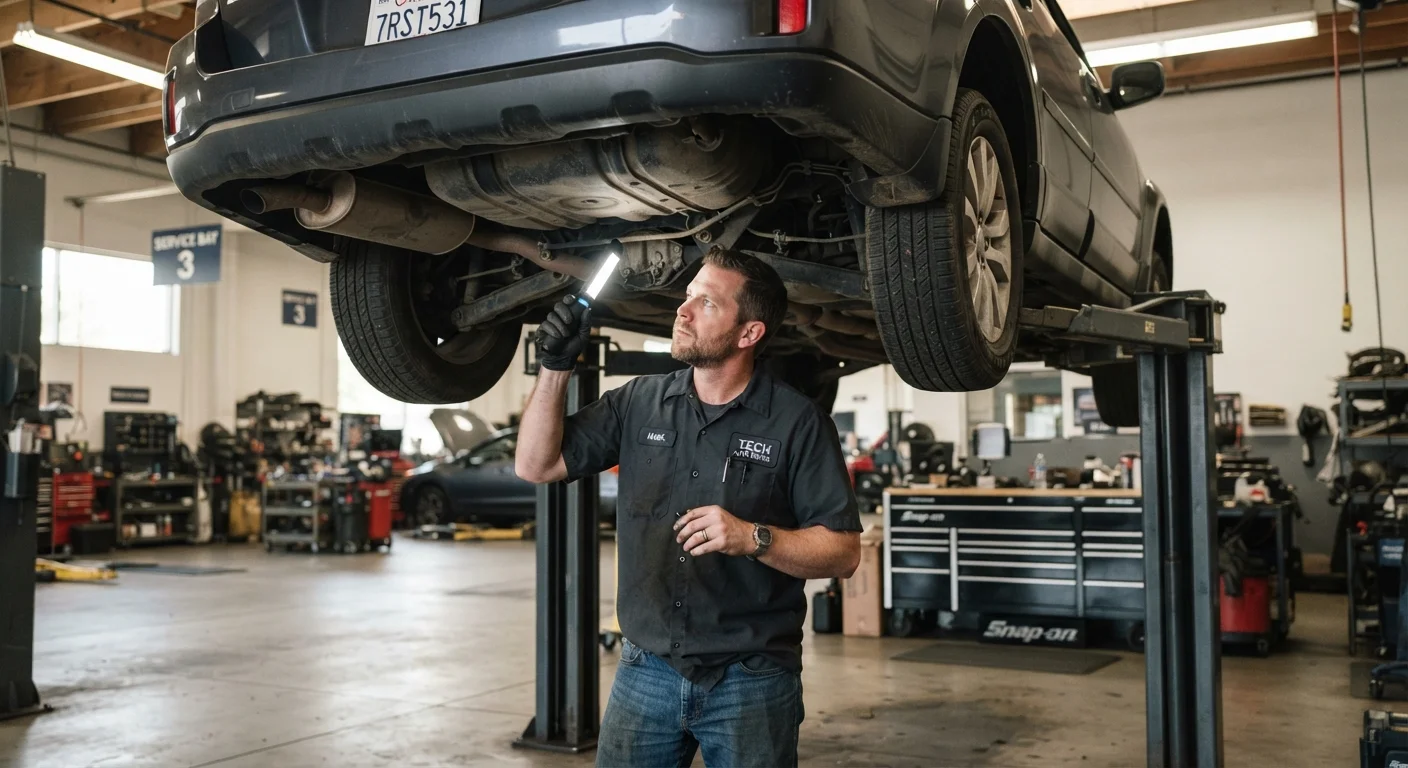
A pre-purchase inspection (PPI) performed by a mechanic you hire — rather than one affiliated with the seller — is one of the most cost-effective risk-management tools available to a used car buyer. For a fee that typically ranges between $100 and $200, you get a trained professional examining systems that a casual walkthrough will never reveal: suspension geometry, compression health, transmission slippage, and corroded undercarriage sections hidden behind plastic trim.
The key word is independent. A dealership's in-house service department has a financial interest in the sale going through. An independent shop has no such incentive — their only obligation is to tell you what they find. That separation is what makes the inspection credible.
For a comparison of what a DIY visual check can and cannot catch versus what a professional inspection surfaces, see our breakdown of both approaches.
Avoid Mechanics Recommended by the Seller
A mechanic suggested by the seller — or one located at the dealership — has an inherent conflict of interest. To maintain objectivity, source your own inspector independently. Check reviews on platforms like Google or the Better Business Bureau, or ask for referrals from people you trust who have no stake in the sale.
Before You Book: Preparation Steps
Arriving at the inspection appointment prepared makes the mechanic's time more efficient and ensures you get more actionable output. Start with the prerequisites below, then build your checklist around the vehicle's specific history and any concerns you noticed during your own initial walkthrough.
What you will need
If you haven't already done a systematic visual inspection of your own, used car inspection points every buyer should know walks through what to look for before the professional appointment.
Vehicle History Report
Reveals past accidents, title issues, odometer flags, and service records before the mechanic even looks at the car.
OBD-II Scanner
Reads stored and pending diagnostic trouble codes from the vehicle's onboard computer — often included in a professional PPI.
Inspection Request Checklist
A written list of what you want the mechanic to evaluate, ensuring nothing is overlooked during the appointment.
The Step-by-Step Process
Follow these steps in order. Each one builds on the last — skipping the seller agreement, for instance, could leave you scrambling on the day of the appointment.
Get the seller's agreement in writing
Before booking anything, confirm that the seller will allow the vehicle to be driven or transported to a third-party mechanic. Most legitimate sellers expect this request; reluctance or outright refusal is a meaningful warning sign. Get the agreement — even a simple text message — so there's no dispute later about the arrangement.
Run a vehicle history report first
Before the mechanic appointment, pull a history report using the 17-character VIN. Look specifically for accident records, salvage or rebuilt titles, odometer rollback flags, and whether the reported mileage matches the vehicle's service history. A history report doesn't replace a mechanical inspection, but it narrows down what to probe during one.
Find and book an independent mechanic
Search for a shop that has no commercial relationship with the seller. An ASE-certified (Automotive Service Excellence) technician or a shop affiliated with a recognized trade body is a reasonable baseline. Call ahead — explain that you want a pre-purchase inspection, not a repair estimate — and ask whether they perform PPI services and how long the appointment will take. Budget one to two hours for a thorough evaluation.
Give the mechanic a specific written checklist
Don't assume the mechanic will check everything by default — scope and price vary by shop. Hand over a written list of what you need reviewed. At minimum, request evaluation of:
- Engine and transmission: leaks, wear, fluid condition, shifting behavior
- Brakes and suspension: pad thickness, rotor condition, bushings, shocks
- Frame and undercarriage: rust, previous collision repair, structural integrity
- Electrical systems: lights, HVAC, power accessories
- OBD-II scan: stored and pending fault codes
- Tires: tread depth, uneven wear patterns indicating alignment issues
See the pre-purchase inspection checklist for a fuller breakdown of what to include.
Request a written report with cost estimates
Ask the mechanic to document findings in writing — not just a verbal summary. A good report will separate issues into categories: safety-critical items, items needing near-term attention, and things to monitor. Critically, request rough cost estimates for any repair work flagged. This gives you a concrete basis for negotiating the price or deciding to walk away.
Evaluate findings against the asking price
Once you have the report, weigh the repair costs against the vehicle's fair market value. If the mechanic flags $3,000 in near-term repairs on a car priced at $9,000, that changes the effective cost materially. Use pricing benchmarks to assess whether the adjusted total still makes sense. Understanding how used car value is calculated will help you interpret the report in a market context.
If repairs are minor, use the report as negotiating leverage. If they are major — particularly anything involving the frame, transmission, or engine — consider whether the risk is worth taking on, regardless of price.
Use the Report as a Negotiating Tool
If the mechanic identifies issues that aren't deal-breakers — worn brake pads, aging tires, a minor fluid leak — document the estimated repair costs and present them to the seller. Many sellers will negotiate the price downward rather than lose a ready buyer. A written inspection report gives you factual leverage, not just gut feeling.
Once you have a written report in hand, the questions to ask before handing over money can help you probe the seller on any items the mechanic flagged.
Never Skip the Inspection on a Private Sale
Private sellers are generally not required to disclose known defects in the same way licensed dealers may be under state lemon and disclosure laws. Without a pre-purchase inspection, you have little recourse if serious problems surface after the transaction closes. This is especially true for vehicles sold 'as-is,' which is the norm in private party sales across most U.S. states.