

Key Takeaways
Why Used Car Prices Drift Above Fair Value
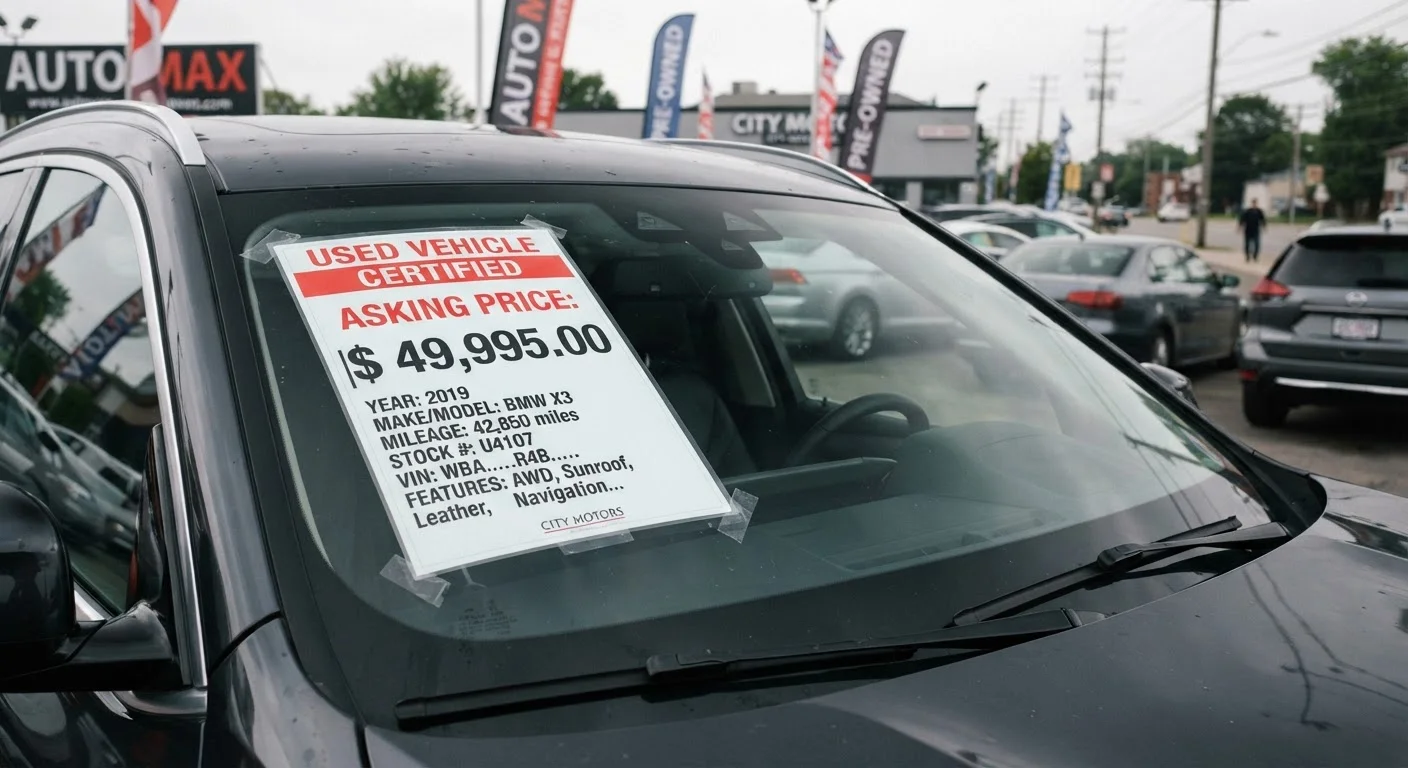
A used car's asking price is rarely a neutral reflection of what the vehicle is worth. It's a starting position shaped by market conditions, dealer strategy, and — sometimes — buyer confusion. Understanding the gap between listed price and fair market value is the first step toward closing it.
Pricing databases like those behind Kelley Blue Book or Edmunds provide useful baselines, but individual listings routinely diverge from those figures for reasons that aren't disclosed upfront. Decoding each line of a used car listing helps clarify what's actually being priced in. The mistakes below are where buyers most often lose ground before negotiations even begin.
Common Mistakes That Cost Buyers Money
Each of the following errors stems from a gap in buyer knowledge that sellers — knowingly or not — benefit from. Recognizing these patterns in advance is what separates a grounded offer from one built on assumptions.
Accepting the listed trim level at face value without verifying it against the actual vehicle.
Why it happens: Trim badges — "LT," "EX," "Sport" — sound meaningful but mean different things across model years. Sellers sometimes list a higher trim than the car carries, or buyers assume trim names signal equivalent features across different manufacturers.
Ignoring dealer-added fees that appear only after price agreement.
Why it happens: Buyers focus on the negotiated vehicle price and mentally close the deal, then sign documents containing documentation fees, "market adjustment" line items, or add-on packages (paint protection, nitrogen in tires) that were never discussed.
Shopping during peak seasonal demand without realizing prices have risen accordingly.
Why it happens: Buyers shop when they need a car, not when the market favors them. SUV and truck prices historically climb in late fall and winter; convertible and sports car prices tend to rise in spring. Most buyers are unaware of these cycles when they walk onto a lot.
Treating the asking price of one listing as representative without pulling comparables.
Why it happens: Finding a car that checks the right boxes feels like a win, and buyers don't want to lose it. That emotional momentum discourages comparison shopping, which is exactly what sellers benefit from.
Overweighting a low odometer reading without factoring in vehicle age and condition.
Why it happens: "Low miles" is treated as a universal virtue. Sellers know this and price accordingly, even when a 12-year-old car with 40,000 miles has rubber seals, belts, and fluids that have degraded with age regardless of mileage.
Market Adjustment Fees Are Not Fixed Costs
During periods of high demand, some dealers add a "market adjustment" surcharge on top of the vehicle's price — sometimes several thousand dollars. Unlike taxes and registration fees, this charge is entirely discretionary and set by the dealer. Treat it as negotiable, or as a signal to compare inventory at other locations. See warning signs of a bad deal for related red flags to watch for.
Once you've identified which mistakes apply to your situation, negotiating with market data behind you puts you in a measurably stronger position.
Verifying the Real Number Before You Negotiate
After spotting the factors that inflate a price, the next step is anchoring yourself to a defensible figure. Reliable methods for verifying a vehicle's true market value include pulling at least three comparable active listings within your region — same year, trim, mileage range, and condition grade — and calculating an average. That average becomes your negotiating floor, not the sticker.
Also check how long the vehicle has been listed. A car sitting unsold for 45 or more days signals the seller may be motivated. Price-drop history, visible on many listing platforms, tells a similar story. These details cost nothing to find and function as negotiating leverage.
45+ days
Inventory age that signals seller motivation
Industry practice generally considers vehicles listed for more than 45 days as aged inventory, often indicating room for price negotiation.
$100–$500+
Typical dealer documentation fee range
Documentation fees vary widely by state and dealership; some states cap them by law while others leave them entirely to dealer discretion.
For a broader view of what first-time buyers routinely underestimate, the hidden costs beyond the sticker price covers the expenses that accumulate after the sale. And if seasonal timing is flexible for you, seasonal pricing patterns in the used car market explains when demand — and prices — typically soften for different vehicle types.
This article is for general informational and educational purposes only. Pricing figures, market conditions, and fee practices vary by region, dealer, and time. Consult multiple independent pricing sources and, where appropriate, a qualified automotive professional before making a purchase decision.