

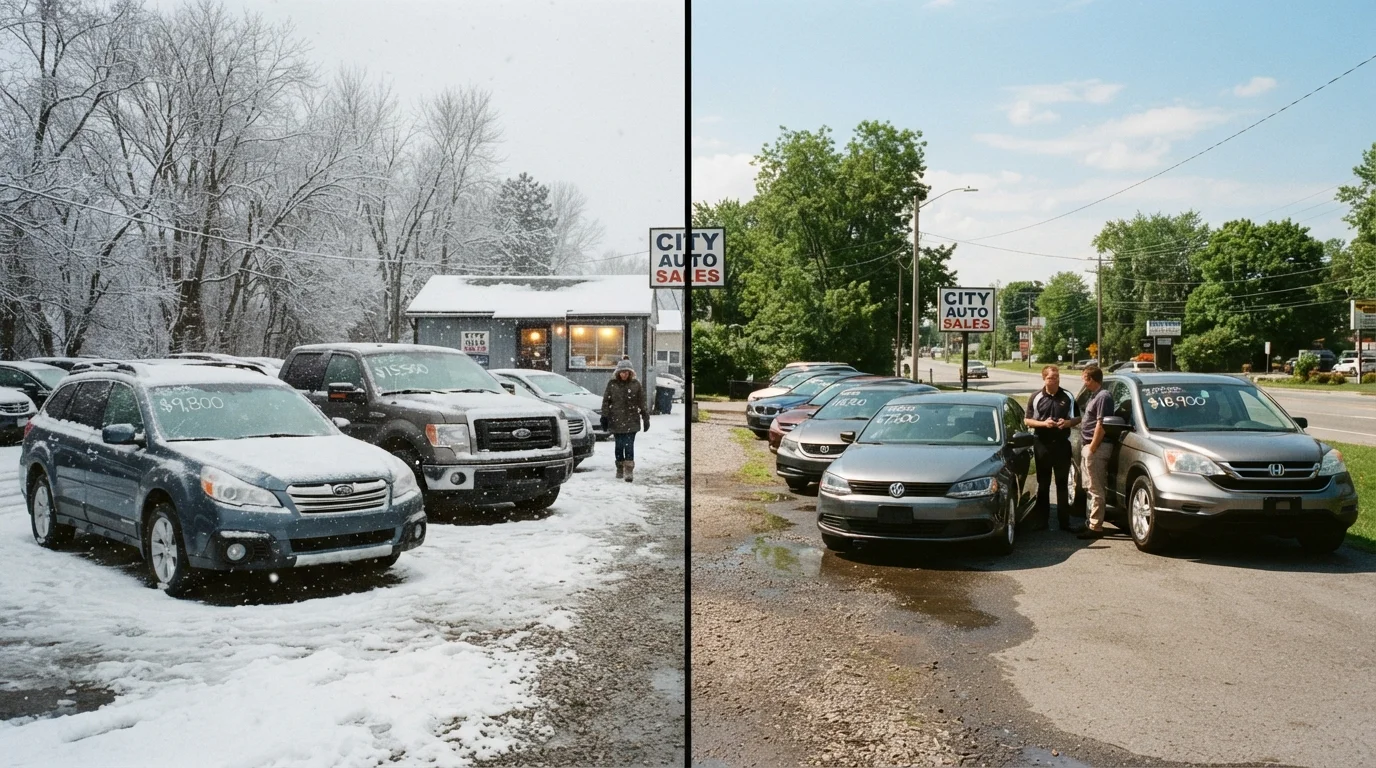
How Seasons Move Used Car Prices
Used car pricing isn't static — it responds to predictable waves of buyer demand that follow the calendar. Understanding these patterns won't guarantee you the lowest possible price, but it can meaningfully shift the odds in your favor when you're deciding when to shop.
Seasonal pricing is layered on top of other market forces. Depreciation curves and regional inventory levels both influence what you'll see on a listing. But once you control for those variables, the calendar still matters — sometimes by a margin of several hundred to a few thousand dollars on the same vehicle.
The core mechanism is straightforward: when more buyers chase the same pool of vehicles, sellers have less reason to negotiate. When demand softens, inventory accumulates and prices tend to follow. Timing your purchase around these demand troughs — rather than peaks — is one of the few levers a buyer can pull without needing specialized knowledge or insider access.
Peak and Off-Peak Periods by Vehicle Type
Not every segment moves in unison. Demand spikes are tied to how and when people actually use a vehicle type:
- Trucks and SUVs: Demand tends to spike in late spring and early summer as buyers gear up for towing, camping, and outdoor activities. Prices typically soften in late fall and winter, particularly in warmer climates where 4WD capability is less urgent.
- Convertibles and sports cars: Listings flood the market in autumn as owners prep for winter and list before values dip further. Buyers shopping in October through December often find sellers more willing to deal. Spring brings the opposite — demand surges as warmer weather arrives.
- AWD crossovers and winter-capable vehicles: These see demand spikes in early fall, particularly in northern states, as buyers anticipate winter driving. Shopping in midsummer — when few people are thinking about snow — tends to produce less competition.
- Sedans and fuel-efficient commuter cars: Demand often picks up in spring, correlating with tax refund season and college graduation. Sedans and coupes listed in January or February frequently carry more negotiating room.
Seasonal demand cycle
The predictable rise and fall in buyer interest for specific vehicle types at different times of year, driven by weather, use patterns, and financial events like tax refunds.
Inventory pressure
The motivation a seller faces to move vehicles when supply exceeds demand or when sales targets approach. Higher inventory pressure generally benefits buyers.
Days on market
The number of days a vehicle listing has been active. Longer days on market often signal a price reduction opportunity, especially for seasonal vehicles listed at the wrong time.
Tax refund season
The period from roughly February through April when many US consumers receive federal income tax refunds, leading to a documented uptick in used car purchases and firmer asking prices.
Tax refund season — roughly February through April — is a documented demand driver across all used vehicle segments. More buyers with cash in hand means asking prices hold firmer. If your timing is flexible, avoiding this window can reduce how much competition you face at the negotiating table.
For a broader look at how listing prices are constructed beyond seasonal factors, see what every line on a used car listing actually means.
Practical Timing Strategies for Used Car Buyers
Knowing the patterns is only useful if you translate them into action. A few concrete approaches:
- Shop opposite the use case. If you want a truck, shop in November. If you want a convertible, shop in October. Sellers of seasonal vehicles are often more motivated when their target buyer pool has thinned.
- Watch end-of-month inventory pressure. Dealers facing monthly sales targets may be more willing to negotiate in the final days of any month, regardless of season. Combine this with an off-peak season and the effect compounds.
- Track listings over 30–45 days. A vehicle that hasn't sold after 45 days is more likely to have a price reduction pending. Seasonal vehicles listed at the wrong time of year age faster — use that to your advantage.
- Factor in regional variation. Seasonal pricing is not uniform across the country. AWD demand in Florida barely budges in fall. Convertible prices in Minnesota drop harder than in California. Regional pricing gaps between dealers reinforce why local market conditions matter as much as national trends.
Seasonal Timing Doesn't Override All Other Factors
A well-timed purchase in an off-peak month can still result in overpaying if you haven't verified the vehicle's condition, checked for hidden fees, or compared listings across multiple sources. Use seasonal awareness as one input — not the only one. Consulting a used car buying guide alongside timing research gives you a more complete picture.
Seasonal timing is one tool among many. It's worth cross-referencing with hidden factors that inflate asking prices — trim confusion and reconditioning fees can erode any seasonal savings if you're not also reading listings critically.