

Key Takeaways
Option A
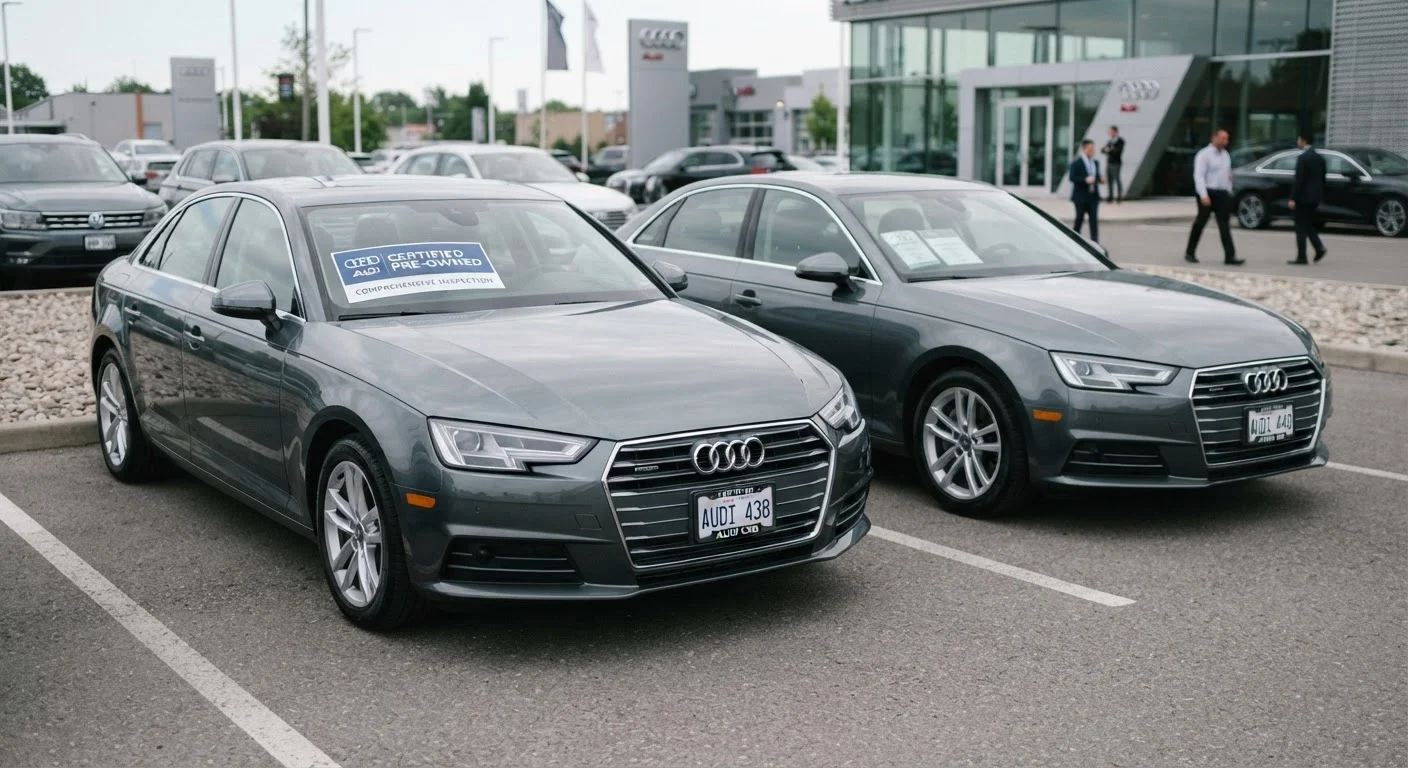
Certified Pre-Owned (CPO)
The manufacturer-backed, inspected and warranted option.
Best for: Buyers who want reduced risk and factory-level assurance without purchasing new.
Option B
Standard Used
The flexible, lower-cost private or dealer purchase.
Best for: Buyers comfortable doing due diligence independently in exchange for a lower purchase price.
If you want warranty coverage and minimal post-purchase surprises
Certified Pre-Owned (CPO)
CPO programmes bundle extended powertrain or bumper-to-bumper warranties, reducing exposure to unexpected repair costs in the first years of ownership.
If you're working with a tight budget and can absorb some repair risk
Standard Used
The lower purchase price leaves room in your budget to handle minor issues, and an independent inspection helps you buy with more confidence.
If you want the widest selection of makes, models, and model years
Standard Used
CPO inventory is limited to franchise dealerships and specific model-year eligibility windows, while the standard used market spans private sellers, auctions, and independent lots.
If you plan to keep the vehicle for five or more years
Certified Pre-Owned (CPO)
Starting with a documented inspection history and factory-backed warranty provides a cleaner baseline for long-term ownership.
What Separates CPO from Standard Used
At its core, a certified pre-owned vehicle is a used car that has passed a manufacturer- or dealer-defined inspection process and is sold with some form of extended warranty or guarantee. A standard used car carries no such programme — it is sold as-is (unless a state's implied warranty laws apply) or with only a basic dealer warranty.
The key distinctions are inspection depth, warranty coverage, and who stands behind the vehicle after the sale. CPO programmes are administered either by the original manufacturer through franchised dealerships, or by dealer groups running their own proprietary certification. These are not the same thing — manufacturer CPO programmes carry more standardised requirements, while dealer-certified programmes can vary enormously in what they actually cover.
Standard used vehicles sold by private parties, independent dealers, or even franchised dealers as non-CPO inventory offer none of that structure. What you get depends entirely on what you negotiate and what you discover during your own due diligence.
| Criterion | Certified Pre-Owned | Standard Used |
|---|---|---|
| Price | Higher — premium for certification | Lower — more room to negotiate |
| Warranty | Extended manufacturer or dealer warranty | As-is or limited dealer warranty |
| Inspection | Multi-point inspection (manufacturer-defined) | None by default; buyer arranges independently |
| Mileage/Age eligibility | Restricted (typically <80k miles, <7 years) | Any age or mileage available |
| Where you can buy | Franchised dealerships only | Dealers, private sellers, auctions |
| Negotiation flexibility | Limited — price tied to programme | High — especially with private sellers |
| Post-sale recourse | Defined warranty claims process | Depends on state law and deal terms |
The Real Cost Equation
CPO vehicles consistently carry a price premium over comparable non-certified examples — often ranging from a few hundred to several thousand dollars depending on the brand, model, and remaining warranty period. That premium reflects the cost of inspection, reconditioning, and warranty administration passed on to the buyer.
Whether that premium is justified depends on what you're actually getting. A CPO warranty with three additional years of powertrain coverage has quantifiable value, especially for vehicles with known expensive repairs. A CPO label attached to a 150-point inspection checklist performed in-house is harder to price independently. For a sharper look at how certification affects sticker prices, see how the CPO label affects pricing.
$1,000–$3,500
Typical CPO price premium over non-certified equivalents
Industry analysts and consumer automotive publications consistently document this range, though it varies by brand and model segment.
125–300 points
Range of inspection criteria across major CPO programmes
The number and rigor of inspection points differ substantially between manufacturer-run and dealer-run CPO programmes.
With a standard used vehicle, you can often negotiate more aggressively on price — particularly with private sellers — and redirect savings toward an independent pre-purchase inspection and a reserve fund for maintenance. That pre-purchase inspection typically costs $100–$200 and can surface issues a CPO checklist might understate.
Risk, Coverage, and Flexibility
Risk tolerance is the deciding variable most buyers underweight. CPO programmes shift some post-purchase mechanical risk back to the manufacturer or dealer. If the transmission fails within the warranty window, you have a defined claims process. With a standard used car, that same failure lands entirely on your budget.
That said, CPO coverage has limits. Wear items — tyres, brakes, windshield wipers — are typically excluded. Many programmes also require service at franchised dealers, which can cost more than independent shops. Read the warranty document, not just the sales pitch.
CPO Warranty Terms Vary Widely
Not all CPO warranties are structured the same way. Some programmes offer bumper-to-bumper coverage; others cover only the powertrain. Deductibles, transferability to a future buyer, and roadside assistance inclusions differ by brand. Always request and read the actual warranty document before signing — do not rely on verbal summaries at the point of sale.
Flexibility is where standard used wins clearly. The CPO pool is constrained to vehicles within a manufacturer's age and mileage thresholds (commonly under five to seven years old and under 80,000 miles), sold only through franchised dealers. The standard used market spans every age bracket — a consideration explored further in older vs. newer used cars. You can buy from a private seller, an independent lot, or an auction, with far more room to negotiate terms.
For buyers working through a comprehensive purchase process, the complete used car evaluation guide covers how to apply rigorous inspection standards to either type of vehicle.