

Key Takeaways
Our Verdict
Neither older cars nor recent used models win outright — the right choice depends on budget ceiling, tolerance for repair risk, and which features matter most to you. Buyers who prioritize lower acquisition cost and simplicity of repair often do well with vehicles over eight years old. Those who need current safety electronics or plan to finance the purchase generally find more value in the two-to-five-year-old segment.
| Best for | Recommended |
|---|---|
| Budget-conscious buyers comfortable with occasional mechanical work | Older vehicles (8+ years) |
| Buyers wanting modern safety features without paying new-car prices | Recent used models (2–5 years old) |
| Drivers seeking the steepest depreciation savings while keeping some warranty coverage | 3-to-4-year-old used vehicles |
| Buyers prioritizing simple DIY maintenance and parts availability | Older vehicles (6–10 years) |
What 'Older' and 'Recent' Actually Mean in the Used Market
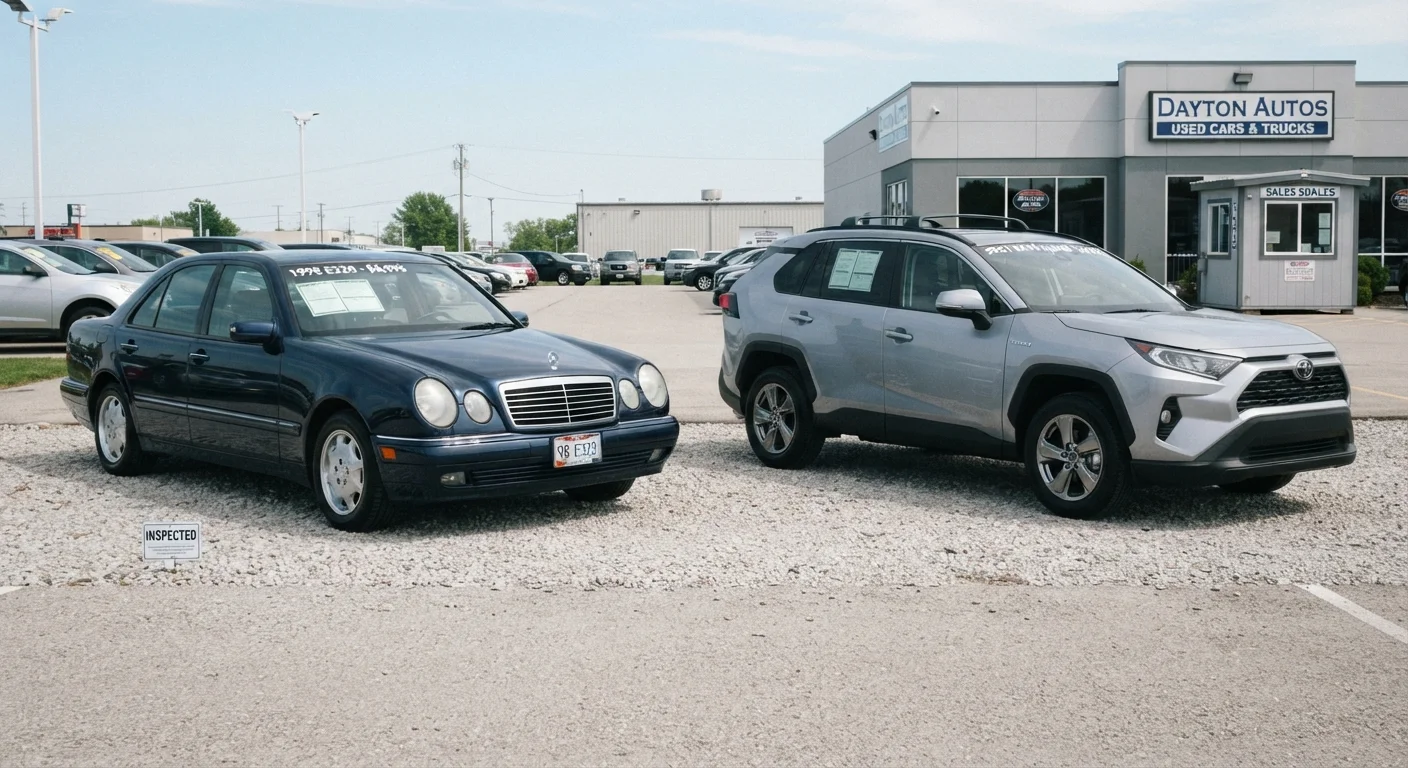
Used car listings span a wide range — from a vehicle that rolled off the line two years ago to one that predates most smartphone apps. For practical purposes, this comparison treats older cars as roughly eight or more model years old and recent models as two to five years old. The middle ground (six to seven years) shares characteristics of both.
That age range shapes nearly everything: price, safety equipment, financing options, insurance rates, and the kind of repair knowledge you'll need. Understanding how age interacts with mileage and condition is the foundation for making a smart used-car decision.
| Older Cars (8+ Years) | Recent Used Models (2–5 Years) | |
|---|---|---|
| Typical purchase price | Lower acquisition cost | Higher, but below new-car price |
| Depreciation exposure | Mostly depreciated already | Some continued depreciation |
| Modern safety tech (AEB, BSM, LKA) | Rarely included | Often standard or available |
| Parts availability | Abundant aftermarket options | Mostly OEM; aftermarket growing |
| Remaining factory warranty | Unlikely | Possible on powertrain |
| Financing accessibility | More lender restrictions | Broader lender options |
| Repair complexity | Generally simpler electronics | May require specialized tools |
| Insurance collision/comp cost | Lower (lower market value) | Higher (higher replacement value) |
Price, Depreciation, and True Cost of Ownership
The sticker gap between an eight-year-old compact and a three-year-old equivalent can be substantial — sometimes more than $10,000 for the same nameplate. That lower entry price on older vehicles is real, but it doesn't tell the whole story.
Recent models sit in the steepest part of the depreciation curve. A two-to-four-year-old vehicle has already absorbed the sharpest value drop from its original MSRP, which is why many buyers find this segment attractive. How depreciation works explains why buying at this point in the curve can offer genuine value — provided you account for what remains of any powertrain warranty.
Older vehicles carry lower purchase prices but typically higher maintenance exposure. Rubber seals, belts, suspension bushings, and cooling system components all age on a calendar, not just a mileage clock. A pre-purchase inspection by a qualified independent mechanic is non-negotiable for cars in this age bracket.
Budget for the Full Ownership Picture
When comparing a $7,000 older vehicle to a $18,000 recent model, factor in estimated maintenance costs over your planned ownership period — not just the purchase price. Request a pre-purchase inspection report from an independent mechanic for any older vehicle you're seriously considering. That $100–$150 inspection fee is among the most cost-effective steps in the used car process.
Safety Technology: The Gap Widened Fast
The period between roughly 2016 and 2020 saw widespread adoption of features that were previously luxury-segment exclusives: automatic emergency braking (AEB), blind-spot monitoring, rear cross-traffic alert, and lane-departure warning. A vehicle from 2013 is unlikely to have any of these; a 2019 model at a similar mileage often has most of them standard.
This matters because these systems have demonstrated measurable effects on crash frequency in studies conducted by organizations such as the Insurance Institute for Highway Safety (IIHS). Buyers with young drivers in the household, high-mileage commutes, or driving in dense urban areas may find the safety technology gap a decisive factor.
Note, however, that advanced driver-assistance systems (ADAS) can be expensive to calibrate or repair if sensors are damaged. Factor that into your evaluation and inspection process.
ADAS Repairs Can Be Costly
Sensors for automatic emergency braking, adaptive cruise control, and lane-keeping systems are often mounted on bumpers, windshields, and mirrors — areas vulnerable to minor collisions. Recalibration after even a small impact can cost several hundred dollars at a dealership. Before buying a recent model with these features, check the vehicle history report for any front-end or windshield damage that could indicate past sensor disruption.
Parts, Repairs, and the Mechanic Factor
Older vehicles generally benefit from abundant aftermarket parts supply and a large pool of mechanics familiar with their systems. A ten-year-old mainstream sedan is likely to have competitive parts pricing and straightforward repair procedures. Understanding OEM versus aftermarket parts trade-offs is especially relevant for older vehicles, where aftermarket options are plentiful.
Recent used models may still be under factory powertrain warranty — a meaningful buffer — but their repair costs when out of warranty can be higher. Complex electronics, proprietary software, and ADAS sensors often require dealer-level diagnostic tools. Some repairs that a competent independent shop handles easily on a 2012 vehicle may require specialized equipment on a 2021 equivalent.
Also worth noting: low mileage alone doesn't predict reliability. A recent model that sat largely unused may have seal degradation or brake corrosion that a higher-mileage older car driven regularly does not.
Financing, Insurance, and What Lenders Think About Age
Vehicle age affects more than the asking price. Many lenders place restrictions on financing vehicles older than eight to ten years, or impose higher interest rates on them. If you're planning to finance rather than pay cash, older vehicles may narrow your lender options — potentially offsetting some of the purchase-price advantage.
Insurance rates also reflect age. Older vehicles with lower market values typically carry lower comprehensive and collision premiums, though liability costs remain relatively consistent regardless of vehicle age. Recent models with advanced safety features may qualify for certain insurer discounts, but their higher replacement value means higher comprehensive and collision coverage costs. General insurance information: always get quotes for the specific vehicle you're considering before completing a purchase, and consult a licensed insurance agent for guidance appropriate to your situation.
When you're ready to make an offer, understanding your negotiating position matters. See how to negotiate a used car price without feeling out of your depth for practical principles that apply across the age spectrum.
This article provides general educational information about used vehicle purchasing factors. It is not financial, legal, or insurance advice. Coverage terms, loan eligibility, and pricing vary by provider and individual circumstances. Consult qualified professionals before making purchasing or insurance decisions.