

| Red light urgency | Stop safely as soon as possible (Standard automotive industry color convention) |
| Amber light urgency | Schedule service within 1-2 days (General manufacturer guidance) |
| Green/blue lights | Informational - system is active (Standard automotive industry color convention) |
| TPMS trigger threshold | 25% below recommended tire pressure (U.S. TREAD Act (2000) federal mandate) |
| Check engine scan tool | OBD-II port reads diagnostic trouble codes (Required on all US vehicles since 1996) |
| Flashing check engine | Indicates active misfire - reduce speed immediately (EPA and manufacturer guidance) |
How Dashboard Warning Lights Are Organized
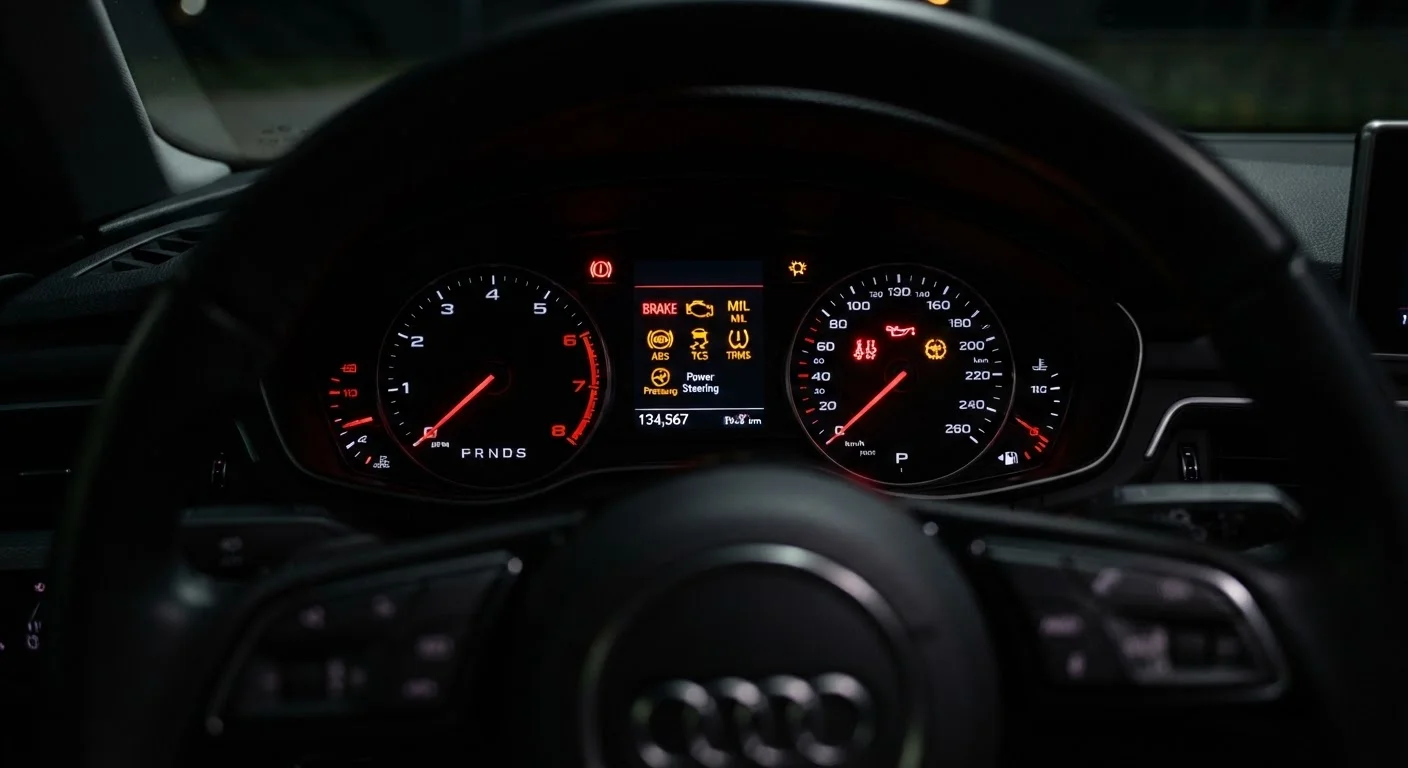
Dashboard warning lights follow a near-universal color-coding system that signals urgency at a glance. Understanding this hierarchy helps you respond appropriately before consulting a mechanic.
| Red light urgency | Stop safely as soon as possible (Standard automotive industry color convention) |
| Amber light urgency | Schedule service within 1-2 days (General manufacturer guidance) |
| Green/blue lights | Informational - system is active (Standard automotive industry color convention) |
| TPMS trigger threshold | 25% below recommended tire pressure (U.S. TREAD Act (2000) federal mandate) |
| Check engine scan tool | OBD-II port reads diagnostic trouble codes (Required on all US vehicles since 1996) |
| Flashing check engine | Indicates active misfire - reduce speed immediately (EPA and manufacturer guidance) |
- Red lights signal an immediate safety risk or critical system failure. Pull over safely as soon as possible and avoid driving further until the issue is resolved.
- Amber or yellow lights indicate a system fault or condition that needs attention soon - usually within a day or two - but doesn't require stopping immediately.
- Green or blue lights are informational, confirming that a feature is active (e.g., high beams, turn signal, cruise control).
Always cross-reference any illuminated symbol with your vehicle owner's manual, as icon designs can vary slightly between manufacturers. For a broader look at the physical and sensory cues that accompany dashboard alerts, see our complete guide to car warning signs.
Critical Red Lights: Stop or Act Immediately
These lights indicate conditions that can cause serious engine damage, safety hazards, or both if ignored.
- Engine Oil Pressure (Oil Can Icon)
- Low oil pressure means engine components aren't being lubricated. Stop the engine as soon as it is safe to do so. Continuing to drive can cause irreversible engine damage within minutes. Check the oil level; if it's adequate, the oil pump or pressure sensor may be at fault - have the vehicle towed to a mechanic.
- Engine Temperature (Thermometer in Liquid)
- The engine is overheating. Turn off the air conditioning, pull over safely, and shut off the engine. Do not open the radiator cap while the engine is hot. Our article on engine overheating warnings covers safe steps to take in detail.
- Battery / Charging System (Battery Icon)
- The charging system isn't maintaining battery voltage. The alternator or battery may be failing. Minimize electrical load (turn off AC, radio) and drive directly to a workshop, as the car may stall when the battery depletes.
- Brake System Warning (Exclamation Mark in Circle)
- If this lights up with the parking brake released, brake fluid may be low or there's a hydraulic fault. Do not ignore reduced braking ability - have the system inspected immediately. Paired with a pulsating pedal or unusual noises, it may point to worn pads; see our guide to unusual car noises for context.
Amber Lights: Schedule Attention Soon
Amber lights typically indicate a sensor has detected a fault in a non-critical system. They rarely require an immediate stop but should be addressed within a short timeframe to prevent the issue from worsening.
Malfunction Indicator Lamp (MIL)
The technical name for the check engine light. It illuminates when the vehicle's onboard diagnostic system detects a fault code in an emissions-related or powertrain component.
TPMS
Tire Pressure Monitoring System. A federally mandated sensor system (required on all US passenger vehicles since 2008) that alerts the driver when tire pressure drops significantly below the recommended level.
OBD-II
On-Board Diagnostics, second generation. A standardized vehicle diagnostic interface present on all US cars sold after 1996, allowing technicians and scan tools to read fault codes stored by the car's computer.
SRS
Supplemental Restraint System. Refers to the airbag system and associated components, including seat belt pretensioners. An SRS warning light indicates a fault that could prevent airbags from deploying properly.
ABS
Anti-lock Braking System. A safety feature that prevents wheels from locking up during hard braking, helping the driver maintain steering control. An ABS light indicates the anti-lock function may be inoperative.
Oil Pressure
The force at which engine oil circulates through the lubrication system. Adequate pressure ensures that moving metal components are protected from friction and heat damage.
- Check Engine / Malfunction Indicator Lamp (Engine Outline Icon)
- One of the most misunderstood dashboard symbols. It can signal anything from a loose gas cap to a misfiring cylinder. A steady light means schedule a diagnostic scan; a flashing light indicates an active misfire that can damage the catalytic converter - reduce speed and have it checked promptly. Our dedicated article, Why Your Check Engine Light Comes On, explains the full range of triggers.
- Tire Pressure Monitoring System - TPMS (Flat Tire with Exclamation Mark)
- One or more tires has dropped below the manufacturer's recommended inflation level. Check all four tires and the spare with a gauge, inflate to the specified PSI listed on the driver's door jamb sticker, and the light should reset after driving a short distance.
- Traction Control / Stability Control (Car with Skid Lines)
- If it flashes briefly, the system is actively working to prevent wheel slip - normal in slippery conditions. A steady light means the system has been disabled or has a fault; schedule an inspection.
- Low Fuel (Gas Pump Icon)
- Self-explanatory but easy to underestimate. Repeatedly running the tank very low can stress the fuel pump, which relies on fuel for cooling. Refuel as soon as practical.
- Transmission Temperature (Thermometer with Gear)
- Transmission fluid is too hot. Reduce load where possible (e.g., avoid towing or steep grades) and allow the vehicle to cool. If the light persists under normal driving, have the transmission fluid level and condition checked.
If multiple amber lights appear together, or you also notice flickering gauges or accessories behaving oddly, your electrical system may be a factor - electrical gremlins in the warning signs hub covers these patterns.
Advanced Safety System Indicators
Modern vehicles include driver-assistance systems that have their own indicator lights. These typically appear in amber when a fault is detected in the system, even though the underlying safety feature is designed to assist rather than warn.
Driver-Assistance Lights vs. Safety Warnings
It's easy to confuse an ADAS (Advanced Driver Assistance System) fault light with a standard vehicle warning. ADAS lights typically mean a convenience or safety-assist feature is offline, not that the vehicle itself is unsafe to drive - though you should investigate promptly. Standard safety lights (ABS, SRS, brake) are more urgent because they affect core vehicle safety systems. When in doubt, consult your owner's manual or a qualified technician.
- ABS (Anti-lock Braking System) - An illuminated ABS light means the anti-lock function may be disabled, though standard braking still works. Have the wheel speed sensors or module inspected.
- Airbag / SRS (Person with Circle) - A fault in the supplemental restraint system. Airbags may not deploy correctly in a collision. This requires professional diagnosis; do not delay.
- Lane Departure / Collision Warning Icons - These amber indicators mean a driver-assistance feature is offline or has detected a sensor obstruction (e.g., a dirty camera lens). Consult the owner's manual for reset procedures. For a full explanation of assistance system abbreviations, see ADAS Decoded.
Proactive awareness is always better than reactive repair. Pair dashboard light knowledge with regular pre-drive checks to catch developing issues before they escalate.
This article is for general informational and educational purposes only. Always consult a qualified mechanic or your vehicle's owner's manual before making repair decisions. Do not attempt repairs beyond your skill level, as improper work can create additional safety hazards.