

Key Takeaways
Summary
18 items · 5-15 minutes
Why a Pre-Drive Check Matters
Most roadside breakdowns don't happen without warning - they're preceded by subtle signs that went unnoticed or unaddressed. A brief visual and sensory inspection before you set off can surface developing problems when they're still inexpensive to fix, rather than after they leave you stranded on the shoulder of a highway.
This checklist focuses on checks that require no tools and minimal time. They're organized around what you can see, hear, smell, and feel - the same cues a trained mechanic uses for a quick walkaround. For deeper under-hood fluid checks, see our monthly fluid check routine. For understanding what lights mean after they illuminate, our dashboard warning lights guide covers every major symbol in plain language.
Exterior Walk-Around
Dashboard and Instrument Panel
Sounds and Smells at Startup
Initial Movement Check
Tools and What You Need on Hand
You don't need a toolbox to complete this checklist. A few simple items make it faster and more reliable.
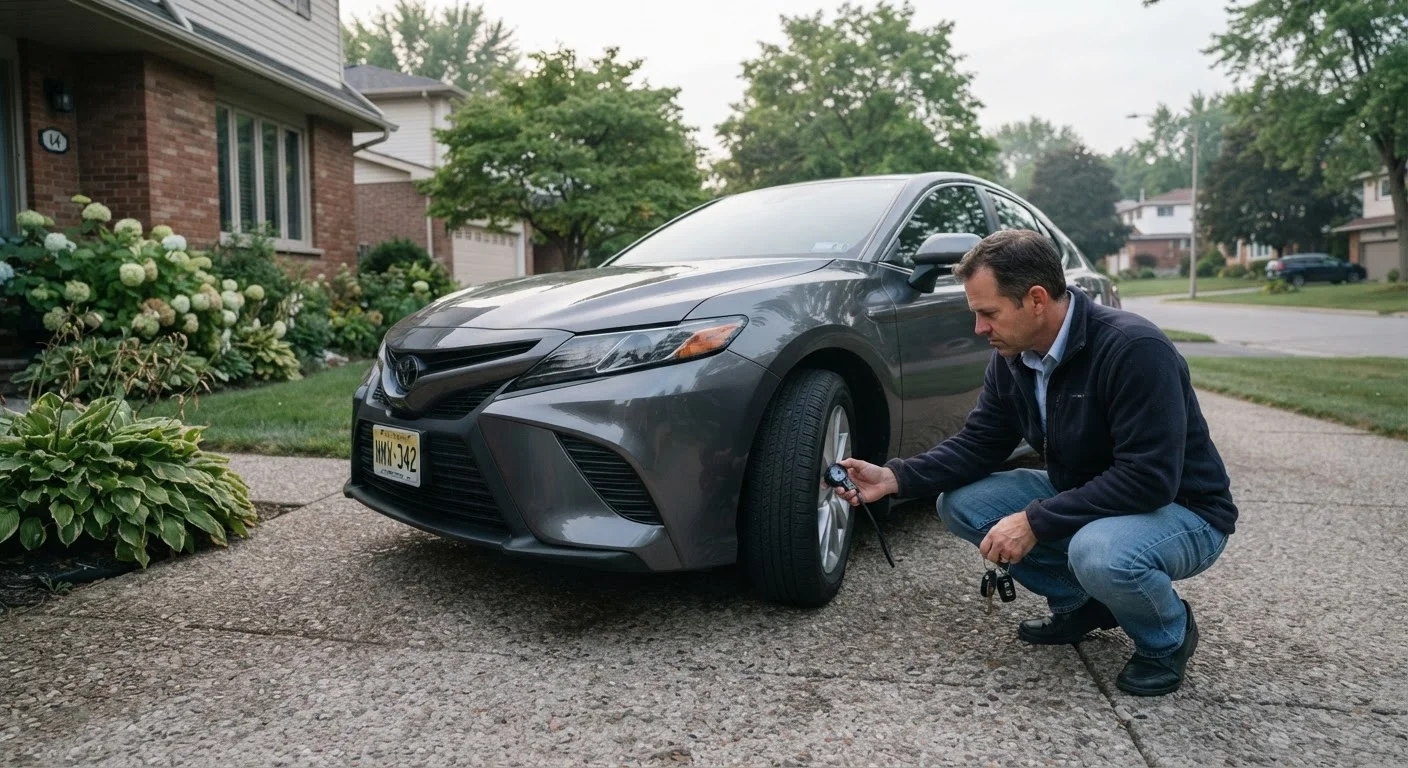
Tire pressure gauge
Allows you to verify tire PSI against the manufacturer's recommended pressure listed on the door jamb sticker.
Flashlight or phone torch
Useful for inspecting under the vehicle in low-light conditions and checking tire sidewalls clearly.
Clean rag or paper towel
Helpful for checking oil level on the dipstick and identifying the color and consistency of any fluid drips.
Owner's manual
Provides manufacturer-specific warning light meanings, fluid specifications, and recommended tire pressures for your exact vehicle.
Keep these in your vehicle at all times so the habit is sustainable. Pairing this routine with your routine upkeep schedule helps ensure nothing gets missed over time.
Never Ignore a Brake Warning Light
If a brake system warning light illuminates and does not extinguish after startup, do not assume it is a sensor glitch. Have the vehicle inspected before driving any significant distance. Brake system failures can develop rapidly and pose serious safety risks.
Spotting Problems Before They Escalate
Certain warning signs show up gradually - a tire that loses a few PSI each week, a slow fluid drip under the car overnight, or a faint smell of burning when you first start up. None of these are immediately dangerous, but each points to a developing issue that will worsen without attention.
Pay particular attention after overnight parking. Puddles or spots beneath the vehicle can indicate oil, coolant, transmission fluid, or brake fluid leaks. The color helps identify the source: oily black or brown suggests engine oil; bright green or orange usually points to coolant; clear or light yellow near the wheels may indicate brake fluid. Brake fluid loss is the most safety-critical of these - do not drive the vehicle without having it inspected if you suspect a brake fluid leak.
Brake Fluid Loss Requires Immediate Action
Brake fluid is a closed system - it should not diminish noticeably over time without a reason. If you notice a puddle near a wheel that appears clear to light yellow and slightly oily, or if your brake pedal feels soft or travels further than usual, treat this as a safety-critical situation. Have the vehicle inspected by a qualified mechanic before driving it. Do not top up brake fluid and continue driving without identifying the source of the loss.
Seasonal conditions also affect how you read these signals. Cold mornings can temporarily mask tire pressure loss or make battery-related starting hesitation feel normal. For a full seasonal readiness perspective, see our pre-season vehicle readiness checklist.