

Key Takeaways
Check Engine Light
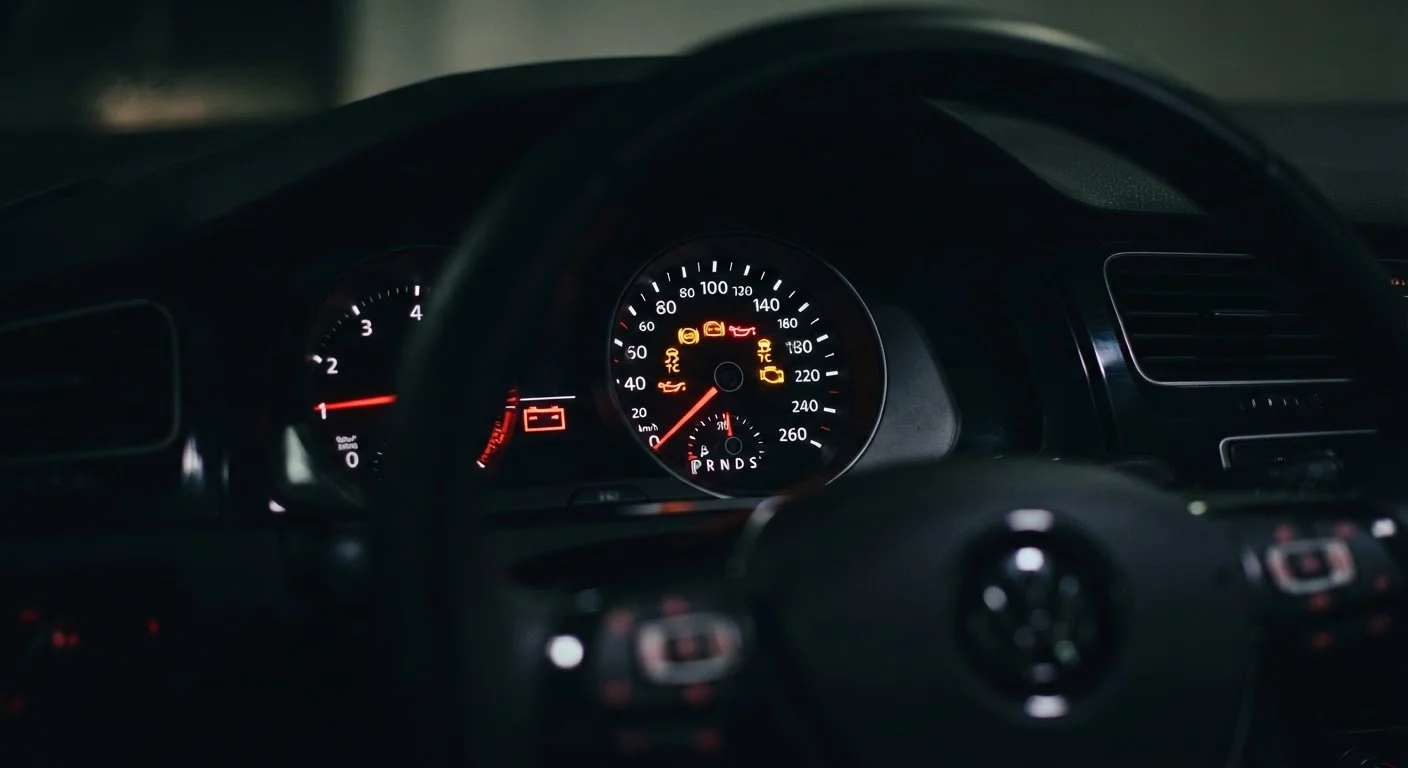
The check engine light - formally called the Malfunction Indicator Lamp (MIL) - is a dashboard warning that activates when your vehicle's onboard diagnostic system (OBD-II) detects a problem it cannot resolve on its own. It can signal anything from a loose gas cap to a misfiring engine. The light does not pinpoint the exact fault; it simply indicates that a diagnostic trouble code (DTC) has been stored in the vehicle's computer.
All US vehicles sold after 1996 are required to include an OBD-II system. When the MIL triggers, a DTC is logged in the engine control module (ECM), which a scan tool can retrieve.
What the Check Engine Light Is Actually Telling You
When that amber light appears on your dashboard, it means your vehicle's onboard diagnostic system - known as OBD-II - has detected a reading outside its acceptable parameters and stored a fault code. The light itself is intentionally generic. It is a messenger, not a diagnosis.
The OBD-II system monitors hundreds of inputs across your engine, transmission, and emissions components. When a sensor reports an unexpected value - or stops reporting altogether - the engine control module logs a diagnostic trouble code (DTC) and illuminates the MIL. Without a scan tool, that code stays invisible to you.
This is why two drivers can both have their check engine lights on for completely unrelated reasons. One might have a loose gas cap; the other a failing oxygen sensor. The light looks identical in both cases. For a broader look at what other dashboard symbols signal, the complete dashboard warning light guide covers the full range.
OBD-II Is Standardized Across All Modern US Vehicles
Since 1996, federal regulations have required all cars sold in the US to use the OBD-II diagnostic standard. This means any compatible scan tool - not just a dealer's proprietary equipment - can read the fault codes stored in your vehicle. The standardization also means independent mechanics and auto parts stores can access the same diagnostic data as franchised dealerships.
Solid vs. Flashing: A Critical Distinction
The behavior of the light matters as much as its presence. A steady, solid light typically indicates a stored fault that is not an immediate emergency - your vehicle detected a problem at some point and wants it addressed, but you generally have time to schedule a scan.
A flashing or blinking light is a different matter. This usually signals an active engine misfire, where unburned fuel is entering the exhaust system. That raw fuel can rapidly overheat and destroy your catalytic converter - a repair that is considerably more expensive than the misfire itself. If your check engine light is flashing, reduce speed, avoid heavy acceleration, and have the vehicle inspected as soon as safely possible.
Never Ignore a Flashing Check Engine Light
A blinking MIL while the engine is running almost always indicates an active misfire. Pull over safely when you can, avoid high-speed or high-load driving, and have the vehicle towed or driven gently to a mechanic. Continuing to drive aggressively with an active misfire can destroy a catalytic converter in a matter of miles, turning a moderate repair into a significantly more expensive one.
The Most Common Triggers
While the OBD-II system can log dozens of different codes, a handful of causes account for a large proportion of check engine light events in everyday driving:
- Loose or faulty gas cap: A missing or improperly sealed cap allows fuel vapors to escape, triggering an evaporative emissions leak code.
- Oxygen (O2) sensor failure: O2 sensors monitor exhaust gases to help the engine maintain an efficient fuel mixture. A failed sensor can reduce fuel economy and increase emissions over time.
- Catalytic converter degradation: The catalytic converter reduces harmful exhaust emissions. When it degrades, a downstream O2 sensor detects reduced efficiency and triggers a code.
- Mass airflow (MAF) sensor fault: The MAF sensor measures incoming air so the engine can calculate the correct fuel amount. Contamination or failure can cause rough running and poor economy.
- Spark plugs or ignition coils: Worn spark plugs or failing coils can cause misfires - a leading cause of the flashing check engine light scenario described above.
~7
Drive cycles before MIL may reset automatically
Many OBD-II systems require approximately 7 successful drive cycles without detecting the fault before the check engine light extinguishes on its own, though this varies by manufacturer.
Top 5
Most common OBD-II trouble code categories
Oxygen sensor faults, evaporative emissions leaks, catalytic converter efficiency codes, MAF sensor faults, and misfire codes consistently rank among the most frequently retrieved DTCs in US repair data.
Understanding which fault category you're dealing with helps you have a more informed conversation with a mechanic and set realistic expectations about repair scope and cost.
What to Do When It Comes On
Your first step is to check whether the light is steady or flashing, and to notice whether your vehicle is behaving differently - rough idling, loss of power, unusual smells, or stalling are all meaningful symptoms. For guidance on reading other physical signals your engine may be giving, see engine bay warning signs explained.
If the light is steady and the car drives normally, check your gas cap first - remove it, inspect the seal, and re-tighten it firmly. This resolves the issue in a meaningful number of cases. If the light remains after a few drive cycles, arrange for an OBD-II scan. Many auto parts retailers offer free walk-in scanning, and a qualified mechanic can interpret the code in the context of your specific vehicle and symptoms.
Avoid the temptation to simply clear the code without addressing the underlying cause. The light will return, and you may delay identifying a fault that is quietly worsening. For a fuller picture of how warning signs fit into overall vehicle health, the complete car warning signs guide is a useful reference.
This article provides general educational information about vehicle warning systems. It is not a substitute for a diagnosis by a qualified mechanic. Always consult a licensed automotive professional for faults affecting the safety or driveability of your vehicle.