

Key Takeaways
Engine Bay Red Flags
Engine bay red flags are visual warning signs visible when you open a vehicle's hood that suggest mechanical problems, poor maintenance, or hidden damage. You don't need technical expertise to spot them — corrosion, fluid stains, mismatched components, and DIY repairs are all readable with a basic checklist. Catching these signs before purchase gives you leverage to negotiate, request repairs, or walk away.
Some findings, such as signs of head gasket failure or evidence of flood damage, require professional diagnosis to confirm severity. Use visual inspection as a first filter, not a final verdict.
Why the Engine Bay Tells the Real Story
A seller's description and a clean exterior can only tell you so much. The engine bay is harder to stage, and most buyers skip it entirely — which is exactly why it's worth your attention. Spending five to ten minutes looking at what's under the hood can surface maintenance neglect, accident damage, or fluid problems that no listing photo will show.
This isn't about diagnosing every component. It's about reading the evidence that's already visible. Think of it as crime-scene logic: stains, residue, and mismatched parts all leave traces. You're learning to see them.
For a broader picture of vehicle health signals, see the complete guide to car warning signs — this article focuses specifically on what's readable inside the hood.
~40%
Used car buyers who skip a pre-purchase inspection
Industry surveys consistently find that a significant share of used car buyers forgo independent mechanical inspections, increasing their exposure to undisclosed defects.
$500–$3,000+
Typical cost range for undetected engine issues
Repair costs for issues such as head gasket failure or significant oil leaks — problems that are often visible during a basic engine bay inspection — can vary widely depending on make and model.
Fluid Leaks and Staining: What to Look For
Fluid stains are among the most reliable indicators of ongoing or past problems. Look for these specific signs:
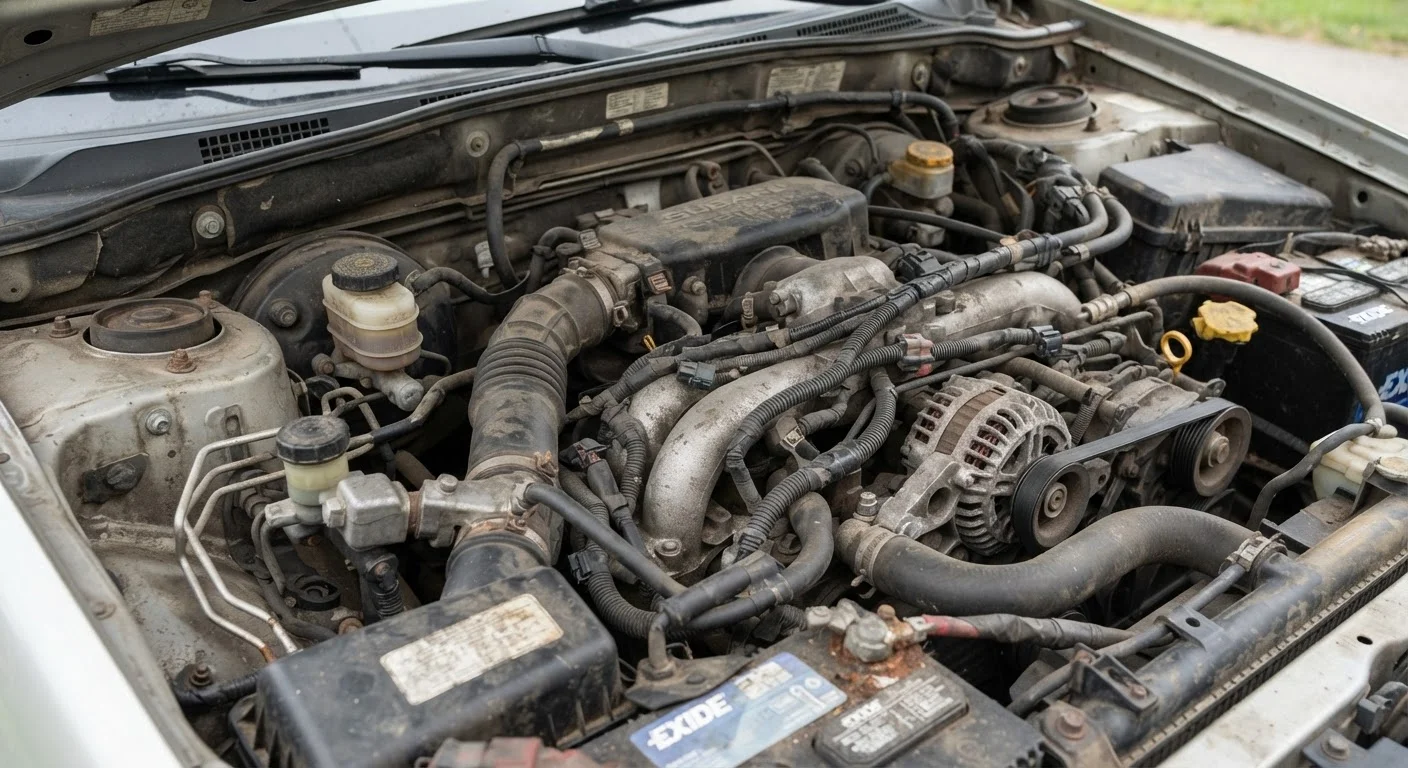
- Oil on the exterior of the engine: A dry, grime-caked engine with no fluid traces can indicate it was recently steam-cleaned before sale. But visible oil streaking down the block suggests a seeping gasket or valve cover leak that hasn't been addressed.
- Coolant residue around hoses: White, rust-colored, or crusty deposits near hose connections point to a slow coolant leak. Even a dried-up leak matters — it suggests the cooling system has been operating under pressure loss at some point. The chain from a small coolant leak to a blown head gasket can develop quickly if left unaddressed.
- Brown or milky residue on the oil filler cap: Remove the oil filler cap (ask the seller first) and look at the underside. A creamy, mayonnaise-like coating suggests water contamination in the oil — a potential sign of head gasket failure. Clear or slightly oily residue is normal.
If you notice drips or pooled fluid beneath the vehicle, identify them by color to gauge severity.
Inspect the Engine Cold When Possible
Ask to see the vehicle before it's been warmed up for the day. A cold engine makes fresh fluid leaks easier to spot on dry surfaces, and some sellers warm vehicles in advance to burn off smoke or reduce visible symptoms. If the engine is already warm when you arrive, note that and factor it into your inspection.
Corrosion, Wiring, and Structural Red Flags
Rust and corrosion in the engine bay fall into two very different categories. Minor surface oxidation on unpainted brackets is normal aging. What you're watching for is:
- Corroded battery terminals: White or blue powdery buildup around the battery posts can indicate a battery nearing the end of its life or chronic overcharging. It's easy to fix, but it also signals whether the previous owner was on top of basic maintenance.
- Frayed or taped wiring: Makeshift electrical repairs — visible tape wraps, exposed wire, or zip-tied bundles running in unusual directions — suggest DIY fixes that may not meet factory specifications. Electrical problems are notoriously difficult to trace later.
- Water lines or mud on the firewall or fuse box: A distinct tide mark or silt residue inside the engine compartment is a flood-damage flag. Cross-reference with the vehicle history report, but don't rely on it exclusively — flood titles are sometimes cleared or the vehicle may have been titled in a different state.
If the body panels adjacent to the engine bay look misaligned or show signs of filler and respray, that may indicate front-end collision damage. Reading the exterior for accident clues adds another layer to your assessment.
Mismatched or Missing Components
The engine bay of a well-maintained vehicle generally looks cohesive — components are in their original positions, clamps are uniform, and nothing appears improvised. Deviations from this are worth questioning:
- Mismatched hose clamps: If multiple hose clamps are different sizes, colors, or types (a mix of worm-drive and spring clamps, for instance), it suggests the hoses were replaced piecemeal rather than as part of a planned service. That's not necessarily dangerous, but it's a flag for what else may have received similar attention.
- Missing or non-original air filter housing: Some modifications are disclosed; many aren't. An aftermarket intake system isn't automatically a problem, but it may affect emissions compliance or warranty standing on a newer vehicle.
- Excessive sealant or RTV (silicone gasket material): A thin bead of sealant on a gasket joint is standard. A thick, uneven application smeared around a joint suggests someone was trying to stop a leak rather than replace the gasket properly.
Any repair that looks improvised deserves a direct question to the seller and, where possible, a request for service records. If the answer is vague or the records don't exist, factor that into your decision.
When to Call in a Professional
Visual inspection is a first filter — not a final verdict. If you find two or more red flags during your walkthrough, a pre-purchase inspection by an independent mechanic is the logical next step. Most inspections take under an hour and give you a written report you can use in price negotiations or as a reason to decline the sale.
This article provides general educational information about vehicle inspection and is not a substitute for a professional pre-purchase mechanical inspection. Always consult a qualified mechanic before making a purchase decision.