

Key Takeaways
Why Your Engine Temperature Gauge Matters
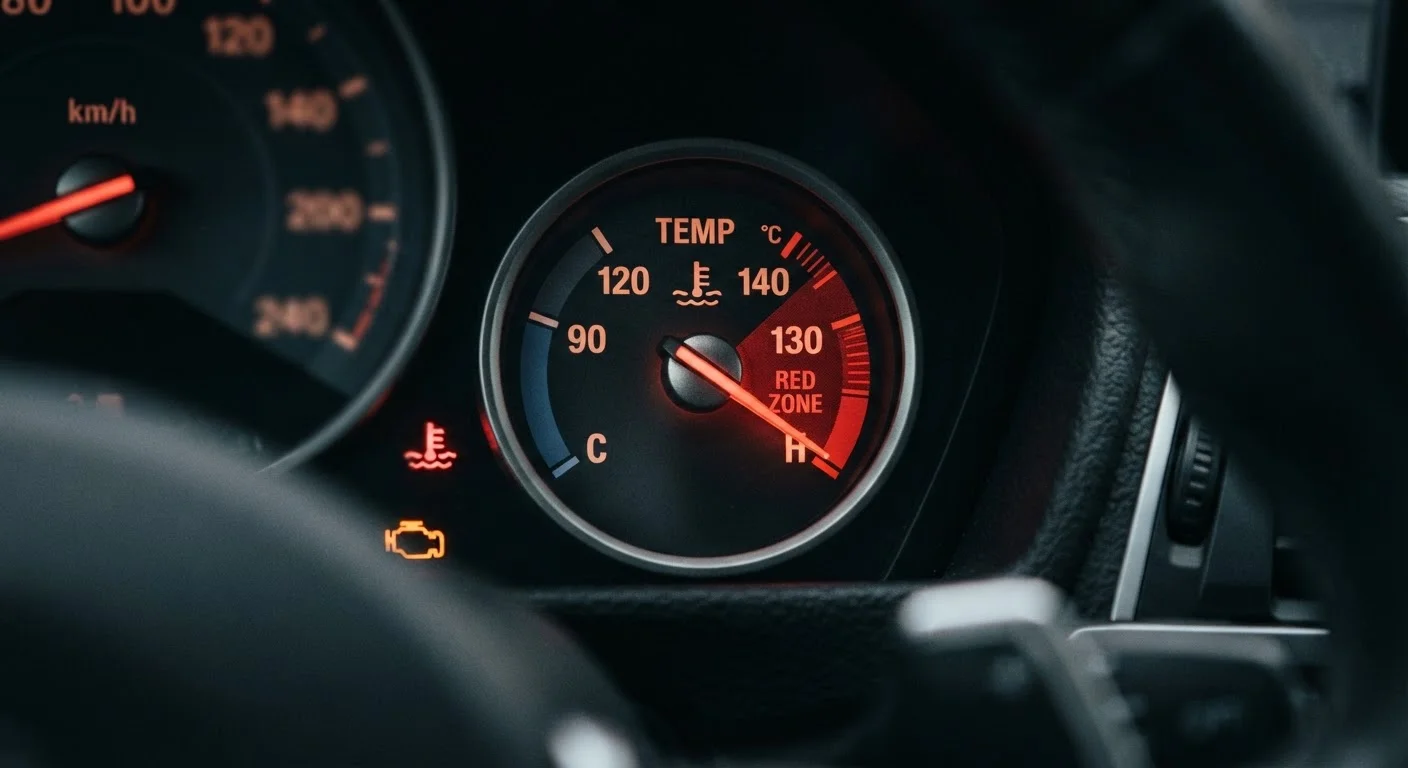
The temperature gauge on your dashboard reflects the operating temperature of your engine coolant - the fluid responsible for absorbing heat from the engine and releasing it through the radiator. Most engines operate safely between roughly 195°F and 220°F (90°C-104°C), and the gauge needle typically rests near the midpoint during normal driving.
When the needle climbs above that midpoint, it signals that the cooling system is struggling. Left unaddressed, excess heat can warp metal components, degrade engine oil, and damage head gaskets. As the coolant leaks and head gasket guide explains, what begins as a minor cooling issue can escalate into one of the most expensive engine repairs if ignored.
Common causes of overheating include:
- Low coolant level - due to a slow leak from a hose, radiator, or water pump seal
- Failed thermostat - a stuck thermostat prevents coolant from flowing to the radiator
- Radiator fan failure - electric cooling fans that stop working reduce airflow at low speeds
- Blocked radiator - debris or internal deposits restrict heat exchange
- Failed water pump - the pump circulates coolant; if it fails, circulation stops
For a broader view of engine bay warning signs, see the engine bay warning signs guide.
Never Open a Hot Radiator Cap
When an engine overheats, coolant pressure inside the system can reach dangerous levels. Opening the radiator cap or coolant reservoir cap while the engine is hot can cause scalding steam and fluid to eject violently. Always allow the engine to cool completely - typically 30 to 45 minutes - before checking or adding coolant.
What to Do When the Gauge Climbs: Step-by-Step
Acting quickly and calmly is the difference between a minor repair and a major engine rebuild. Follow the steps below in order. If you're unsure whether your vehicle is safe to drive, treat it as unsafe and arrange a tow.
What you will need
Pre-mixed coolant (50/50)
Used to top up a low coolant reservoir once the engine has fully cooled down.
Heat-resistant gloves
Protects hands when opening the hood or working near hot engine components after cooling.
Flashlight
Helps inspect coolant hoses, the reservoir level, and the engine bay in low-light conditions.
Roadside assistance contact or app
Provides access to towing if the vehicle cannot be safely driven after overheating.
Recognize the early warning signs
Watch for the temperature gauge needle moving above the normal midpoint range. Alongside the gauge, early overheating can produce a sweet, slightly chemical smell (hot coolant), steam rising from under the hood, or a sudden drop in cabin heating performance. The dashboard warning lights guide explains the engine temperature warning light you may also see illuminate.
Turn off the air conditioning and turn on the heater
As soon as you notice the gauge rising, switch off the air conditioning - the A/C compressor adds load to the engine and increases heat output. Then turn the cabin heater to its maximum heat setting and set the fan to high. The heater core acts as a secondary radiator and can draw heat away from the engine coolant circuit, offering a few minutes of buffer while you find a safe place to stop.
Pull over safely and shut off the engine
Signal, check your mirrors, and move to the nearest safe stopping point - a parking lot, a side street, or a wide paved shoulder. Once stopped, turn the engine off immediately. Do not idle to try to cool it down; without forward airflow, idling can make overheating worse unless the radiator fan is functioning correctly.
Wait for the engine to cool completely
Leave the hood closed and wait at least 30 to 45 minutes before touching anything under the hood. Opening the hood immediately after stopping is fine - it can help release heat - but do not touch any caps, hoses, or engine surfaces until the metal and fluids have cooled. Use this time to consult your owner's manual and, if needed, contact roadside assistance.
Check the coolant reservoir level
Once fully cooled, locate the coolant reservoir (a translucent plastic tank connected to the radiator by a hose - your owner's manual will show its exact location). Check whether the fluid level sits between the MIN and MAX marks. If the reservoir is low or empty, add the correct pre-mixed coolant slowly. Do not remove the radiator cap itself unless your manual specifically instructs you to fill directly through it.
Restart cautiously and monitor the gauge
If you added coolant and believe a low-fluid level was the cause, restart the engine and watch the temperature gauge closely for the first few minutes. If the gauge begins to rise again toward the red zone, turn the engine off immediately and arrange a tow. Do not attempt to drive to a shop if the gauge cannot stabilize in the normal range.
Continuing to Drive Can Destroy Your Engine
An overheated engine can warp cylinder heads, damage pistons, or blow a head gasket within minutes of the gauge hitting the red zone. These repairs can cost thousands of dollars. If the gauge climbs and does not respond to the steps below, stop driving and call for roadside assistance.
Keep an Emergency Coolant Bottle in Your Car
Storing a small bottle of pre-mixed coolant (50/50 antifreeze and distilled water) in your trunk can buy you enough safety margin to reach a repair shop after a minor coolant loss. Check your owner's manual to confirm the correct coolant specification for your vehicle before purchasing.
After any overheating event, a qualified mechanic should pressure-test the cooling system, inspect hoses and the radiator cap, and confirm there is no evidence of combustion gases in the coolant - an indicator of head gasket damage. For a complete reference on vehicle warning signs beyond the temperature gauge, the complete car warning signs guide is a useful next read.