

How Federal Standards Define Child Restraint Categories
Child restraint systems (CRS) sold in the United States must comply with Federal Motor Vehicle Safety Standard 213 (FMVSS 213), administered by the National Highway Traffic Safety Administration (NHTSA). This standard sets minimum requirements for structural integrity, harness strength, flammability resistance, and labeling - every seat on the US market must meet it before reaching store shelves.
FMVSS 213 organizes child restraints into categories based primarily on the child's weight and, more recently, height. The four core categories are:
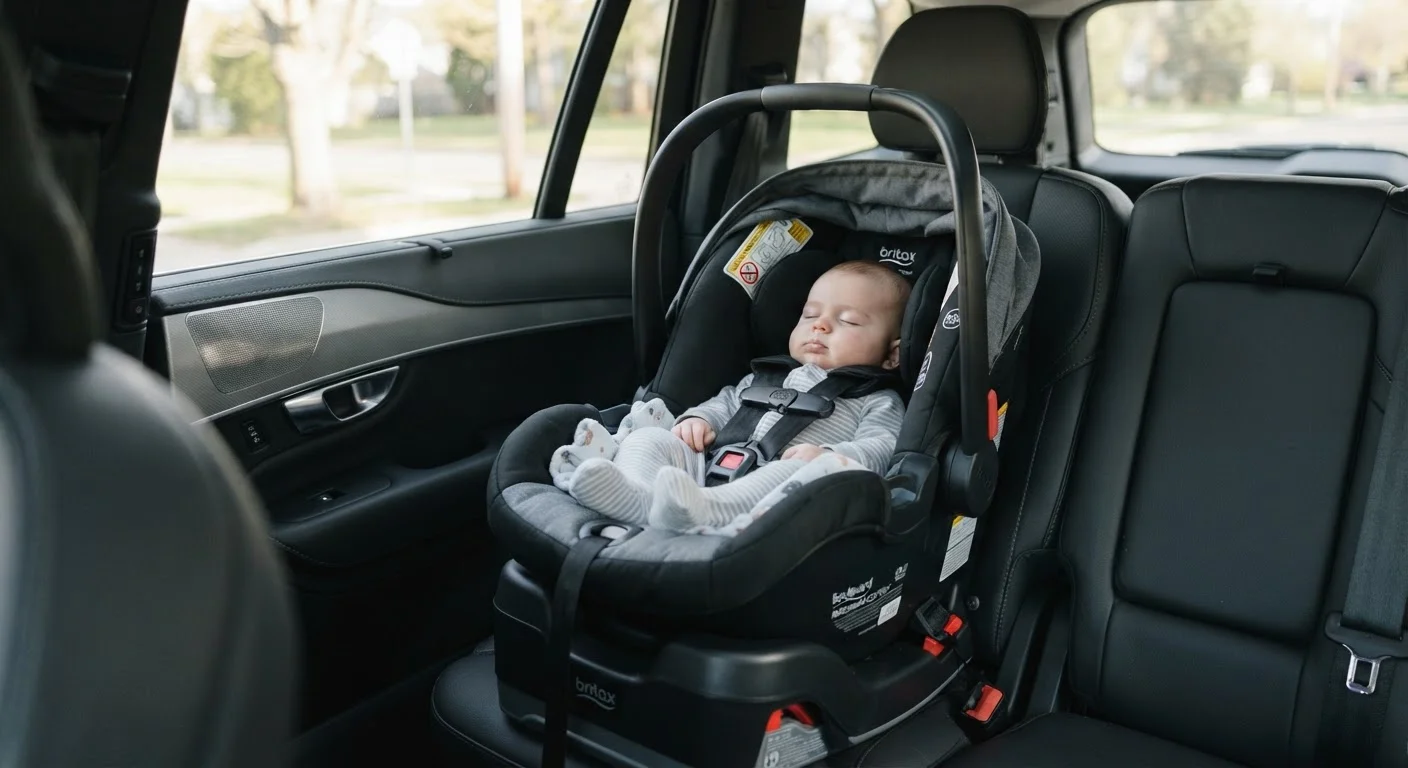
- Rear-facing only (infant) seats - designed for newborns and small infants, typically up to 35-40 lbs depending on the model.
- Convertible seats - can be used rear-facing first, then rotated forward-facing; many accommodate children from birth to 65 lbs or more.
- Forward-facing seats with harness - for toddlers and preschoolers who have outgrown the rear-facing weight or height limit of their convertible seat.
- Belt-positioning booster seats - no internal harness; positions the vehicle's own seatbelt correctly across the child's body once the child has outgrown a harnessed seat.
Understanding these categories matters because no single seat is universally appropriate. Seat selection depends on a child's current size, the vehicle's seating geometry, and the LATCH (Lower Anchors and Tethers for Children) system compatibility. For a broader look at how passive safety systems protect all occupants, see our guide to passive safety systems.
What the Standards Actually Test - and What They Don't
FMVSS 213 requires that every child seat survive a 30 mph dynamic sled test simulating a frontal crash. Regulators measure head excursion (how far the child's head travels forward), chest acceleration forces, and harness retention. A seat passes only if it keeps the test dummy within defined injury thresholds.
FMVSS 213
Federal Motor Vehicle Safety Standard 213 is the US federal regulation that sets mandatory performance and labeling requirements for all child restraint systems sold in the country.
Head Excursion
The forward distance a restrained child dummy's head travels during a crash test. FMVSS 213 sets a maximum limit to reduce the risk of head contact with vehicle interior surfaces.
LATCH System
Lower Anchors and Tethers for Children - a standardized anchor system built into US vehicles and child seats since 2002 that allows installation without routing the vehicle seatbelt through the seat.
Belt-Positioning Booster
A child seat without an internal harness that raises the child so the vehicle's lap-and-shoulder seatbelt crosses the chest and hips correctly rather than the neck and abdomen.
Convertible Seat
A child restraint that can be configured rear-facing for infants and then rotated to forward-facing as the child grows, offering extended use within a single seat.
CPS Technician
A Child Passenger Safety Technician is a certified professional trained to inspect car seat installation and advise caregivers on correct fit and usage for their specific vehicle and child.
NHTSA also publishes its own CPS (Child Passenger Safety) ease-of-use ratings, which score installation simplicity, harness adjustability, and labeling clarity - factors not covered by the pass/fail crash test. These ratings exist because a seat that is difficult to install correctly provides diminished real-world protection even if it performs well in the lab.
Registered Seats Can Be Recalled More Easily
NHTSA maintains a child seat recall database, and manufacturers are required to notify registered owners of safety recalls. Parents and caregivers can register a seat directly with the manufacturer using the registration card included in the packaging or through the manufacturer's website. Checking NHTSA's recall database periodically is also advisable, as seat models can be subject to recall years after purchase.
What FMVSS 213 does not directly regulate is the interaction between the child seat and the specific vehicle it rides in. Fit varies: the same seat may install very securely in one vehicle and less stably in another due to seat cushion angle, anchor position, and belt geometry. This is why NHTSA and child passenger safety technicians recommend verifying installation in each vehicle where the seat will be used.
For context on how crash test standards work across the broader vehicle, our roadmap to crash test ratings explains NHTSA and IIHS methodologies in accessible terms.
Transitioning Between Seats: The Standards-Based Guidance
A common source of confusion is when to transition a child from one seat type to the next. The standards-based answer is straightforward: a child should remain in each category until they exceed the seat's stated weight or height limit - whichever comes first. Moving a child to the next stage early does not provide added safety; it removes a layer of protection.
Key transitions guided by manufacturer limits (which must comply with FMVSS 213 labeling requirements) include:
- Rear-facing to forward-facing: When the child exceeds the rear-facing weight or height limit of the seat in use - not simply when they reach age two, which was a common rule of thumb but is now considered an oversimplification.
- Harness to booster: When the child exceeds the forward-facing harness limit, typically 40-65 lbs depending on seat model.
- Booster to seatbelt alone: When the vehicle's lap-and-shoulder belt fits the child correctly without a booster - generally when the child is approximately 4 feet 9 inches tall and can sit with their back flat against the vehicle seat.
The seatbelt itself is the final restraint system a child transitions to, and its performance depends on proper positioning. Modern seatbelt technology - including pretensioners and load limiters - is optimized for adult geometry, reinforcing why booster use until correct fit is achieved matters. When choosing a family vehicle, safety factors beyond star ratings are worth examining alongside CRS compatibility.