

Key Takeaways
Suspension Tuning
Suspension tuning refers to the deliberate engineering choices that determine how a car's wheels, springs, and dampers respond to road inputs. These choices affect ride comfort, body motion, steering feel, and overall handling balance. Automakers make different trade-offs depending on whether a model is targeting daily comfort, spirited driving, or a blend of both.
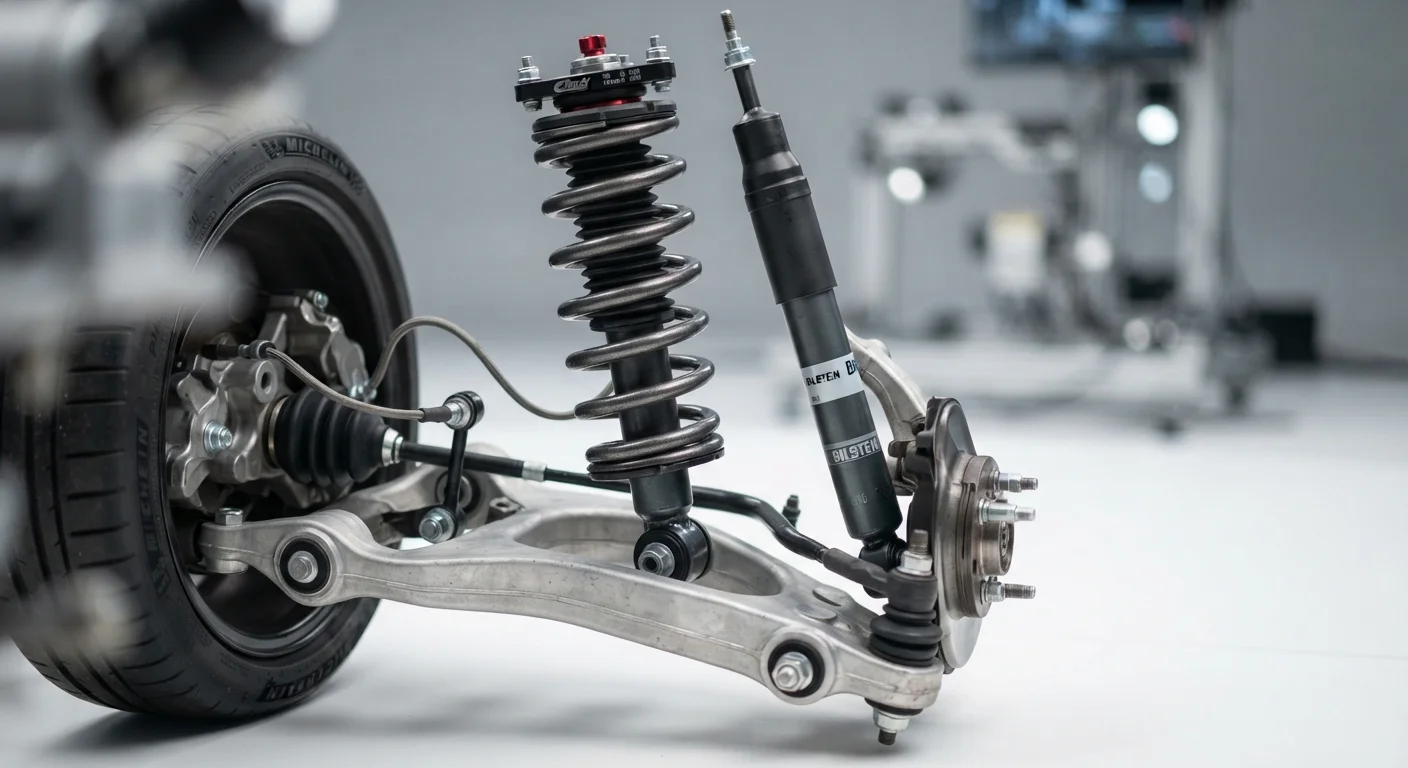
Key variables include spring rate (stiffness), damper valving (how quickly a shock absorber compresses and rebounds), anti-roll bar diameter, and suspension geometry angles such as camber and caster.
The Two Jobs Suspension Has to Do Simultaneously
Every sedan's suspension performs two competing tasks at once: isolating passengers from road irregularities and keeping the tires in firm, consistent contact with the pavement. These goals pull in opposite directions. A suspension optimized purely for isolation would allow excessive body movement, reducing tire contact and predictability. One tuned purely for tire control would transmit every road texture into the cabin.
Automakers resolve this tension through calibration choices that reflect each model's intended character. A long-wheelbase executive sedan and a sport-oriented compact may share the same basic architecture - MacPherson struts up front, a multi-link rear - yet feel entirely different because the springs, dampers, and geometry have been set to different priorities. Understanding those choices helps explain why two sedans at a similar price point can feel worlds apart. Body style also plays a role in structural rigidity, which interacts with suspension behavior in ways many buyers overlook.
Spring Rate: The Foundation of Ride Character
The spring rate - measured in pounds per inch or Newtons per millimeter - determines how much force is required to compress a spring by a given distance. A higher rate means the spring resists compression more aggressively. This limits body roll in corners and keeps the car flat during acceleration and braking, but it also means smaller road imperfections produce noticeable cabin intrusions.
Comfort-biased sedans typically use lower spring rates that allow the body to rise and fall more freely, absorbing bumps before they reach occupants. The trade-off is greater body lean in corners and a slightly floaty sensation on highway undulations. Sport-tuned variants of the same platform often raise spring rates by 20-40% or more, fundamentally changing what the car communicates through the seat.
20-40%
Typical spring rate increase in sport vs. standard variants
Engineering data from automotive development literature indicates sport suspension packages commonly raise spring rates in this range over comfort-spec equivalents on the same platform.
<10ms
Adaptive damper response time
Electronically controlled adaptive damper systems can adjust valve settings in under 10 milliseconds, faster than any road input a driver would consciously perceive.
3-5°
Typical negative camber range in sport tune
Sport-oriented sedan geometry often targets slightly more negative camber than comfort tunes to improve cornering tire contact, though exact values vary by manufacturer and platform.
Damper Valving: Where the Nuance Lives
Springs determine how much a suspension moves; dampers - commonly called shock absorbers - control how quickly that movement happens. A damper forces hydraulic fluid through small orifices to resist motion. Faster-valved dampers resist both compression and rebound more aggressively, keeping body motions tightly controlled. Slower valving allows more gradual movement, which feels more compliant over broken pavement.
The interaction between spring rate and damper valving is where engineers invest significant development time. A stiff spring paired with an under-damped shock produces a bouncy, unsettled feel. A soft spring with an over-damped shock creates a wooden, disconnected sensation. Getting that ratio right for a specific use case - mixed urban commuting, long highway cruising, or canyon driving - is the core engineering challenge of suspension tuning.
Adaptive damper systems, offered on many mid-range and premium sedans, address this by varying fluid flow electronically. In practice, the Comfort mode of an adaptive system typically matches or surpasses the compliance of a standard passive setup, while Sport mode can approach dedicated performance tuning. The gap between modes is what defines the system's versatility. This dynamic is explored further in our comparison of performance and comfort-focused luxury EVs.
Test Drive Multiple Drive Modes Back-to-Back
When evaluating a sedan with adaptive dampers, ask to drive on the same road segment in both Comfort and Sport modes consecutively. The contrast is far more informative than experiencing one mode in isolation. Pay attention to how the car handles a specific rough patch, not just smooth highway surfaces where differences are harder to detect.
Geometry, Tires, and the Limits of Any Tune
Spring and damper choices operate within a framework set by suspension geometry. Camber angle - how much the wheel tilts relative to vertical - affects tire contact during cornering. Caster angle influences straight-line stability and steering return. Toe settings change how tires point relative to the direction of travel, affecting both tire wear and initial steering response. Sport-tuned sedans often run slightly more negative camber to maximize cornering grip, which can accelerate inner tire wear in daily driving.
Tires amplify or mute all of these calibrations. A sedan with firm sport suspension but tall-sidewall tires will feel noticeably more compliant than the same car on low-profile rubber. This is why some sport packages that include larger wheel diameters - and therefore shorter sidewalls - result in a harsher ride than the standard suspension might suggest. Rear seat passengers feel these changes acutely, as discussed in our guide to rear-seat comfort factors.
This article is for informational purposes only. Any suspension modifications should be carried out by a qualified mechanic. Suspension system condition affects vehicle safety - consult a professional if you notice changes in ride quality or handling. See our overview of common suspension repairs for guidance on wear signs.