

Key Takeaways
Why Published Rear-Seat Specs Mislead More Than They Inform
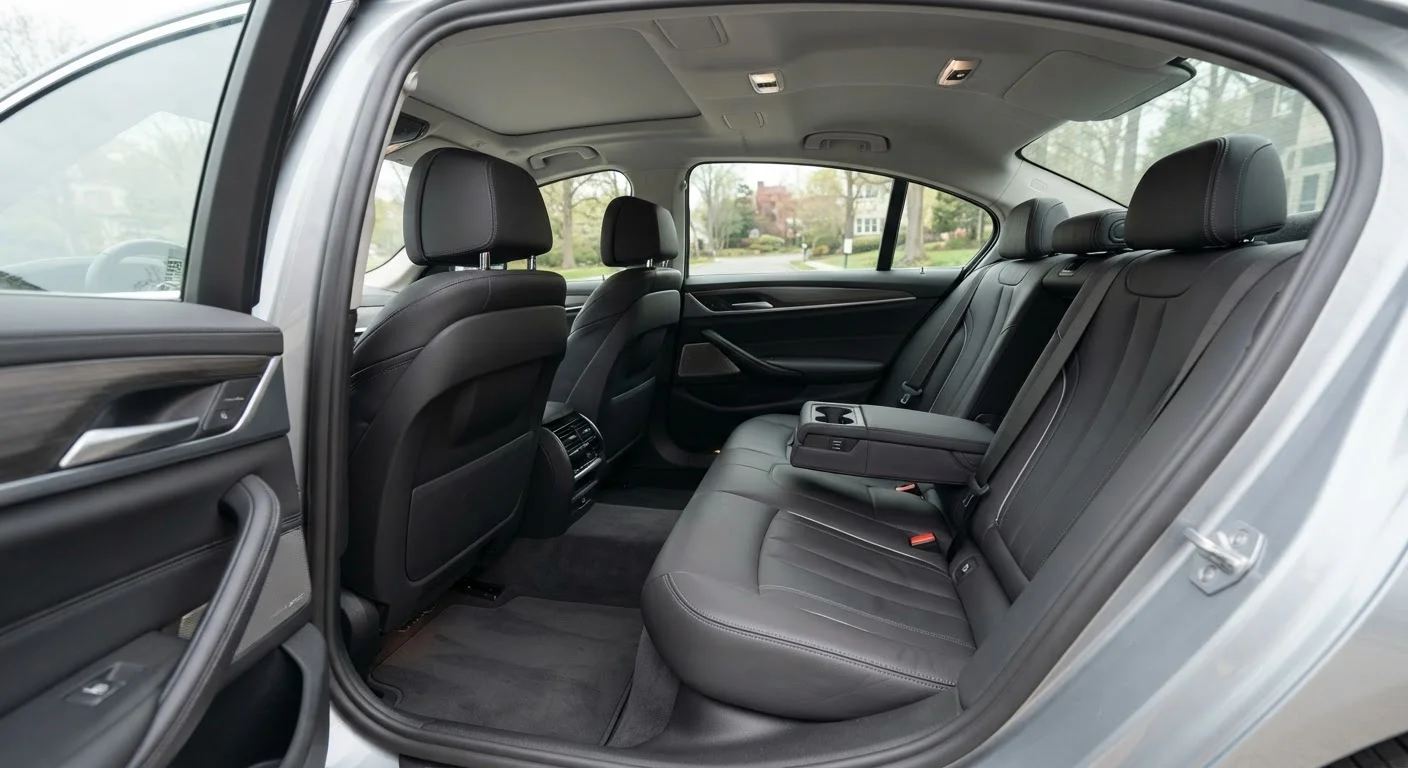
Automotive marketing sheets list rear legroom, headroom, hip room, and shoulder room as if these four numbers fully describe the passenger experience. They do not. Each measurement is taken under controlled, standardized conditions that rarely reflect how real occupants sit, how the front seat is actually positioned, or how the geometry of the roofline narrows space where heads actually rest.
Consider legroom: the SAE standard measures from the back of the front seat cushion to the front of the rear seat cushion with the front seat rail in a set reference position. A driver who is six feet tall will push that seat back considerably further, reducing available knee clearance by several inches - a gap that never appears in any brochure figure.
Headroom compounds the problem. Sedans with swept-back rooflines report a single centerline figure that is meaningless for outboard passengers, where the roof is lower and sloping inward. The result: a sedan advertising 37 inches of rear headroom may still brush the hair of a 5-foot-10-inch passenger sitting in the outboard seat.
Spec-sheet legroom can be misleading
Published legroom figures assume the front seat is in a standardized, not a real-world, position. A driver of average or above-average height will slide the front seat further back, reducing actual rear legroom by several inches. Always verify available knee clearance with the front seat adjusted for a realistic driver posture.
Understanding these gaps between reported and experienced dimensions is the foundation of a sound rear-seat evaluation. The steps below walk through each dimension category systematically so you can move from spec comparison to confident, in-person verification.
What the Right Dimensions Tell You - And What Else to Look For
Once you've completed the step-by-step evaluation above, interpret the findings in context. A sedan with 38 inches of rear legroom on paper but a high floor tunnel, upright seat angle, and a steeply raked roofline may deliver meaningfully less comfort than a model reporting 36 inches of legroom with a flat floor, generous cushion depth, and an accommodating backrest angle.
Test the seat with real passengers, not just measurements
Dimensions establish a shortlist, but a physical test-sit remains the only reliable method to confirm comfort. Spend at least 10 minutes seated in the rear before making any evaluation judgment. Pay attention to how cushion firmness, air circulation, and noise levels combine - factors no spec sheet captures.
Suspension tuning also shapes how rear passengers experience a journey. A sport-tuned suspension that transmits road texture into the cabin makes an ergonomically sound seat feel harder than it is. For a detailed breakdown of how damping and geometry choices affect cabin feel, see what suspension tuning does to daily driving comfort.
Occupant Protection Depends on More Than Space
Rear-seat comfort evaluation should include a review of passenger protection systems - not just physical dimensions. Side curtain airbags, rear-seat belt pre-tensioners, and structural integrity ratings all affect rear occupant safety. For a structured overview of how these systems work together, see the occupant protection hub.
Finally, safety ratings complement comfort analysis when building a complete picture of a sedan. IIHS and NHTSA assessments increasingly include rear-seat occupant tests that reflect structural protection for back-seat passengers - an important data layer beyond ergonomics. Reading a sedan's safety rating explains how to interpret those scores accurately.
What you will need
Buyers comparing sedans against three-row SUVs for family use should also weigh how rear-seat access, space, and passenger amenities differ across body styles. See three-row SUV space trade-offs for a parallel evaluation framework.