

Key Takeaways
Sedan vs. Coupe
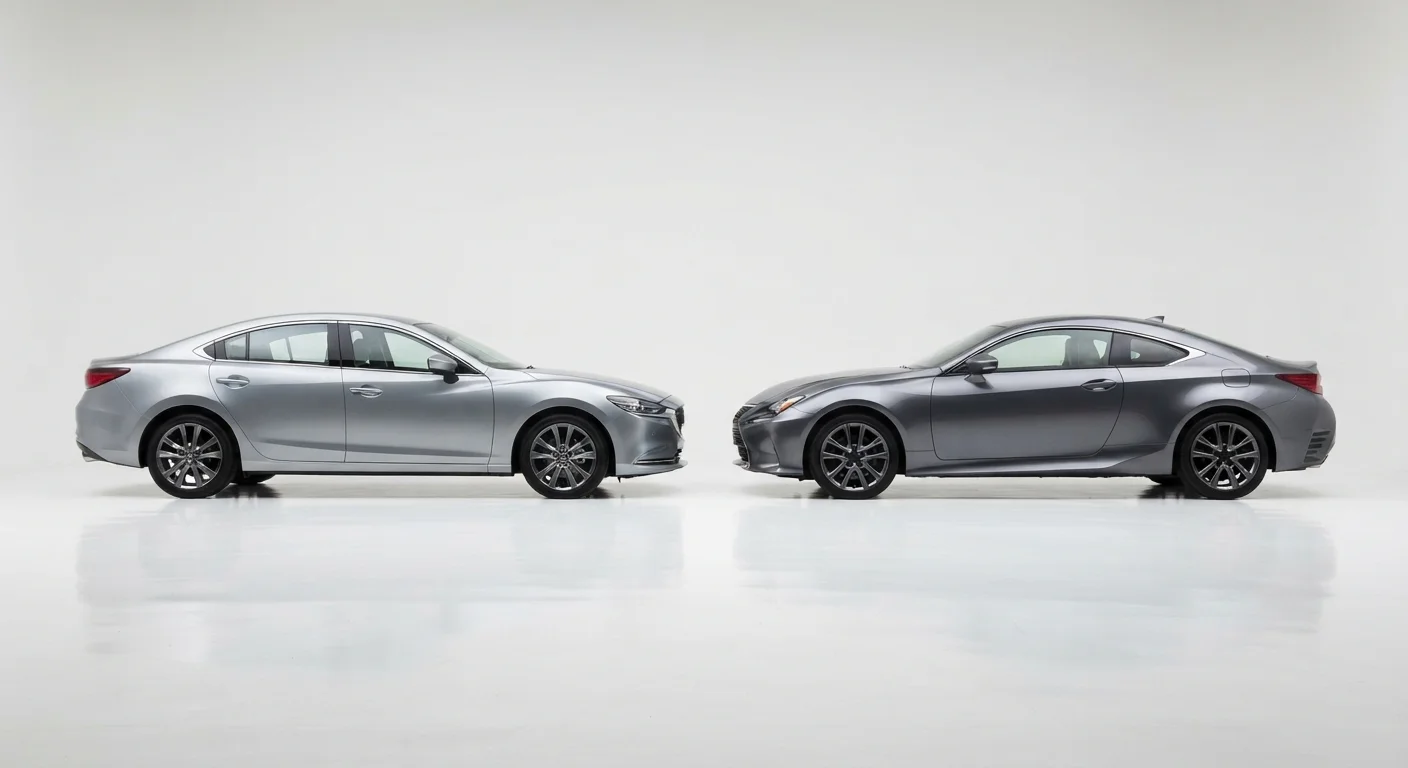
A sedan is a closed-body passenger car with four doors and a separate trunk compartment, designed to seat four or more occupants comfortably across two rows. A coupe is a closed-body car - traditionally two doors - with a lower, more steeply raked roofline that prioritizes style and driving dynamics over rear-seat space. The distinction goes well beyond door count: it shapes the car's structural rigidity, sightlines, and how it feels to drive.
Industry classification bodies such as SAE International historically defined a coupe as having less than 33 cubic feet of rear interior volume, regardless of door count - a threshold that explains why some four-door models are marketed as coupes.
More Than a Door Count
The casual shorthand - sedan means four doors, coupe means two - misses most of what actually separates these body styles. The real differences sit in roofline geometry, pillar structure, interior volume distribution, and the driving character each layout encourages.
A sedan's defining feature is its three-box silhouette: a distinct engine bay, passenger cabin, and trunk. That upright greenhouse (the glasshouse above the beltline) delivers generous headroom across both rows and wide door apertures that make loading passengers and cargo straightforward. For a deeper look at how pillars and rooflines drive those proportions, see The Anatomy of a Sedan: Pillars, Rooflines, and Why They Matter.
A coupe sacrifices that upright volume for a lower, swept roofline. The result is a sportier silhouette - but also a compressed rear cabin, reduced rearward visibility, and doors that are typically longer and heavier to compensate for the missing rear pair.
33 cu ft
SAE rear-interior volume threshold for coupe classification
SAE International's historical definition uses interior rear volume - not door count - to distinguish a coupe from a sedan.
~10-15%
Typical trunk volume reduction in coupe vs. sedan variant
Comparing same-platform sedan and coupe pairings across several mainstream segments, coupe trunk volumes are commonly 10-15% smaller due to roofline constraints.
2-4 inches
Typical rear headroom difference, sedan over coupe
Manufacturer specification sheets for same-platform sedan and coupe pairs routinely show rear headroom advantages of two to four inches in favor of the sedan body style.
Structural Consequences of Each Layout
One structural difference that buyers rarely consider is the B-pillar - the vertical support between the front and rear door openings. Sedans rely on the B-pillar for cabin rigidity and side-impact protection. Most traditional coupes eliminate it entirely, which opens up a cleaner roofline but requires engineers to redistribute that stiffness into the sill, roof rail, and door frames.
When executed well, a pillarless coupe structure can match or exceed sedan rigidity. When it isn't, the body shell flexes more over broken road surfaces, which affects both ride refinement and handling precision. Wheelbase, roofline rake, and glasshouse proportions all interact - The Dimensions That Define a Coupe's Character Across Segments explains how manufacturers use these numbers intentionally.
Check the B-Pillar Before You Buy
When evaluating a coupe, open the front door and look for a vertical pillar between the front and rear door openings. Its presence or absence tells you a great deal about how the manufacturer approached structural rigidity. A frameless window coupe without a B-pillar may offer a cleaner aesthetic but requires careful inspection of door seal quality and body flex over rough roads.
Practical Ownership Trade-Offs
The differences compound over time in ways that aren't obvious on a test drive. Rear visibility through a coupe's steeply raked rear window is measurably worse, which can raise stress in urban parking scenarios. Longer doors - necessary when there's no rear door to split the opening - require more swing clearance, creating challenges in tight parking spaces.
Insurance costs and resale dynamics also diverge. Sedans attract a wider buyer pool, which tends to support resale values. Coupes carry a sportier image that can accelerate depreciation once they age out of their target demographic. For a thorough look at how these realities accumulate, Coupe Ownership Over Time: Practical Realities Few Buyers Consider Upfront covers the long-term picture.
Buyers weighing these formats in the electric vehicle space face an additional layer of complexity, since battery placement interacts with floor height and roofline options. Hatchback, Sedan, or SUV: Picking an EV Body Style That Fits Your Life addresses those trade-offs specifically.