

Key Takeaways
Our Verdict
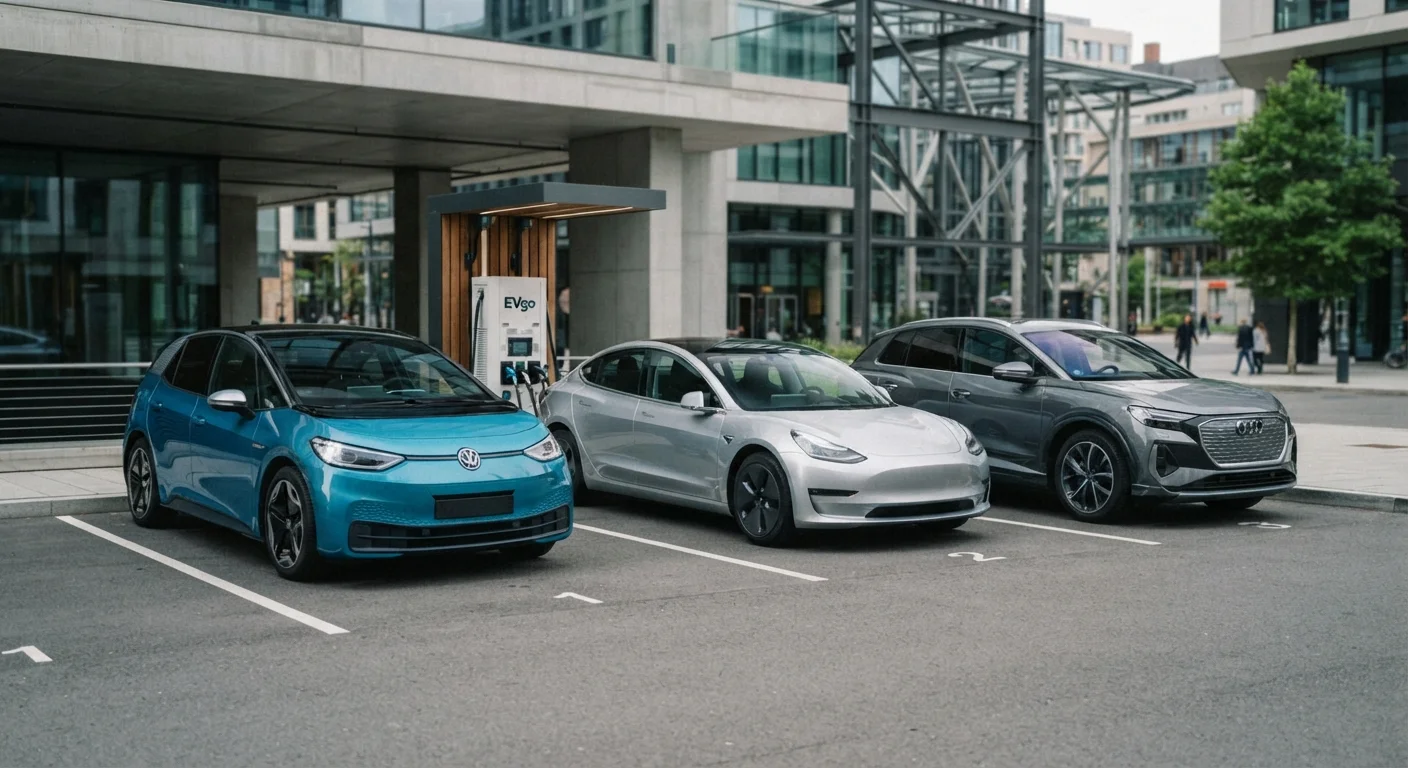
No single EV body style suits every driver. Hatchbacks reward city-focused drivers who prioritize efficiency and parkability; sedans serve highway commuters who value range and a refined interior; SUVs meet the needs of families, frequent haulers, and those who need all-wheel capability. Identifying your dominant use case - not the longest range spec sheet - is the most reliable guide.
| Best for | Recommended |
|---|---|
| Urban commuters and first-time EV buyers | Hatchback EV |
| Highway commuters prioritizing aerodynamic efficiency | Sedan EV |
| Families, road trippers, and all-weather drivers | SUV EV |
Why Body Style Matters More in an EV
With a combustion vehicle, body style is largely a lifestyle choice. In an electric vehicle, it's also an engineering variable. Weight, aerodynamic drag coefficient, and battery packaging all interact with body shape to determine real-world range - sometimes by margins of 30 to 50 miles between otherwise similar powertrain configurations.
That relationship between form and function makes the body-style decision more consequential for EV shoppers than it is for those buying a gasoline counterpart. Understanding how each format performs across daily use scenarios - not just EPA estimates - is the most practical starting point. For a deeper look at what variables shape those estimates, see our EV range reference guide.
Hatchback EVs: Efficiency in a Compact Package
Hatchback-format EVs are defined by their short rear overhang, integrated liftgate, and relatively low curb weight. In electric form, that compact footprint translates into several practical advantages: lower rolling resistance, easier maneuvering in dense urban environments, and lower energy consumption per mile under city-cycle driving conditions.
The trade-off is interior volume. Rear headroom and cargo depth are constrained by the sloping roofline. Passengers over six feet tall may find rear-seat comfort marginal on longer trips, and hauling bulky items requires folding rear seats - which eliminates passenger capacity. Hatchback EVs are structurally less suited to towing and rarely offer all-wheel-drive variants.
City Drivers: Let Regenerative Braking Work for You
Stop-and-go urban driving is where EV efficiency shines most relative to gasoline vehicles. In a compact hatchback EV, frequent deceleration events feed energy back into the battery through regenerative braking, effectively extending usable range beyond what a single highway cruise would deliver. If your daily pattern involves traffic lights and short hops, a smaller-battery hatchback may cover your needs more cost-effectively than a larger SUV with a bigger pack.
For buyers whose mileage is concentrated in stop-and-go city driving, the hatchback format plays to EVs' inherent strength: regenerative braking recovers more energy in frequent deceleration cycles, partially offsetting the smaller battery capacity that often comes with a lighter, smaller platform.
Sedan EVs: Aerodynamic Efficiency Meets Passenger Comfort
Sedan-format EVs benefit from long, low rooflines and carefully managed drag coefficients - several models in this segment have achieved drag figures well below the industry average of roughly 0.30 Cd. That aerodynamic advantage pays dividends primarily at highway speeds, where air resistance becomes the dominant energy drain. Drivers whose commutes are highway-heavy will often see sedan EVs outperform their rated range under real conditions.
The fixed trunk lid, while less versatile than a liftgate, still accommodates a useful frunk (front trunk) on most dedicated EV platforms, partially compensating for the sealed rear compartment. Passenger space is generally strong in the mid-size and full-size sedan segments - for context on how sedan sizing translates to livability, our guide on choosing a sedan segment covers those trade-offs in detail.
| Hatchback EV | Sedan EV | SUV EV | |
|---|---|---|---|
| Urban maneuverability | Excellent - compact footprint | Good - moderate length | Fair - larger turning radius |
| Highway range efficiency | Moderate - higher drag | Strong - low drag coefficient | Lower - weight and drag penalty |
| Cargo capacity | Limited with liftgate access | Moderate - trunk plus frunk | High - large cargo bay |
| Passenger comfort (rear) | Constrained headroom | Comfortable in mid/full size | Spacious, especially 3-row |
| AWD availability | Rare | Widely available | Standard or widely available |
| Typical curb weight | Lightest | Mid-range | Heaviest |
| Towing capability | Generally none | Minimal to none | Low to moderate |
SUV EVs: Capability and Cargo at a Range Cost
Electric SUVs - whether compact crossovers or full-size three-row models - deliver the highest cargo volume, available all-wheel drive, and the elevated seating position many US buyers prefer. Families moving car seats, sports equipment, or large hauls will find the SUV format meaningfully more functional than either alternative.
That capability carries a measurable energy cost. A larger, heavier body requires a bigger battery to achieve comparable range, and the taller profile increases aerodynamic drag. SUV EVs in the same price tier as sedan EVs frequently carry range ratings 20 to 60 miles lower, though manufacturers have progressively narrowed this gap with larger battery packs. For those weighing how luxury-tier SUVs compare to other body styles, this body-style comparison for luxury EVs provides additional context.
~30-60 mi
Typical range gap: SUV vs. sedan EV
Industry comparisons of similarly priced EV segments consistently show SUV formats carrying a range deficit relative to aerodynamically optimized sedan platforms.
0.23 Cd
Drag coefficient of leading sedan EVs
Several sedan-format EVs have achieved drag coefficients near 0.23, well below the passenger-vehicle average of approximately 0.30, directly improving highway efficiency.
How to Match Body Style to Your Actual Driving Life
The comparison table above illustrates where each format wins and concedes. But specs only clarify the decision - your driving pattern closes it. Consider three questions:
- What is your typical trip length? If most trips are under 40 miles and you rarely highway-cruise, the hatchback's efficiency advantage in city cycles may offset its smaller battery. If you regularly drive 200-mile round trips, aerodynamic efficiency and a large pack - common in sedans - become critical.
- How many passengers and how much cargo? Regular hauling of more than four adults, or frequent loading of large cargo, strongly favors the SUV format's flexibility.
- What is your charging situation? All three formats charge through the same infrastructure. Home charging via a Level 2 outlet is the practical baseline for any body style. For broader guidance on the EV ownership experience, EV range and charging resources cover home and public options.
This article is for informational and educational purposes only. Vehicle specifications, range ratings, and availability vary by manufacturer, model year, and trim. Consult official manufacturer documentation and conduct a test drive before making a purchasing decision.