

Key Takeaways
Our Verdict
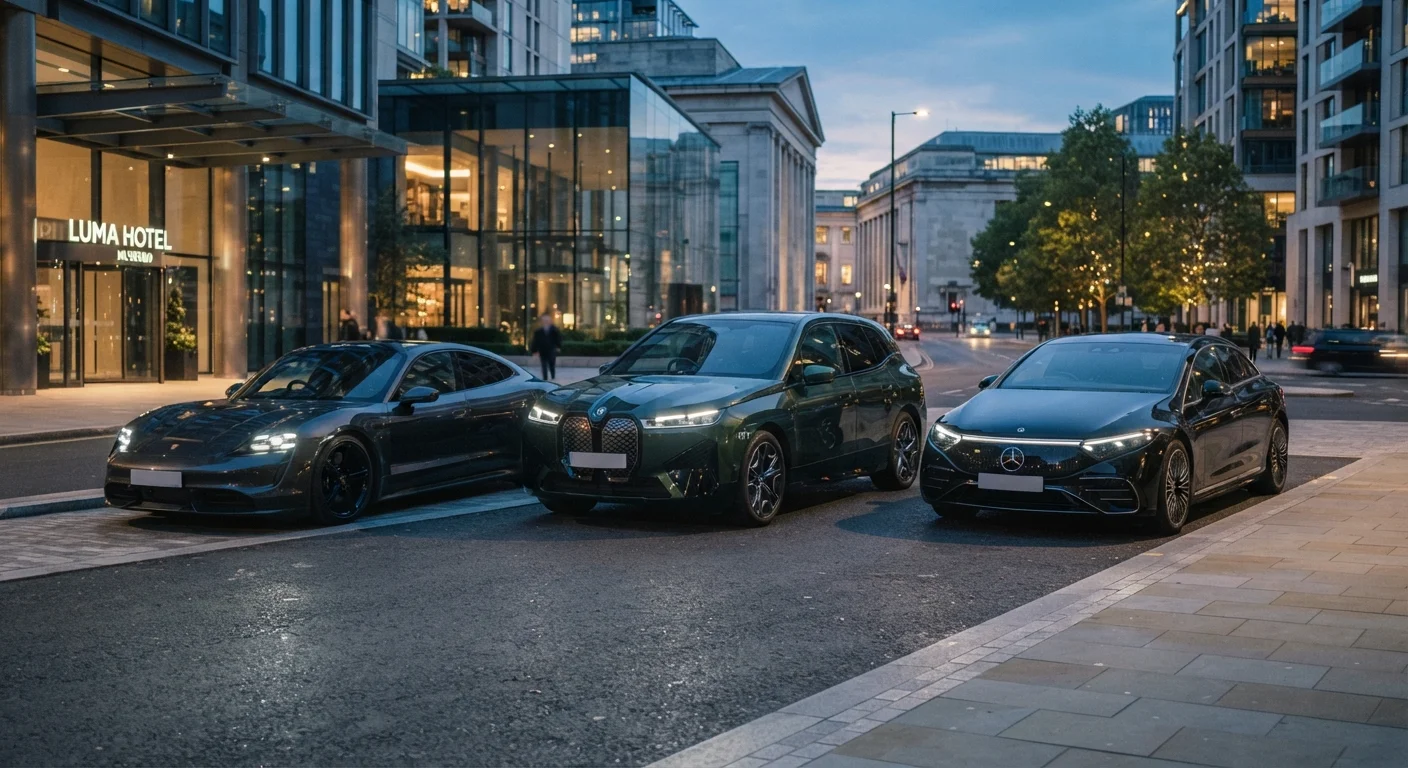
No single luxury EV body style is universally superior — each reflects a different set of priorities. Sedans reward those who value range and driving dynamics; SUVs serve families and cargo-heavy lifestyles; crossover-style models bridge the gap but require careful evaluation of both compromises and advantages.
| Best for | Recommended |
|---|---|
| Urban professionals prioritizing range and driving precision | Luxury Sedan / Saloon |
| Families needing flexible cargo space and optional third-row seating | Luxury Electric SUV |
| Long-distance drivers where efficiency matters most | Luxury Sedan / Saloon |
| Buyers wanting SUV versatility with near-sedan refinement | Luxury Electric Crossover SUV |
Sedan vs. Saloon: Clearing Up the Terminology
For US buyers entering the luxury EV market, terminology can cause unnecessary confusion. In American English, sedan and saloon describe the same fundamental body style: a three-box, four-door vehicle with a separate, enclosed trunk. British automotive terminology uses "saloon" where the US uses "sedan." Some European luxury brands use "saloon" in global marketing materials, which occasionally carries over into US-facing content.
What does differ meaningfully is fastback versus traditional trunk design. Certain luxury EVs adopt a sloping roofline that blurs the line between sedan and hatchback — sometimes marketed as a "four-door coupe" or "gran turismo" variant. These distinctions affect rear headroom and cargo access more than they affect the powertrain. If you're comparing luxury EV options across body styles more broadly, this body style breakdown is worth reviewing alongside this guide.
How Body Style Affects Range and Efficiency
Among the most consequential — and least discussed — impacts of body style is aerodynamic drag. Sedans and saloons typically achieve lower drag coefficients than SUVs due to their streamlined profiles and lower ride height. In the EV context, reduced drag translates directly to extended range on a given battery capacity.
~0.20–0.22 Cd
Typical luxury EV sedan drag coefficient
Several luxury electric sedans have achieved drag coefficients near or below 0.22, meaningfully reducing energy consumption at highway speeds.
10–15%
Estimated range reduction for SUV vs. sedan
Industry engineering analyses suggest that equivalent-battery SUVs may deliver roughly 10–15% less range than sedan-bodied peers due to aerodynamic and weight differences.
Luxury electric SUVs compensate through larger battery packs, but carrying more battery mass introduces its own efficiency trade-offs. Buyers prioritizing maximum rated range per charge may find that sedan-bodied luxury EVs serve that need better than comparably priced SUVs. For a deeper look at how engineering choices shape efficiency and ride quality across the segment, see how luxury EVs differ from mainstream EVs.
Comparing the Three Body Style Categories
The luxury EV market currently organizes around three dominant body style categories, each with distinct attributes for different use cases. Understanding these trade-offs is more useful than focusing on brand names or trim levels.
| Luxury Sedan / Saloon | Luxury Electric SUV | Luxury Crossover SUV | |
|---|---|---|---|
| Aerodynamic Efficiency | High — low drag coefficient | Lower — taller, boxier profile | Moderate — between sedan and SUV |
| Typical Range Advantage | Often highest in segment | Offset by larger battery | Varies by model |
| Cargo Capacity | Limited to trunk volume | Largest — flexible rear space | Moderate — foldable rear seats |
| Passenger Headroom | Lower rear headroom possible | Generous front and rear | Adequate in most configurations |
| Ride Height | Low — sporty, ground-hugging | High — easier ingress/egress | Mid-level — compromise position |
| Urban Maneuverability | Easiest — compact footprint | More challenging — larger size | Generally manageable |
| Family Practicality | Limited | High — optional 3rd row | Moderate |
For buyers weighing performance tuning versus ride comfort within any of these body styles, the trade-offs between performance and comfort-focused luxury EVs is a practical companion resource.
Matching Body Style to Your Lifestyle
Urban and suburban commuters often find that a luxury sedan or saloon covers most needs efficiently. The lower profile is easier to navigate in parking structures, aerodynamic efficiency reduces range anxiety on predictable routes, and the cabin refinement typical of this body style suits daily driver expectations.
Families with children or frequent cargo demands tend to benefit from an electric SUV's higher load floor, greater interior volume, and the option of three-row seating in larger configurations. If you're evaluating three-row electric SUVs specifically, this guide on three-row SUV trade-offs addresses seating access and real-world cargo practicality in detail.
Long-distance and interstate drivers should weigh charging network access and per-charge range heavily. Given that sedan-bodied luxury EVs tend to be more aerodynamically efficient, they may offer a practical advantage on longer trips — assuming charging infrastructure along planned routes is adequate.
Test Your Actual Driving Profile First
Before committing to a body style, map your three most common weekly routes and identify where you would charge. A sedan may offer more range on paper, but if your lifestyle genuinely requires cargo flexibility or elevated ride height, those factors should carry equal or greater weight. Renting or borrowing a comparable vehicle for a weekend can reveal practical priorities that spec sheets do not.
Buyers new to the luxury EV segment overall will find a thorough orientation in this complete landscape guide for first-time luxury EV buyers, which covers feature tiers and key decision points beyond body style alone. For a comprehensive reference spanning range, warranty, and long-term costs, the end-to-end luxury EV buyer's reference is a useful next step.