

Key Takeaways
Home charging eliminates most gas station trips
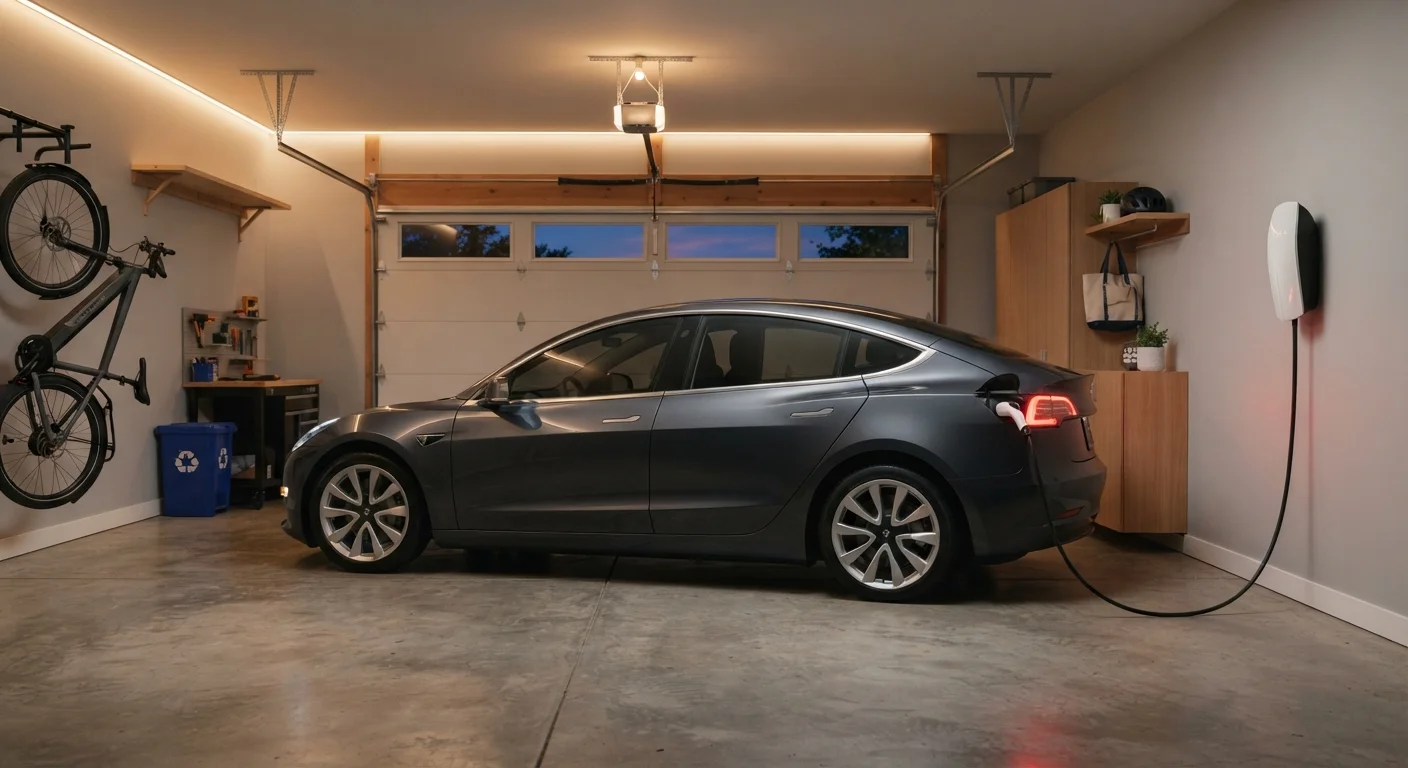
Plugging in overnight means starting each day with a predictable, full charge - a convenience most owners describe as one of the most underrated aspects of EV life.
Significantly lower routine maintenance costs
No oil changes, no spark plugs, no exhaust repairs. EV service schedules are genuinely simpler, and brake wear is reduced through regenerative braking.
Smooth, quiet acceleration from a standstill
Electric motors deliver torque instantly, producing a linear, refined driving feel that many owners prefer to the rev-and-shift pattern of combustion engines.
Regenerative braking improves efficiency over time
Once mastered, one-pedal driving recovers energy that would otherwise be lost as heat, extending usable range in stop-and-go driving conditions.
Lower per-mile energy costs in most regions
Charging an EV is generally cheaper per mile than fueling with petrol, particularly for drivers who charge overnight on off-peak electricity rates.
Public charging infrastructure is uneven by region
Dense urban areas typically offer ample fast-charging options, but rural and suburban drivers may encounter gaps that require more deliberate route planning.
Higher upfront purchase price than comparable ICE models
Even with incentives, most EVs carry a price premium at purchase. Recouping this through savings requires sufficient annual mileage and favorable local electricity rates.
Battery capacity degrades gradually over years
Real-world range shrinks incrementally as battery cells age - a factor that affects long-term ownership value, though degradation rates vary considerably by model and usage pattern.
Range planning adds mental overhead for long trips
Highway journeys that exceed single-charge range require charger identification and scheduling stops, a layer of planning that petrol drivers rarely need to perform.
Cold weather meaningfully reduces usable range
Lithium-ion batteries perform less efficiently in low temperatures, and cabin heating draws significantly from the pack - leading to real-world range reductions of 15-30% in cold climates.
Our Verdict
Switching to an EV involves genuine lifestyle adjustments - most notably around charging logistics and driving technique - but the majority of owners report that these changes become second nature within a few months. The experience is not universally seamless, particularly for those without reliable home charging access, but for drivers whose daily patterns align with EV strengths, the transition is often smoother than anticipated.
Drivers with predictable daily commutes, access to home or workplace charging, and a willingness to adapt their fueling mindset will find EV ownership most rewarding.
How Daily Fueling Completely Reframes Itself
The single biggest behavioral shift for new EV owners isn't the car itself - it's where and when energy enters it. Instead of detouring to a gas station once or twice a week, most EV drivers plug in at home each evening and wake up to a vehicle that's ready to go. This "top-up" mentality replaces the fill-up ritual entirely for the majority of daily driving.
Home charging at Level 2 (240V) typically adds 20-30 miles of range per hour, meaning an overnight session can restore a full charge from near-empty on most models. For those without a home charger, the calculus is different - see what relying on public charging actually looks like for a realistic breakdown of that scenario.
For longer trips, DC fast chargers can add significant range in 20-40 minutes, though speed varies by vehicle and network. Understanding the fundamentals of EV range and charging before switching reduces surprises considerably.
Driving Feel: Regenerative Braking and One-Pedal Operation
Most EVs offer regenerative braking - a system that converts kinetic energy back into battery charge when you lift off the accelerator. In stronger settings, the car decelerates noticeably without touching the brake pedal, enabling "one-pedal driving" in urban environments. This takes deliberate adjustment for drivers trained on conventional coasting.
Within weeks, most owners find regenerative braking intuitive and even preferable. A secondary benefit: traditional brake pads last significantly longer because mechanical braking is used far less frequently. The transition from instinctively coasting to deliberately lifting and letting the motor slow the car is one of those habits that feels awkward for a month, then automatic.
Home charging eliminates most gas station trips
Plugging in overnight means starting each day with a predictable, full charge - a convenience most owners describe as one of the most underrated aspects of EV life.
Significantly lower routine maintenance costs
No oil changes, no spark plugs, no exhaust repairs. EV service schedules are genuinely simpler, and brake wear is reduced through regenerative braking.
Smooth, quiet acceleration from a standstill
Electric motors deliver torque instantly, producing a linear, refined driving feel that many owners prefer to the rev-and-shift pattern of combustion engines.
Regenerative braking improves efficiency over time
Once mastered, one-pedal driving recovers energy that would otherwise be lost as heat, extending usable range in stop-and-go driving conditions.
Lower per-mile energy costs in most regions
Charging an EV is generally cheaper per mile than fueling with petrol, particularly for drivers who charge overnight on off-peak electricity rates.
Maintenance: What Disappears and What's New
EVs eliminate oil changes, transmission fluid, spark plugs, and exhaust system servicing. Routine maintenance shrinks to cabin air filters, tire rotations, brake fluid checks, and wiper blades. For many owners, this translates to fewer dealership visits and lower annual service costs. The long-term EV maintenance cost picture is generally favorable, though not zero.
What's new: battery health monitoring, software updates (often delivered over-the-air), and periodic thermal management system checks. High-voltage battery packs are designed for longevity - most automakers warranty them for eight years or 100,000 miles - but battery capacity does degrade gradually over time, which affects usable range.
Software Updates: A New Kind of Ownership
Many modern EVs receive over-the-air software updates that can adjust charging behavior, range estimates, or driver-assistance features without a dealership visit. This is genuinely convenient but also means vehicle behavior can change after purchase. Reading release notes and understanding what an update modifies is a small but new ownership responsibility that has no real equivalent in traditional vehicle maintenance.
The Psychological Shift: Range Anxiety and How It Evolves
Range anxiety - the worry of running out of charge before reaching a charging point - is widely cited by prospective EV buyers as a top concern. In practice, most owners report that it fades significantly once they develop familiarity with their vehicle's real-world range and local charging infrastructure. Studies by J.D. Power and others consistently find that EV satisfaction rates are high among owners who have completed the learning curve.
That said, anxiety doesn't vanish for everyone. Drivers in rural areas with sparse public networks, or those who regularly take long highway trips, may find range planning a persistent mental overhead. Reviewing the financial and logistical questions to resolve before switching - including infrastructure in your area - is a sound pre-purchase step.
Public charging infrastructure is uneven by region
Dense urban areas typically offer ample fast-charging options, but rural and suburban drivers may encounter gaps that require more deliberate route planning.
Higher upfront purchase price than comparable ICE models
Even with incentives, most EVs carry a price premium at purchase. Recouping this through savings requires sufficient annual mileage and favorable local electricity rates.
Battery capacity degrades gradually over years
Real-world range shrinks incrementally as battery cells age - a factor that affects long-term ownership value, though degradation rates vary considerably by model and usage pattern.
Range planning adds mental overhead for long trips
Highway journeys that exceed single-charge range require charger identification and scheduling stops, a layer of planning that petrol drivers rarely need to perform.
Cold weather meaningfully reduces usable range
Lithium-ion batteries perform less efficiently in low temperatures, and cabin heating draws significantly from the pack - leading to real-world range reductions of 15-30% in cold climates.
Ownership Costs: The Full Picture
EV sticker prices remain higher on average than comparable petrol vehicles, though the gap has narrowed. Lower per-mile energy costs and reduced maintenance spending can offset this over time, though the timeline varies by driver, electricity rates, and vehicle model. The complete EV ownership cost breakdown - covering charging costs, insurance, depreciation, and available incentives - provides a more accurate comparison than purchase price alone.
Federal tax credits and state-level incentives can meaningfully affect net cost, but eligibility rules are specific and subject to change. Verifying current terms before purchase is essential; the EV costs and incentives hub is a useful starting point for understanding what may apply to your situation.
~15-30%
Range reduction in cold weather
Testing by organizations including AAA has documented significant EV range loss in sub-freezing temperatures due to battery chemistry and heating demands.
8 yrs / 100K mi
Typical battery warranty offered by most automakers
Federal regulations require automakers selling EVs in the US to warrant the high-voltage battery pack for at least eight years or 100,000 miles.