

Key Takeaways
Why Range Anxiety Exists — and How Real It Is
Range anxiety — the fear of running out of battery before reaching a charger — is the single most cited barrier among people considering an electric vehicle. Yet for the majority of US drivers, the concern is larger in perception than in practice. The average American drives roughly 37 miles per day, well within the range of virtually every new EV on the market today.
The anxiety stems from a genuine unfamiliarity with a refueling model that works differently from gasoline. Gas stations are ubiquitous and a fill-up takes three minutes; EV charging is distributed, session times are longer, and the infrastructure is still maturing in many regions. Those are real differences worth understanding — but they don't translate automatically into daily inconvenience once you adapt your routine.
Think of Charging Like Your Phone
The mindset shift that helps most new EV owners: stop thinking about 'filling up' and start thinking about plugging in whenever you're parked for an extended period. Home, work, and destination chargers all contribute incrementally. You rarely need to make a special trip to 'refuel.'
For a structured look at the specific variables — speed, temperature, payload, terrain — that shape how far your EV will actually travel, see our reference guide on EV range factors.
Understanding Rated vs. Real-World Range
Every new EV sold in the United States carries an EPA-rated range figure, established through a standardized test cycle. That number is a consistent, comparable benchmark — not a guarantee of what you'll experience on the road. Real-world range commonly falls 10–20% below the EPA estimate under normal mixed driving conditions, and the gap can widen further in cold weather or at sustained highway speeds.
37 miles
Average US daily driving distance
According to Federal Highway Administration data, the typical American driver covers about 37 miles per day — within the range of most current EVs.
10–20%
Typical real-world range shortfall vs. EPA rating
Real-world EV range commonly falls 10–20% below EPA estimates under normal mixed driving, per independent testing organizations.
20–40 min
Time to add 100–200 miles via DC fast charger
DC fast charging session times vary by vehicle charge acceptance rate and charger output, based on published manufacturer and network data.
Key factors that erode rated range include:
- Cold temperatures: Lithium-ion battery chemistry slows in cold, and cabin heating draws heavily from the pack. Range reductions of 20–40% are documented in sub-freezing conditions.
- Highway speed: Aerodynamic drag increases with the square of velocity. Sustained driving at 75–80 mph can reduce range noticeably compared to city driving.
- Payload and HVAC: Carrying extra passengers or cargo and running climate control all draw from the same battery.
The practical takeaway: use the EPA figure as a comparison tool across models, then mentally budget 80% of it as a comfortable real-world daily figure. That buffer also protects battery longevity, since most manufacturers recommend avoiding routine full charges and deep discharges.
Calibrate your range expectations by tracking your actual daily mileage for two weeks before buying. This lets you match battery size to real need rather than worst-case assumptions.
Buyers who overestimate their daily mileage often pay for more battery capacity than they use, while underestimating it leads to range anxiety. Actual data removes the guesswork.
Set your regular charge limit to 80% rather than 100%. Most manufacturers recommend this as a default to preserve long-term battery health, reserving 100% charges for days you genuinely need maximum range.
Lithium-ion cells experience faster degradation at sustained high states of charge. Charging to 80% daily is a well-documented best practice supported by EV manufacturers.
Home Charging: Your Primary Energy Source
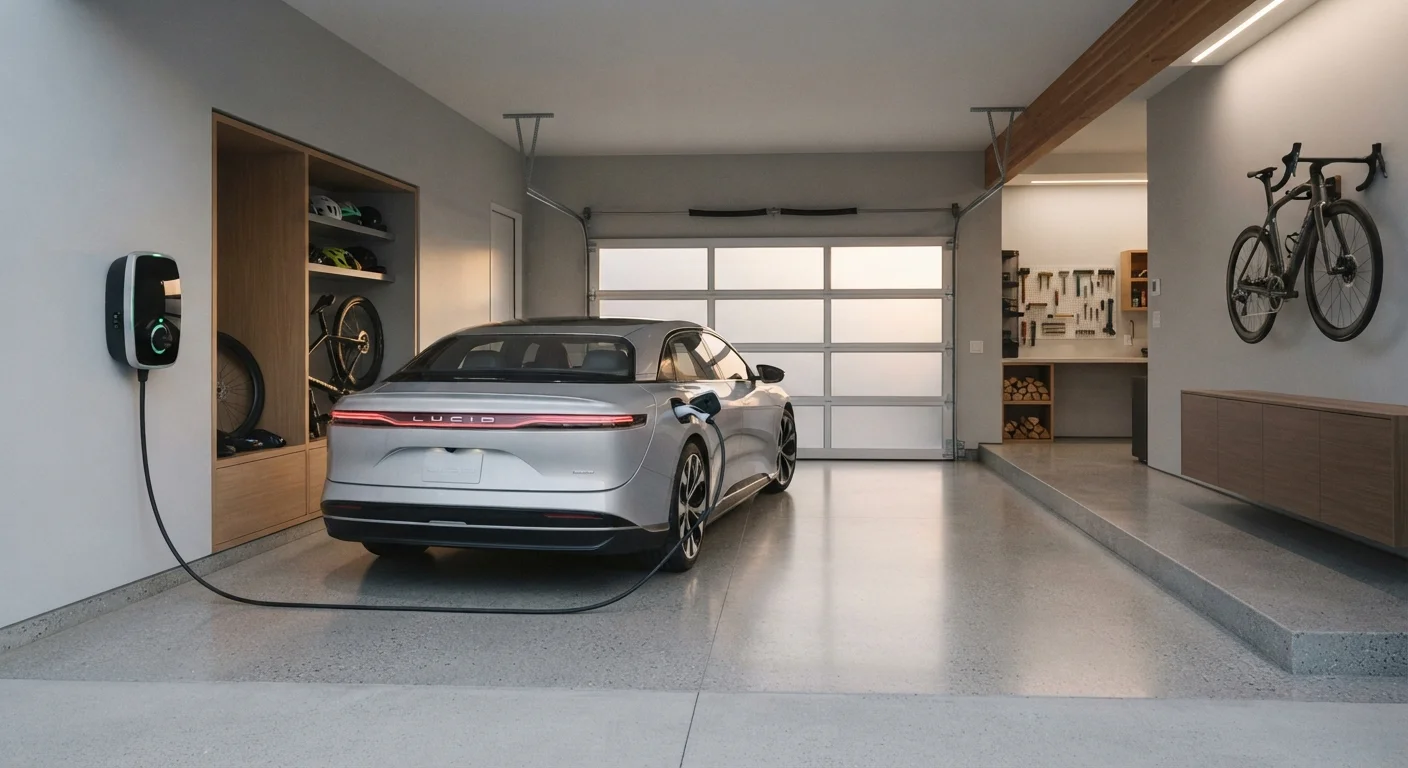
If you have access to a garage or dedicated parking with an outlet, home charging will cover the overwhelming majority of your energy needs. This is the foundational insight that reframes EV ownership: instead of visiting a fuel station, you plug in each evening and wake up with a full — or near-full — battery.
Level 1 (120V): A standard household outlet delivers roughly 3–5 miles of range per hour of charging. Adequate for drivers covering under 40 miles daily and a useful backup, but slow for most households as a primary solution.
Level 2 (240V): A dedicated 240V circuit — the same voltage as a clothes dryer — with a compatible EVSE (Electric Vehicle Supply Equipment, commonly called a home charger) delivers roughly 15–30 miles of range per hour depending on the unit and vehicle. Most EVs are fully replenished in 6–10 hours overnight.
Installing a Level 2 charger involves electrical work, permitting in many jurisdictions, and sometimes panel upgrades. Our home EV charging setup guide walks through the practical and regulatory considerations before installation day.
Public and DC Fast Charging Explained
Public charging infrastructure fills the gap for longer trips, apartment dwellers, and situations where home charging isn't available. Understanding the three levels helps set realistic expectations.
Level 2 public chargers are common at shopping centers, parking garages, workplaces, and hotels. Speeds mirror home Level 2 units — useful for adding range during a multi-hour stop, not for rapid top-ups.
DC fast chargers (Level 3) bypass the vehicle's onboard charger and deliver power directly to the battery at much higher rates. Depending on the vehicle's maximum charge rate acceptance, these can add 100–200 miles of range in 20–40 minutes. They're the backbone of long-distance EV travel.
Plan DC Fast Charging Stops Before Long Trips
DC fast charging availability along your specific route is not guaranteed. Before any long-distance drive, use a route-planning tool (many are built into EV navigation systems) to identify charger locations, network compatibility, and fallback options. Arriving at a charger that is out of service or incompatible with your vehicle can strand you in an unfamiliar area.
Networks such as Electrify America, EVgo, and Tesla's Supercharger network (now open to non-Tesla vehicles at many locations) operate the largest DC fast charging footprints in the US. Coverage is strong along major interstate corridors but thinner in rural areas — a factor worth mapping before a road trip.
For those who cannot install a home charger, public charging becomes a primary strategy. That requires a different ownership mindset; see our article on owning an EV without a home charger for a realistic look at what that involves.
Planning for Ownership Without a Home Charger
Apartment renters, condo owners, and those without dedicated parking face a genuine constraint. It's not insurmountable, but it requires planning. Strategies that work for drivers in this situation include:
- Identifying reliable Level 2 or DC fast chargers near work, regular errands, or along commute routes.
- Choosing an EV with a longer rated range to build in more buffer between public charging sessions.
- Factoring charging time into regular stops — grocery runs, gym visits, or errands become charging opportunities.
Some employers, municipalities, and multi-unit housing operators are expanding workplace and destination charging, gradually improving the landscape. Still, the honest assessment is that home charging access is a significant quality-of-life advantage for EV owners, and it's worth investigating your specific situation carefully before purchase.
Charging Access Is Evolving Rapidly
Multi-unit housing charging access — long a gap in the EV ecosystem — is improving as building codes in several states begin requiring EV-ready parking in new construction. If your current building lacks charging, it's worth checking whether planned improvements or local ordinances may change that in the near term.
Costs, Incentives, and the Financial Picture
The total cost of EV ownership involves more than the sticker price. Electricity is generally cheaper per mile than gasoline, and EVs have fewer moving parts — no oil changes, fewer brake replacements due to regenerative braking — which tends to lower maintenance costs over time. Against that, EVs carry higher upfront purchase prices compared to equivalent internal combustion vehicles, and home charging equipment and installation add cost.
Federal tax credits under the Inflation Reduction Act can reduce the purchase price of qualifying new EVs by up to $7,500, with a separate credit available for used EVs. Eligibility depends on vehicle MSRP caps, buyer income limits, and where the vehicle's battery components are sourced. These rules are subject to change and should be verified against current IRS guidance.
Many states layer additional incentives — rebates, reduced registration fees, HOV lane access — on top of federal credits. Our EV costs and incentives hub covers the full ownership cost picture, and our article on financial questions to resolve before switching to an EV helps you work through eligibility and budgeting before committing. For model-specific range and feature comparisons, the electric models hub is a useful starting point.
This article provides general educational information about electric vehicles and is not financial, tax, or legal advice. Incentive eligibility, charging infrastructure, and product specifications change over time; consult current official sources and qualified professionals for guidance specific to your situation.