

Key Takeaways
Purchase Price and Incentives
Electric vehicles generally carry higher sticker prices than their gasoline counterparts at the same trim level. Entry-level EVs from mainstream brands typically start in the low-to-mid $30,000s, while mid-range models cluster between $45,000 and $65,000. Luxury and performance segments extend well above $80,000.
However, the federal clean vehicle tax credit — currently up to $7,500 for qualifying new EVs under the Inflation Reduction Act — meaningfully reduces net purchase cost for eligible buyers. Income caps and vehicle price limits apply, so not every buyer or every model qualifies. Some states layer additional credits or rebates on top of the federal amount, which can bring effective costs closer to comparable gas vehicles.
For buyers considering a lease rather than an outright purchase, the credit structure works differently. Leasing vs. buying an electric vehicle explores how the federal tax credit interacts with lease agreements and what that means for your out-of-pocket expenses.
Incentive Eligibility Requires Verification
The federal clean vehicle tax credit has specific income limits, vehicle price caps, and North American assembly requirements. Not all EV models or buyers qualify. Verify eligibility through the IRS or a licensed tax professional before factoring the credit into your purchase budget — eligibility rules have changed and may continue to evolve.
Charging Costs: Home and Public
Fuel cost is where EV ownership often delivers its clearest financial advantage. The U.S. Department of Energy estimates that, on average, charging an EV costs the equivalent of roughly $1.00–$1.50 per gallon of gasoline, though this varies considerably by local electricity rates and driving habits.
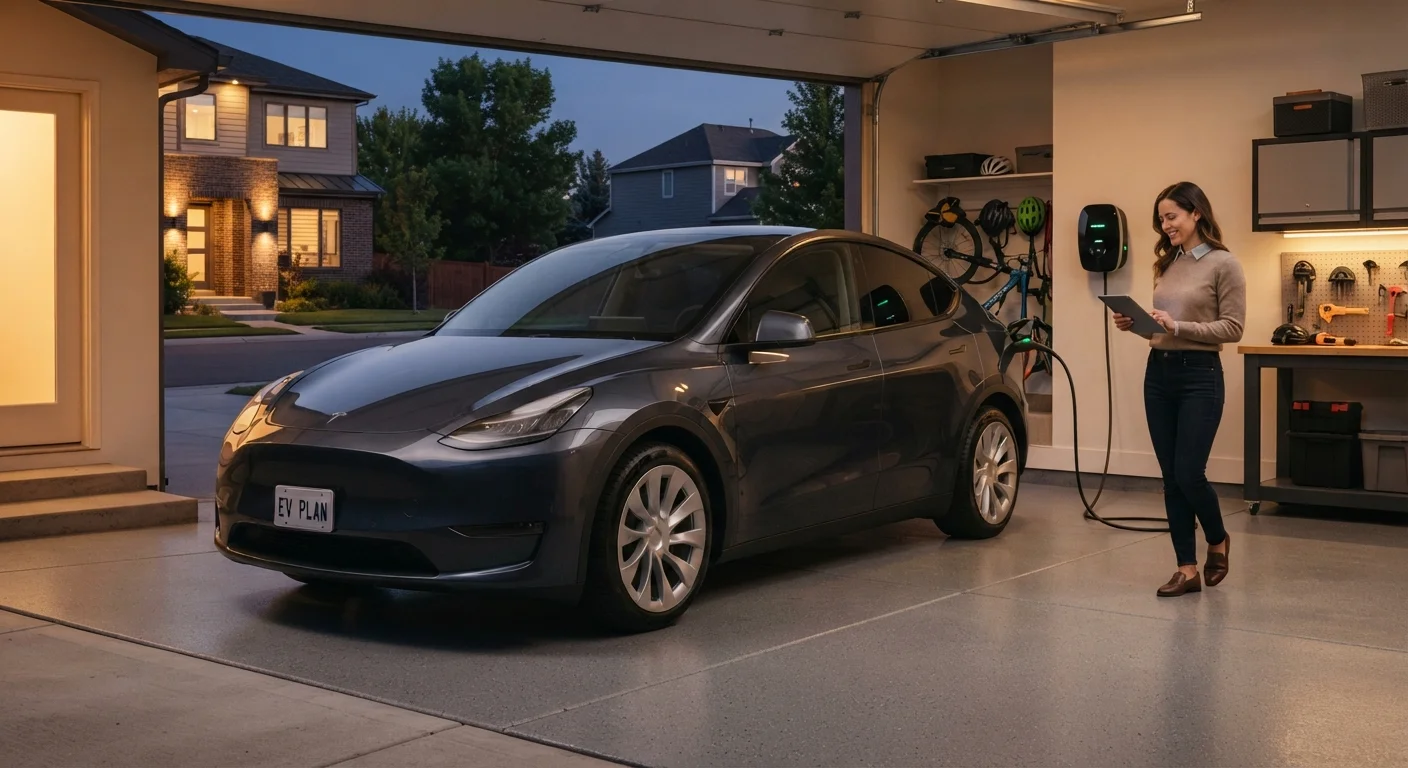
Home charging on a Level 2 charger — typically a 240-volt outlet — is the most cost-effective option for most owners. Installing a dedicated home charging unit adds a one-time hardware and installation cost, generally ranging from $500 to $1,500 depending on your electrical panel's condition and local labor rates.
Public DC fast charging is faster but more expensive per kilowatt-hour, and frequent reliance on public networks can erode the fuel-cost advantage. For the full picture on real-world range and charging options, see the EV Range & Charging hub.
$1.00–$1.50
Equivalent cost per gallon for home EV charging
According to U.S. Department of Energy estimates comparing average residential electricity rates to gasoline costs.
$7,500
Maximum federal EV tax credit for eligible buyers
Available under the Inflation Reduction Act for qualifying new electric vehicles, subject to income and price limits.
10–25%
Average EV insurance premium above gas equivalents
Based on 2023 analysis by automotive research organizations; varies significantly by model, insurer, and driver profile.
8 yrs / 100K mi
Standard EV battery warranty from most manufacturers
Federal regulations require a minimum 8-year, 100,000-mile battery warranty on EVs sold in the United States.
Maintenance: What EVs Skip and What They Add
EVs eliminate several routine service items that gas vehicles require: oil changes, transmission fluid, spark plugs, and exhaust system components are all absent. This genuinely reduces scheduled maintenance frequency and cost.
What remains — and what's unique to EVs — includes tire rotation (often more frequent due to heavier vehicle weight), cabin air filter replacement, brake fluid checks, and eventual battery health monitoring. Regenerative braking also extends brake pad life substantially, reducing that recurring expense.
Request a battery health report from the manufacturer's app or dealer before purchasing a used EV — degradation above 20% from original capacity should factor meaningfully into your offer price.
Battery capacity directly determines real-world range and future utility; understanding its condition prevents costly surprises and provides negotiating leverage.
If you're installing a home charger, have a licensed electrician assess your panel before committing to a unit — some older panels require an upgrade that can add $1,000 or more to the total installation cost.
Electrical panel capacity is a frequently overlooked installation cost that can significantly change the economics of home charging setup.
Battery replacement is the cost most buyers worry about. While modern EV batteries are engineered to last the vehicle's usable life under normal conditions, a degraded or failed battery pack represents a significant repair cost. Most manufacturers offer battery warranties of eight years or 100,000 miles. For a detailed look at how maintenance spending shifts across EV ownership years, see EV maintenance costs over time.
Insurance Considerations
Insurance premiums for electric vehicles tend to run higher than for equivalent gas-powered models. Insurers cite higher repair costs — driven by specialized components, battery proximity to impact zones, and limited repair networks — as primary factors. A 2023 analysis by several automotive research organizations found EV insurance premiums averaging 10–25% above comparable internal combustion engine vehicles, though this varies significantly by model, insurer, and driver profile.
Don't Assume Insurance Costs Will Match Gas Vehicles
Many buyers are surprised to find their EV insurance premium substantially higher than their previous gas vehicle. Get insurance quotes for a specific EV model before finalizing a purchase decision, as the premium difference can materially affect your total cost of ownership calculation. Rates differ by insurer, driver history, and location.
Coverage needs for EVs may also differ. Some policies now include provisions specific to charging equipment or battery damage. Readers should consult a licensed insurance agent to understand coverage options specific to their vehicle and region. This content is general educational information and is not personalized insurance advice. Terms, coverage, exclusions, and premiums vary by provider and individual circumstance.
Depreciation and Resale Value
Depreciation remains one of the most variable and consequential costs in EV ownership. Some models have shown steeper-than-average first-year depreciation as newer versions with longer range quickly enter the market, while others have retained value competitively.
Factors influencing EV resale value include battery range relative to new competitors, software update capability, brand reputation for reliability, and the remaining transferable warranty. Buyers planning to sell within three to five years should research the specific model's historical resale trajectory, as depreciation can outweigh fuel and maintenance savings over a short ownership window.
For a broader look at the economics of electric vehicle ownership, the total cost of running an electric vehicle offers an expanded analysis of how these variables interact over time.
Total Cost of Ownership: Putting It All Together
When all cost categories are combined — purchase price net of incentives, fuel, insurance, maintenance, and depreciation — many EV models compare favorably with gas vehicles over a five-year ownership horizon, particularly for drivers who charge primarily at home and accumulate substantial annual mileage.
However, the math is not universal. Buyers in states with high electricity rates, those without home charging access, or those who keep vehicles only a few years may find the advantage narrower or absent. Running a model-specific total cost of ownership calculation is essential before drawing conclusions. What the EV total cost of ownership calculation actually includes walks through every cost category buyers should account for.
“The sticker price is only the beginning of the EV cost conversation. Fuel savings, maintenance differences, and depreciation all interact in ways that make model-by-model comparison essential rather than optional.”
— Consumer Financial Protection Bureau, Federal agency providing general consumer financial guidance
For buyers also weighing lifestyle changes beyond finances, the EV ownership experience covers how daily routines shift after switching.
This article is for general informational and educational purposes only. It does not constitute financial, insurance, or legal advice. Vehicle prices, incentive eligibility, insurance premiums, and ownership costs vary by model, region, provider, and individual circumstances. Consult qualified professionals before making purchasing, insurance, or financial decisions.