

Key Takeaways
Hybrid Vehicle Technology
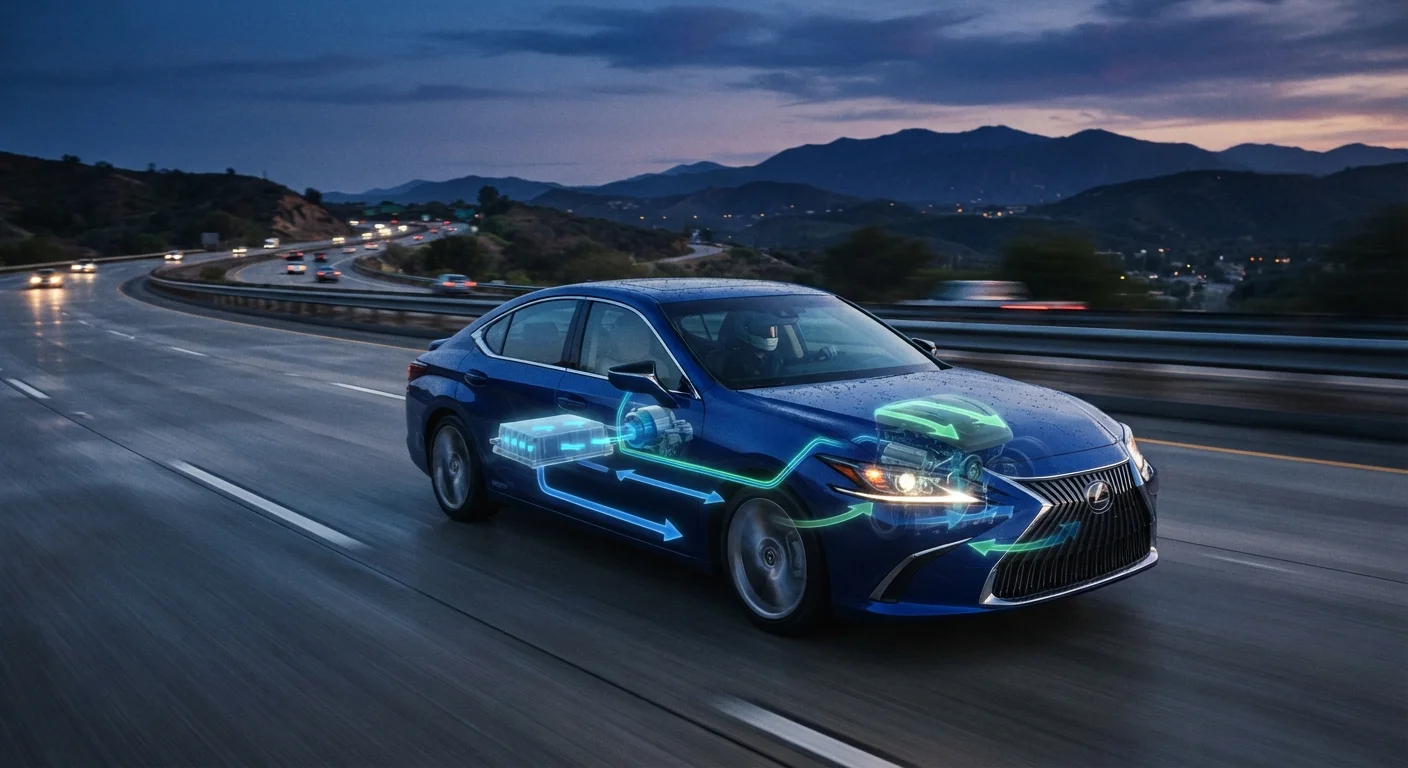
A hybrid vehicle uses two power sources - typically a gasoline combustion engine and an electric motor - to propel the car. The electric motor assists during acceleration and can recover energy through regenerative braking, reducing overall fuel consumption. Asian automakers, particularly Toyota and Honda, were the first to mass-produce this technology for everyday consumers.
Most consumer hybrids use a parallel hybrid architecture, where the combustion engine and electric motor can drive the wheels independently or together, managed by a sophisticated power-split device or transmission control unit.
The Origins: Japan's Commitment to Efficient Mobility
Long before hybrid vehicles became a mainstream talking point, Japanese engineers were quietly solving a difficult problem: how to extract more mobility from less fuel. The research groundwork laid by Toyota's engineers in the early 1990s culminated in the Toyota Prius, unveiled at the 1995 Tokyo Motor Show as a concept and launched as a production vehicle in Japan in December 1997. Its Hybrid Synergy Drive system - a power-split device that seamlessly blended output from a 1.5-liter gasoline engine and an electric motor - was a genuine engineering breakthrough at the time.
Honda followed in 1999 with the Insight, a two-seat aerodynamic coupe powered by its Integrated Motor Assist (IMA) system. Where Toyota's approach used a planetary gear set to allow the electric motor to act as a primary driver, Honda's IMA positioned the motor directly between the engine and transmission as an assist unit. Both philosophies achieved meaningful fuel savings; both demonstrated that hybrid drivetrains were commercially viable.
These weren't vanity projects. Japan's domestic fuel economy standards, combined with California's influential emissions regulations, created genuine market pressure to innovate. Explore the engineering decisions behind this fuel-efficiency leadership in greater depth.
Scaling Up: How Hybrids Went Global
The second-generation Prius, introduced in 2003, was a turning point. Its more aerodynamic body, larger battery, and improved efficiency saw it adopted well beyond environmentally motivated early adopters. By the mid-2000s, Toyota had extended hybrid technology across its lineup - into the Camry, Highlander, and eventually the Lexus luxury brand - demonstrating that the powertrain could scale across vehicle classes.
1997
Year Toyota Prius first went on sale
The Toyota Prius launched in Japan in December 1997, becoming the world's first mass-produced hybrid passenger vehicle.
20M+
Prius units sold globally by early 2020s
Toyota has reported cumulative Prius sales exceeding 20 million units worldwide, reflecting the model's sustained commercial impact.
Over 50%
Share of global hybrid sales held by Toyota
Toyota consistently accounts for the majority of global hybrid vehicle sales volume, reflecting its two-decade head start and broad model coverage.
Honda continued refining the IMA system across Civic Hybrid, Accord Hybrid, and CR-Z models, while also developing the more sophisticated two-motor Sport Hybrid system that appeared in later Accord and CR-V Hybrid models. The evolution showed Honda's willingness to rearchitect its hybrid approach in response to competitive pressure.
Critically, Asian brands invested in manufacturing volume, driving down battery and component costs in ways that European and American rivals - who largely licensed or observed from the sidelines during this period - found difficult to match quickly. See how American brands have responded in the current EV era.
South Korea Enters the Arena
While Toyota and Honda defined the first decade of mainstream hybrids, Hyundai and Kia began their own serious hybrid programs in the 2010s. The Hyundai Sonata Hybrid arrived in 2010, followed by the Kia Optima Hybrid in 2011, signaling that South Korean automakers were ready to compete on efficiency as well as value.
Both brands subsequently expanded into plug-in hybrid (PHEV) territory and have developed the Hyundai Motor Group's proprietary hybrid architecture used across multiple platforms. Their growth trajectory has been steep: from budget-positioning challengers to legitimate technical contenders, a transformation examined in detail here.
Evaluating a Hybrid: What to Check
When considering any hybrid vehicle, review the manufacturer's stated fuel economy figures for both city and highway driving - hybrids often show their greatest advantage in city cycles. Also check the warranty coverage on the hybrid battery, as terms vary by manufacturer and model year. A qualified mechanic familiar with hybrid systems should perform any pre-purchase inspection.
Hybrid Technology as a Bridge to Electrification
One of the most significant - and often underappreciated - contributions of Asian hybrid programs is institutional. Engineers who spent two decades refining battery management, regenerative braking, and power electronics on hybrid vehicles built the foundational expertise that now underpins full battery-electric programs. Toyota's battery chemistry knowledge, Honda's motor efficiency work, and Hyundai's rapid software integration capabilities all trace a direct line from hybrid development.
“The hybrid vehicle was not simply a fuel-saving device - it was an education system for the entire automotive industry on how to manage two fundamentally different power sources in real-world conditions.”
— Takeshi Uchiyamada, Chief Engineer of the original Toyota Prius development program and former Toyota Chairman
For consumers, hybrids also served as a trust-building exercise. Drivers who would have hesitated to commit to a fully electric vehicle found in hybrids a low-risk introduction to electrified powertrains - no charging infrastructure required, no range anxiety, but a measurably different (and more efficient) ownership experience.
For readers new to navigating the wide range of models now available from Asian manufacturers, this buyer's roadmap offers a grounded starting point. For a side-by-side look at how hybrid, sedan, and SUV lineups compare across major Asian brands, see this model range guide.
Hybrid vs. Plug-In Hybrid: A Key Distinction
Standard hybrids (sometimes called self-charging hybrids) recharge their batteries through regenerative braking and the combustion engine - no external charging is needed. Plug-in hybrids (PHEVs) carry a larger battery that can be charged from an outlet, enabling a limited range of all-electric driving. Both technologies originate from the same engineering lineage developed by Asian automakers, but they suit different driving patterns and infrastructure situations.