

Key Takeaways
Start here
Why Asian Brands Matter to U.S. Buyers
Next
The Major Players: A Brand-by-Brand Overview
Dig deeper
Reliability and Fuel Efficiency: The Core Reputation
Apply it
Choosing a Starting Point: Key Factors to Weigh
Keep going
Where to Go From Here
Why Asian Brands Matter to U.S. Buyers
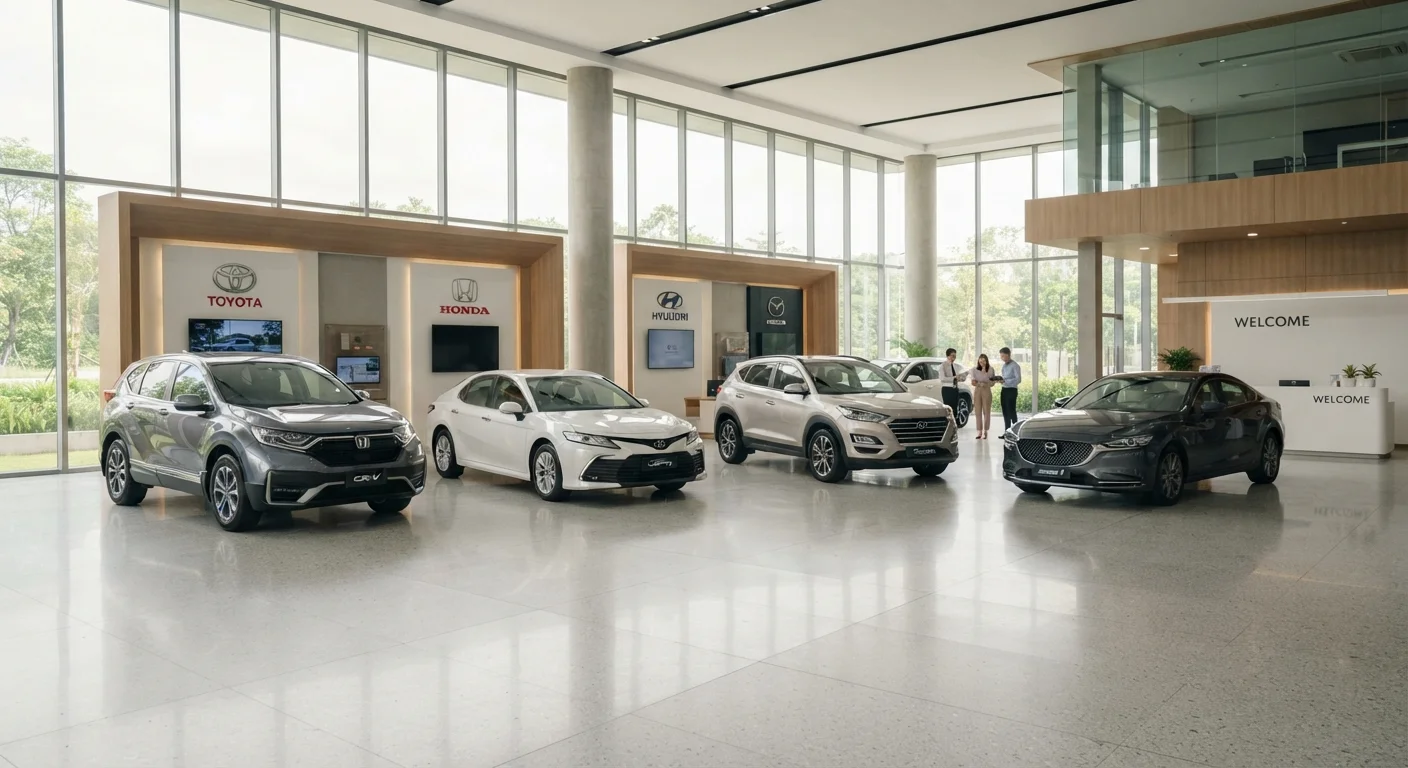
Walk into any American parking lot and the evidence is unmistakable: Asian automakers have earned a formidable position in the U.S. market. Toyota, Honda, Hyundai, Kia, Nissan, Subaru, and Mazda collectively offer hundreds of configurations across sedans, SUVs, trucks, hybrids, and electric vehicles. For a first-time buyer, that breadth can feel as paralyzing as it is exciting.
The appeal is rooted in measurable outcomes. Independent reliability surveys - including those published annually by J.D. Power and Consumer Reports - have repeatedly placed Japanese and Korean brands near or at the top of long-term dependability rankings. Asian automakers also led the commercialization of hybrid drivetrains, giving U.S. buyers fuel-efficient options long before they became mainstream across other regions.
Understanding why these brands perform the way they do is the first step to figuring out which one fits your life. Compared with European automakers or American brands, Asian manufacturers have historically emphasized cost-of-ownership discipline alongside product quality - a combination that resonates strongly with value-focused buyers.
Drivetrain
The system that delivers engine power to a vehicle's wheels. Common types include front-wheel drive (FWD), rear-wheel drive (RWD), and all-wheel drive (AWD).
Hybrid vehicle
A car that combines a conventional gasoline engine with an electric motor and battery to improve fuel efficiency. The battery recharges automatically - no plug-in required for standard hybrids.
Plug-in hybrid (PHEV)
A hybrid vehicle whose battery can also be recharged by plugging into an external power source, allowing limited all-electric driving before the gasoline engine takes over.
Total cost of ownership
The full financial picture of owning a vehicle, including purchase price, fuel, insurance, maintenance, and depreciation - not just the sticker price.
Luxury division
A separate brand created by an automaker to sell higher-end vehicles with more premium features and a distinct retail experience - for example, Toyota's Lexus or Honda's Acura.
Depreciation
The decline in a vehicle's market value over time. Some brands and models hold their value better than others, which affects resale and trade-in outcomes.
The Major Players: A Brand-by-Brand Overview
Each Asian brand occupies a distinct position in the market. Here is a plain-language snapshot of the brands most relevant to U.S. consumers:
- Toyota: The world's largest automaker by volume, Toyota is synonymous with long-term reliability. Its lineup spans the entry-level Corolla sedan to the rugged 4Runner SUV and the iconic Prius hybrid family. Luxury buyers can look to the Lexus division.
- Honda: Known for driver-oriented engineering and practical design, Honda offers the Civic, Accord, CR-V, and Pilot, among others. Its Acura luxury division targets buyers wanting added refinement.
- Hyundai: South Korea's flagship automaker has repositioned itself around design and value over the past decade. The Tucson, Santa Fe, and Elantra are among its most recognized U.S. models.
- Kia: Sister brand to Hyundai under the same parent group, Kia has carved a distinct identity through bold styling. The Telluride SUV has drawn widespread critical attention for its spaciousness and standard feature set.
- Nissan: One of the earliest committed to mass-market EVs with the Leaf, Nissan's mainstream lineup includes the Altima sedan, Rogue crossover, and Frontier truck.
- Subaru: Defined by standard all-wheel drive and outdoor-lifestyle positioning, Subaru's Outback, Forester, and Crosstrek dominate its lineup and attract a loyal ownership base.
- Mazda: Positioned at the premium end of the mainstream market, Mazda emphasizes driving dynamics and interior quality. It offers a focused lineup of crossovers and sedans.
Reliability and Fuel Efficiency: The Core Reputation
Asian brands - particularly Japanese marques - built their U.S. reputation during the 1970s and 1980s by delivering vehicles that outlasted domestic alternatives at lower ownership cost. That foundational work shaped engineering philosophies that persist today.
Fuel efficiency became a second pillar when Toyota introduced the first-generation Prius in the U.S. market in 2001, demonstrating that hybrid drivetrains could be practical and commercially viable. Honda followed with its own hybrid models, and the technology has since spread across nearly every segment. If you want a deeper look at how that happened, the history of Asian hybrid innovation traces the full arc from early prototypes to today's mainstream lineup.
Check Model-Level Reliability, Not Just Brand
Brand-level reliability averages can mask significant variation between individual models. Before committing to a vehicle, look up the specific model's reliability history using sources like Consumer Reports or J.D. Power. A brand with a strong overall reputation may still have one model line that underperforms its peers.
Korean brands Hyundai and Kia have invested heavily in closing reliability and efficiency gaps over the past decade. While their early U.S. reputation for quality was mixed, third-party survey data from the 2020s reflects meaningful improvement - though variation still exists by model line.
Choosing a Starting Point: Key Factors to Weigh
With so many models available, narrowing your focus before you shop prevents decision fatigue. Consider four dimensions:
- Primary use case. Are you commuting solo in a city, hauling a family on road trips, towing a trailer, or navigating snowy mountain roads? Each use case maps to different body styles and drivetrain options.
- Budget and total cost of ownership. Sticker price is only part of the picture. Factor in insurance costs (which vary by model), fuel costs, and expected maintenance intervals. General ownership patterns for Asian brand vehicles over high mileage are covered in detail in what long-term ownership actually looks like.
- Powertrain preference. Gasoline, hybrid, plug-in hybrid, or fully electric - Asian brands now offer all four. If the EV transition matters to your decision, where each Asian brand stands on EVs is worth reading.
- Brand lineup depth. Some brands offer broad model ranges; others keep their catalog focused. Understanding how each brand structures its lineup helps you identify whether it covers your needs. Navigating the model range of major Asian brands is a structured next step for this.
Trim Levels Can Change the Value Equation Significantly
Most Asian brand models are sold across multiple trim levels - base, mid, and top - that can differ by thousands of dollars and dozens of features. A base trim of a well-regarded model may lack safety technology that is standard on higher trims. Always confirm which safety and convenience features are included in the specific trim you're evaluating, not just the model as a whole.
Where to Go From Here
This guide is a starting point, not a finish line. Once you have a sense of which brand identity resonates - whether that's Subaru's all-weather practicality, Mazda's driver-focused refinement, or Toyota's documented longevity - you're ready to go deeper into specific model comparisons and ownership realities.
If you're weighing Asian brands against other regions, navigating an American brand lineup and a first-timer's introduction to the European car market offer parallel perspectives worth reading side by side.
Model Range Navigator: Major Asian Brands
A structured look at how Toyota, Honda, Hyundai, Kia, and others organize their lineups - and which vehicle types each brand excels at. Useful once you've identified your top brand candidates.
Long-Term Ownership Reality Check
Covers maintenance intervals, common wear items, and depreciation patterns for Asian brand vehicles past 100,000 miles - essential reading before making a purchase decision.
This article provides general educational information about automotive brands and is not a substitute for personalized advice from a licensed automotive professional or financial adviser. Reliability, fuel economy, and ownership costs vary by model, model year, driving conditions, and individual circumstances.