

Key Takeaways
Option A
Timing Belt
The scheduled-replacement consumable.
Best for: Vehicles where lighter weight and quieter operation are prioritized, accepting a defined replacement interval.
Option B
Timing Chain
The long-life, oil-dependent alternative.
Best for: Drivers who prefer a component designed to last the engine's lifetime - provided oil maintenance is kept up consistently.
If you want predictable, scheduled maintenance with clear milestones
Timing Belt (with diligent tracking)
Belt intervals are well-defined and easy to plan around. Schedule the replacement proactively and you largely eliminate the risk.
If you prefer lower long-term maintenance intervention on the engine
Timing Chain
A chain-equipped engine requires no scheduled timing service - as long as you never neglect oil changes, the chain should outlast the rest of the drivetrain.
If you're buying a used vehicle and assessing hidden risk
Timing Chain
With a chain engine, there's no overdue belt lurking in the background. For a belt engine, always verify the replacement history before purchase.
If you're building a full 100,000-mile maintenance budget
Timing Belt (plan the cost in advance)
Belt replacement is a significant but knowable cost. Factor it into your ownership budget alongside other major services.
What Both Components Actually Do
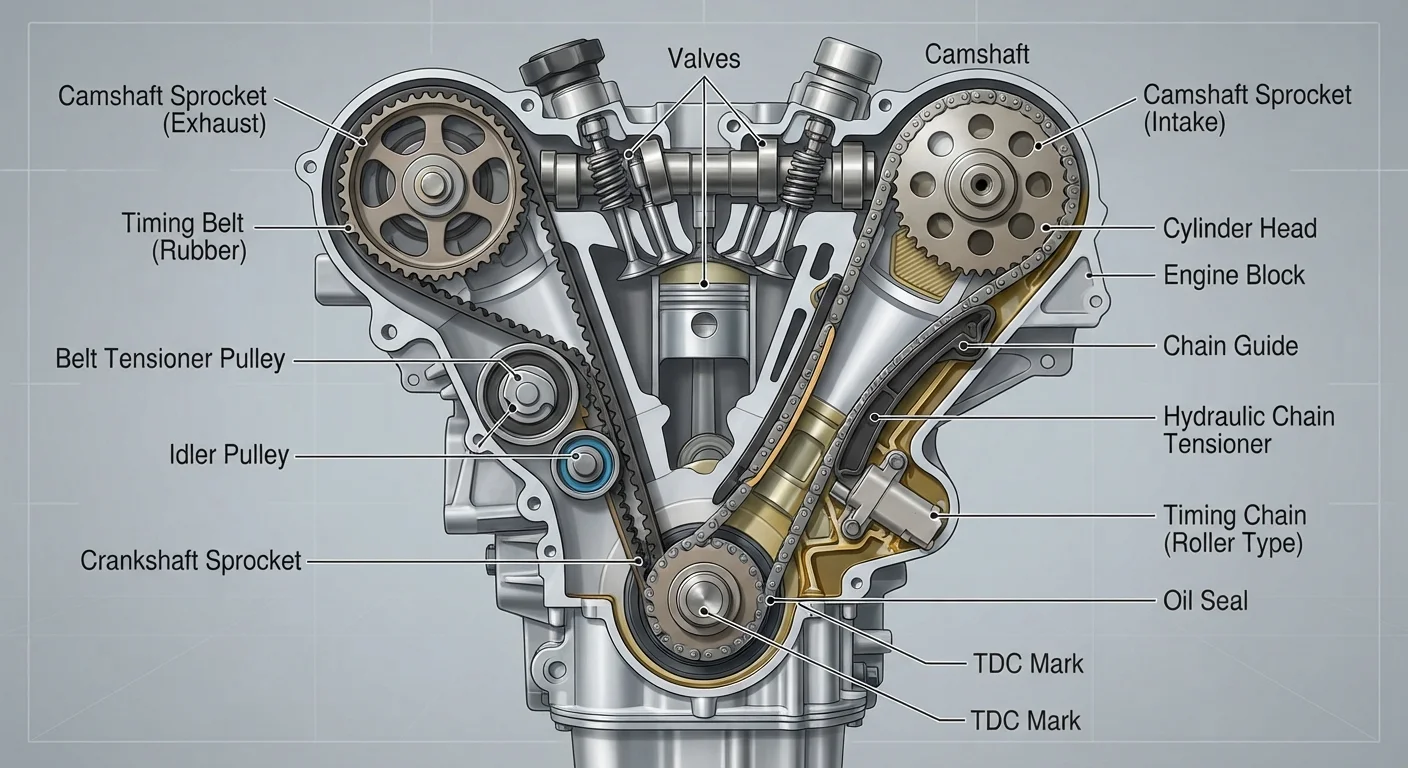
The timing belt and timing chain serve an identical mechanical purpose: they synchronize the rotation of the crankshaft and camshaft so that the engine's intake and exhaust valves open and close at precisely the right moment relative to each piston's position. Get this timing wrong - even slightly - and the engine runs poorly or not at all. A sudden failure in an interference engine (one where the valves and pistons share the same space at different times) can cause the valves to collide with the pistons, resulting in severe internal engine damage.
The difference between the two systems is purely material and design: a timing belt is a toothed rubber band, while a timing chain is a metal roller chain similar to a bicycle chain. Both accomplish the same synchronization job; how long they last and what maintenance they require diverges significantly from there.
Understanding which system is under your hood is foundational to planning your maintenance schedule correctly. See our explanation of factory maintenance schedules for broader context on how these intervals fit into your vehicle's overall service plan.
Head-to-Head: Service Life, Cost, and Risk
The practical differences between the two systems show up most clearly when you compare their service requirements side by side.
| Criterion | Timing Belt | Timing Chain |
|---|---|---|
| Material | Reinforced rubber | Metal roller chain |
| Typical service life | 60,000-100,000 miles | Designed to last engine lifetime |
| Scheduled replacement | Yes - required at interval | No scheduled interval |
| Key maintenance dependency | Mileage/age tracking | Consistent, clean engine oil |
| Failure warning signs | Rarely any before failure | Cold-start rattle; timing codes |
| Failure consequence (interference engine) | Potentially severe engine damage | Potentially severe engine damage |
| Replacement labor intensity | High - significant disassembly | Not a routine service item |
Timing belt replacement is a labor-intensive job - the belt is often tucked behind covers that require significant disassembly. Many mechanics recommend replacing the water pump at the same time since it's already accessible, which adds cost but avoids a second round of labor later. The total job typically runs into the hundreds of dollars, varying by vehicle make, model, and region.
Timing chains, by contrast, carry no scheduled replacement interval under normal conditions. However, they are not maintenance-free: a chain that runs in dirty or low oil will stretch, wear, and eventually develop slack. A worn chain can jump a tooth on the sprocket - producing a rattling noise on cold starts, check-engine codes related to camshaft timing, or in a worst case, a timing event similar in consequence to a belt failure.
60K-100K mi
Typical timing belt replacement interval
Most manufacturers specify a mileage or age limit (often 7-10 years) - whichever arrives first - as the replacement trigger.
~$500-$900
Estimated timing belt job cost (parts + labor)
Costs vary widely by vehicle and region; replacing the water pump at the same service can add cost but reduces overall labor over time.
~40%
Share of US market vehicles using timing belts
Timing chains have become more prevalent in newer engine designs, though belts remain common across many models still in daily use.
How to Find Out Which System Your Vehicle Has
The most reliable method is your owner's manual. Look in the scheduled maintenance section for any reference to a timing belt replacement interval - if one exists, you have a belt. If the manual contains no such entry, your engine almost certainly uses a chain. Our guide on reading the maintenance section of your owner's manual walks through exactly where to find this information.
You can also check a trusted third-party engine database, ask a qualified mechanic to confirm during any routine service, or look up your specific engine code. If you're purchasing a used vehicle with a timing belt engine, request documented proof of the last belt replacement and factor a potential near-term replacement into your offer or budget calculations.
Whichever system your vehicle uses, neglecting its requirements is one of the most consequential maintenance oversights possible. Learn more about how skipped services compound into larger problems in our article on maintenance habits that shorten a car's life prematurely.
Building Your Maintenance Plan Around Your Engine's Timing System
Once you know which system you have, you can plan accurately. For timing belt engines, note the manufacturer's recommended replacement mileage and age interval (most specify a mileage or a time limit - whichever comes first). Mark it on your maintenance calendar and treat it as a non-negotiable service, not an optional upgrade.
For timing chain engines, the key lever is oil quality and change frequency. Follow your manufacturer's specified oil viscosity and change intervals without exception. If you do a lot of short-trip driving - where the engine never fully warms up - consider erring toward the more frequent end of the recommended oil change range, as short trips accelerate contaminant buildup.
Either way, timing system health slots into a larger picture of milestone-based upkeep. Our comprehensive scheduled maintenance guide from first service to 100,000 miles places timing service within the full sequence of what needs attention at each major interval. And if you're deciding which of these tasks to handle yourself versus taking to a shop, our DIY vs. workshop servicing guide can help draw that line - timing belt replacement, in particular, is generally a job for a qualified mechanic given the precision and consequences involved.
This article provides general educational information about vehicle maintenance concepts. Service intervals, costs, and specifications vary by vehicle make, model, and engine. Always consult your owner's manual and a qualified mechanic for guidance specific to your vehicle.