

Key Takeaways
Why Most Drivers Skip the Maintenance Section
The owner's manual arrives with every new vehicle, gets tucked into the glove box, and is rarely opened again. When drivers do consult it, they typically flip to the warning lights page or check a fluid capacity - they almost never read the maintenance schedule in full. The result is that most people rely on oil change stickers, shop recommendations, or memory-of-memory rules like "every 3,000 miles" rather than the manufacturer's actual guidance for their specific vehicle.
That gap matters. A factory maintenance schedule is not a generic suggestion - it is an engineering document calibrated to your engine's design, operating tolerances, and expected wear patterns. Understanding what a factory maintenance schedule is and why it exists is the first step toward using it correctly.
Your Manual Is Model-Specific - Generic Advice Isn't
Third-party maintenance guides and quick-lube reminders are based on averages across many vehicles. Your owner's manual is written specifically for your engine, drivetrain, and design tolerances. When the two conflict, the manual takes precedence. This is especially true for oil change intervals, which vary widely by manufacturer and engine design.
This guide walks you through the manual's maintenance section step by step, so you can build a clear, accurate service plan rather than guessing.
What You Will Need Before You Start
What you will need
Owner's Manual
The primary reference document containing manufacturer-specified maintenance intervals, fluid types, and service procedures.
Mileage Log or Service Records
Helps you establish where you currently stand relative to the factory maintenance schedule.
Manufacturer's Website or App
Provides a digital copy of your manual if the physical version is unavailable, often with searchable text.
How to Read and Apply Your Maintenance Schedule
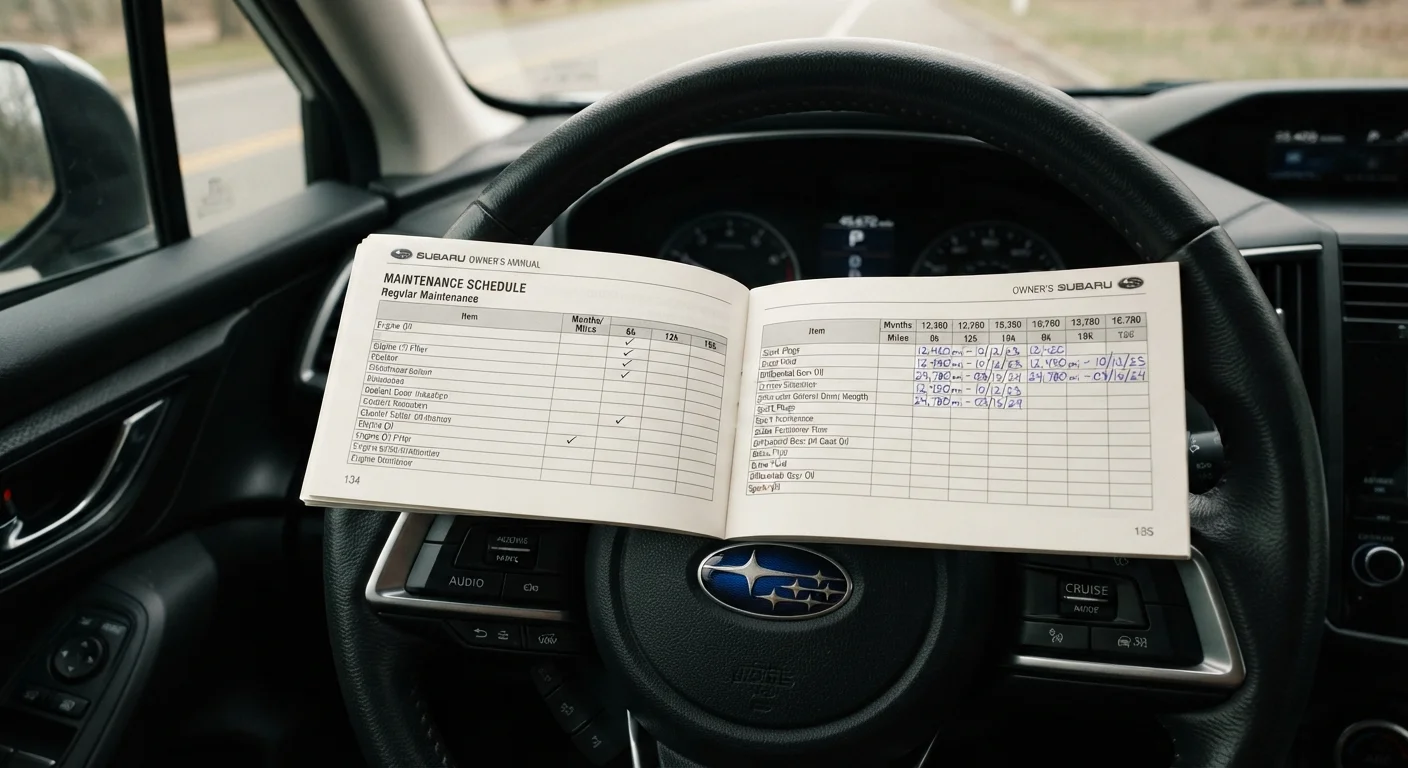
Locate the maintenance schedule section
Open your owner's manual to the table of contents. Look for terms like "Maintenance Schedule," "Service Intervals," or "Scheduled Maintenance." This section is typically in the latter half of the manual. If your manual is missing, search the manufacturer's website using your vehicle's year, make, and model to download a PDF copy.
Identify your driving condition category
Most manuals present two schedules: one for normal driving conditions and one for severe or special driving conditions. Severe conditions typically include frequent short trips under five miles, stop-and-go city driving, towing or hauling, dusty environments, and extreme temperatures. Read the definitions carefully - many drivers qualify as severe without realizing it, which means shorter service intervals apply to them.
Map out each service interval by mileage and time
Factory schedules are organized by mileage milestones (e.g., every 5,000, 15,000, or 30,000 miles) and sometimes by elapsed time (e.g., every 12 months), whichever comes first. Create a simple list of upcoming intervals based on your current odometer reading. Note what is required at each milestone - oil and filter changes, tire rotations, brake inspections, spark plugs, air filters, coolant flushes, and so on.
Record the specified fluid types and part specifications
The manual will list exact specifications for engine oil viscosity (such as 0W-20 or 5W-30), transmission fluid type, coolant formulation, and brake fluid grade. Write these down or photograph the relevant pages. Using the wrong specification - even a close substitute - can void warranty coverage and, in some cases, cause component damage over time.
Note any model-specific items unique to your vehicle
Some vehicles have service items that generic maintenance guides overlook: cabin air filter intervals, differential fluid changes, transfer case service on four-wheel-drive models, timing belt replacement windows, or battery inspections on hybrids. Scan the full schedule rather than skimming only the familiar items. For example, whether your engine has a timing belt or chain fundamentally changes your long-term maintenance obligations.
Transfer your schedule to a reminder system
A maintenance schedule only works if you act on it. Transfer the upcoming service milestones to your phone's calendar, a mileage-tracking app, or a simple spreadsheet. Set reminders at least 500 miles before each interval so you have time to book a service appointment or gather supplies. Consistent tracking is the core habit that keeps your vehicle running reliably.
Once you have mapped your intervals, you can cross-reference them with a broader milestone reference. The scheduled maintenance guide from first service to 100,000 miles provides useful context for what each major service typically involves across vehicle types.
Warranty Compliance Requires Documentation
Manufacturer and extended warranties often require proof that services were performed at specified intervals using approved fluids and parts. Keep receipts and service records, whether you perform maintenance yourself or use a shop. Without documentation, warranty claims related to maintenance-sensitive components can be disputed or denied.
What Happens When You Ignore the Schedule
Deferred maintenance rarely announces itself immediately. The costs accumulate quietly - in accelerated wear on engine internals, degraded brake performance, corrosion in cooling systems, and reduced transmission longevity. The maintenance habits most likely to shorten a vehicle's life prematurely are often the ones that seemed minor at the time.
Skipping Services Has Compounding Consequences
Missing one interval occasionally is rarely catastrophic, but skipping services repeatedly allows small issues to become expensive failures. Deferred oil changes, for instance, accelerate internal engine wear in ways that are not always visible until damage is done. Consistent adherence to the factory schedule is the most reliable way to avoid preventable repair costs.
If you are new to vehicle ownership or trying to decide which services you can handle independently, understanding where DIY maintenance ends and professional servicing begins will help you make that call confidently.
This article is for general informational purposes only. Always refer to your vehicle's official owner's manual and consult a qualified mechanic before performing or scheduling maintenance, particularly if your vehicle is under warranty or has an unknown service history.