

Key Takeaways
Luxury EV Interior
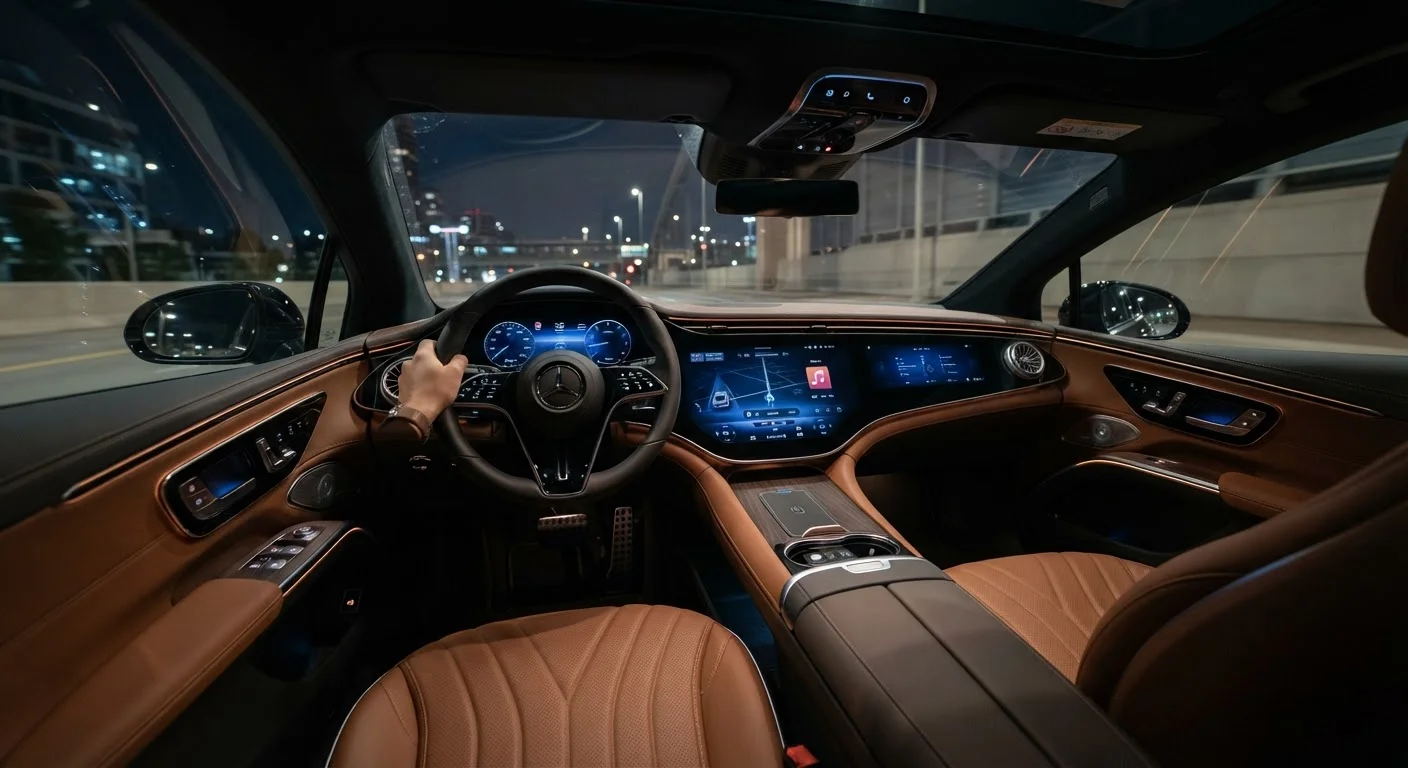
A luxury EV interior is the intentionally engineered cabin environment of a premium electric vehicle, designed to deliver superior comfort, refined aesthetics, and intuitive usability. It combines high-grade materials — such as full-grain leather, open-pore wood, and brushed metals — with advanced noise-reduction technology and thoughtfully arranged controls. Unlike standard EV interiors, luxury cabins undergo rigorous quality processes that govern texture, fit, finish, and sensory experience.
NVH (Noise, Vibration, and Harshness) engineering is a defining discipline in luxury cabin development; without combustion engine masking, EVs expose road, tire, and wind noise that requires dedicated acoustic countermeasures.
Materials: What Premium Actually Feels Like
The material palette of a luxury EV interior communicates quality before a single button is pressed. Premium cabins distinguish themselves through the grade and sourcing of every surface a passenger contacts — from door pulls to headliners.
Full-grain and semi-aniline leathers remain the benchmark for seating surfaces, valued for their natural texture and breathability. Open-pore wood veneers — where the grain is left unsealed — convey warmth and authenticity that high-gloss lacquered alternatives cannot replicate. Brushed or milled aluminum accents provide visual contrast and a cool, precise tactile response.
Sustainability has become an increasingly substantive consideration rather than a marketing afterthought. Many premium EV makers now offer interiors trimmed in recycled PET textile, wool-blend fabrics, or plant-derived bio-based synthetics positioned as leather alternatives. These materials are engineered to meet the same durability benchmarks as conventional options while reducing reliance on animal products and virgin plastics. Understanding what actually makes a car luxury helps contextualize why material choices carry so much weight in premium EV evaluation.
~30 dB
Typical luxury EV cabin noise reduction vs. road surface
Automotive acoustic engineers cite laminated glass and door cavity foam as the primary contributors to interior sound attenuation in premium EV cabins.
40%+
Share of luxury EV buyers citing interior quality as a top decision factor
Industry surveys consistently show that cabin material quality and refinement rank among the most influential factors for buyers in the premium EV segment.
6–16 way
Typical power seat adjustment range in luxury EV tier
Luxury EV seating systems commonly offer between 6 and 16 directions of power adjustment, compared to 4–6 in mainstream EV models.
Acoustics: Engineering Silence in an Already Quiet Powertrain
One of the counterintuitive challenges of luxury EV design is that removing engine noise exposes the cabin to sounds that combustion powertrains previously masked. Tire roar, wind buffeting, and road surface noise all become primary acoustic considerations.
Acoustic engineers address this through multiple layered strategies. Laminated side glass — standard in many luxury-tier vehicles — uses a sound-dampening interlayer that significantly attenuates wind and road frequencies. Acoustic foam inserts in door cavities, wheel arches, and the floor pan absorb structure-borne vibration before it enters the passenger space. Precision door seals, which engage fully when doors are closed, prevent wind infiltration at highway speeds.
Active noise cancellation (ANC) represents the most sophisticated layer of acoustic treatment. Microphones sample low-frequency cabin noise in real time, and the audio system generates opposing sound waves to cancel it. When implemented well, ANC can reduce residual road boom to near inaudibility. The practical result is a cabin environment where conversation occurs at a natural speaking volume even at freeway speeds — a tangible sensory differentiator from mid-premium alternatives.
“In an electric vehicle, the cabin is the powertrain experience. Without engine sound and vibration to define the character of the drive, every material, every seal, and every acoustic decision becomes the product.”
— NVH Engineering Specialist, Automotive acoustics researcher, published in Society of Automotive Engineers proceedings
Ergonomics: Where Design Meets Daily Use
Ergonomics governs how naturally and efficiently a driver or passenger can operate, occupy, and move within the cabin. In luxury EVs, this extends well beyond seat adjustability to encompass control placement, sightlines, haptic feedback, and spatial proportions.
The shift away from conventional instrument clusters and physical buttons — accelerated in EV design — has created ergonomic trade-offs. Large central touchscreens consolidate many functions but require visual attention that physical controls do not. Premium implementations address this through contextual haptic feedback, voice command integration, and retained hard controls for climate and volume — ensuring that safety-critical adjustments can be made without eyes-off-road interaction.
Seat engineering in luxury-tier EVs typically includes multi-way power adjustment, lumbar support, and in many cases massage and ventilation functions. Critically, premium seats are designed to accommodate a wide anthropometric range — supporting comfort for both shorter and taller occupants without compromise. Steering column reach and rake adjustment, combined with driver-profile memory systems, allows multiple drivers to restore preferred positions instantly.
For buyers evaluating cabin quality against the full spectrum of luxury EV attributes, key features distinguishing tier-one luxury EVs provides a useful engineering-focused framework. This article is also part of a comprehensive luxury EV buyer's reference covering the full ownership decision process.
Evaluate Ergonomics During an Extended Test Drive
A brief showroom sit-down rarely reveals ergonomic shortcomings. Request a test drive long enough to interact with climate controls, navigate the infotainment system, and assess seat support on varied road surfaces. Pay attention to whether you can adjust critical functions — volume, temperature, mirrors — without taking your eyes off the road. These details become significant during daily use.