

Key Takeaways
Blind-Spot Monitoring (BSM)
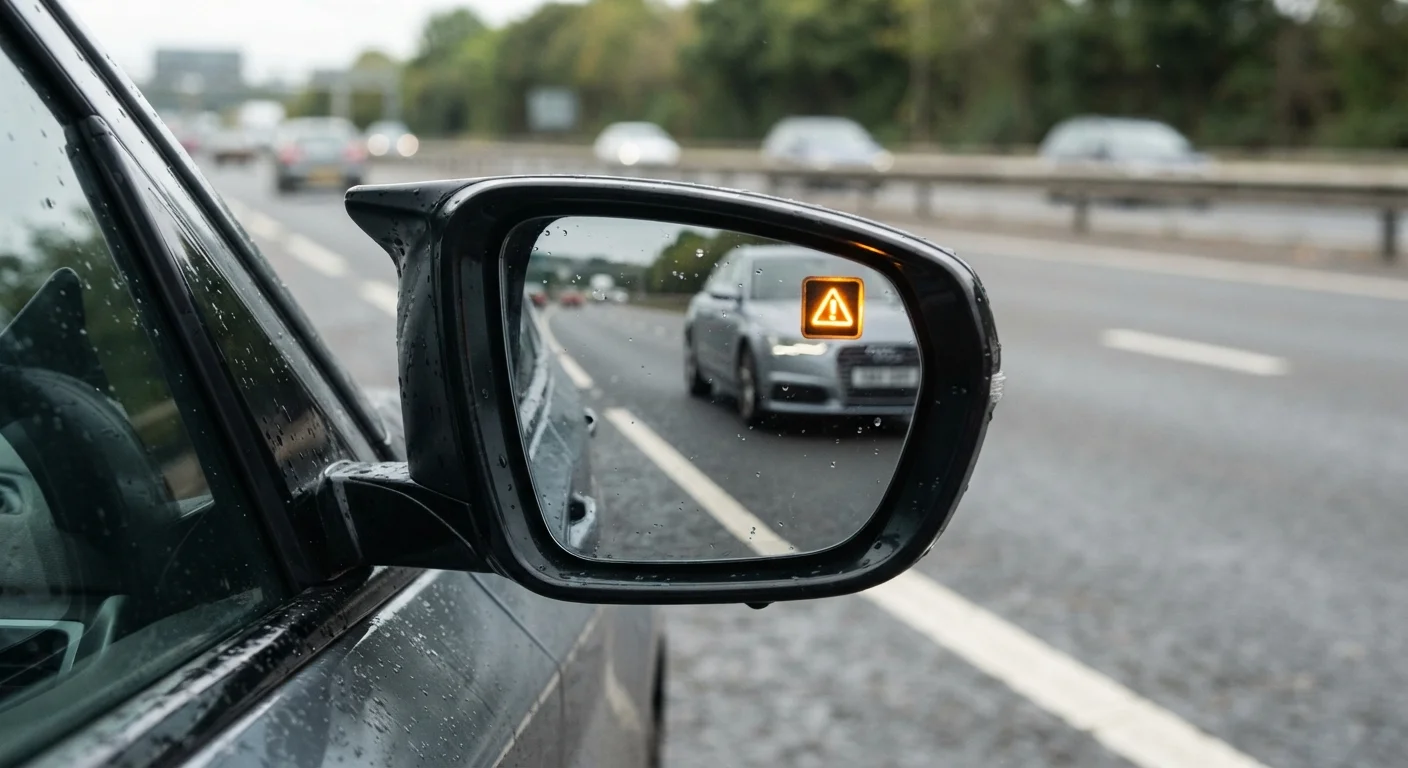
Blind-spot monitoring is a driver-assistance feature that uses sensors - typically radar - mounted in the rear corners of a vehicle to detect traffic in the zones alongside and slightly behind the car that mirrors alone can't reliably cover. When another vehicle enters that zone, the system activates a visual alert, usually a lit icon in the side mirror, and may add an audible or haptic warning if the driver signals a lane change. The goal is to supplement - not replace - mirror checks and head checks.
Most production BSM systems use short-range radar operating in the 24 GHz or 77 GHz band. Detection zones typically extend roughly 10-15 feet to the side and up to about 20 feet behind the rear bumper, though coverage geometry varies by manufacturer and system calibration.
How Blind-Spot Monitoring Actually Works
At its core, blind-spot monitoring (BSM) is a radar-based system. Most vehicles implement it using two short-range radar modules embedded behind the rear bumper fascia, one on each side. These units emit radio waves that bounce off surrounding objects and return to the sensor; onboard software interprets the return signals to identify vehicles traveling in adjacent lanes.
When a vehicle is detected in the monitored zone - typically the lane alongside the rear half of your car - an amber icon illuminates in or near the corresponding side mirror. If you activate your turn signal while the alert is active, many systems escalate the warning with an audible chime or a steering wheel vibration to make the caution more urgent.
For a deeper look at the radar, camera, and lidar technologies underpinning systems like BSM, see the sensor technologies behind modern safety systems.
~23%
Reduction in lane-change crashes with BSM
IIHS research has estimated blind-spot monitoring is associated with meaningful reductions in lane-change crashes and resulting injuries when the system is functioning correctly.
77 GHz
Common radar frequency in modern BSM
Many current-generation systems use 77 GHz short-range radar, which offers improved resolution over older 24 GHz units for object discrimination in adjacent lanes.
~10-20 mph
Typical minimum activation speed threshold
Most BSM systems are engineered to activate only above a minimum speed, as the feature is optimized for highway and arterial driving rather than low-speed maneuvering.
What Blind-Spot Monitoring Detects - and What It Doesn't
BSM performs reliably in its intended use case: detecting a full-size vehicle traveling at a similar speed in an adjacent lane on a highway or arterial road. Where it becomes less dependable is outside that scenario.
Known Detection Gaps
- Motorcycles and cyclists: Narrow objects return weaker radar signals. Many systems may not consistently detect a motorcycle rider or a cyclist in the monitored zone.
- Stationary objects: Most BSM implementations filter out stationary returns - parked cars, barriers, jersey walls - to avoid constant false alerts. This means the system will not warn you about a stopped vehicle at the edge of your zone.
- Fast-approaching vehicles: A car closing rapidly from far back may be outside the detection window long enough that the alert arrives late or not at all before the vehicle enters the zone.
- Sensor obstruction: Mud, snow, ice, or a rear-end repair that misaligns the bumper can all degrade or disable detection without an obvious warning to the driver.
Understanding these gaps is precisely why BSM should be thought of as a supplemental cue, not a clearance signal. Conditions that degrade ADAS performance more broadly are worth reviewing alongside this topic.
BSM Doesn't Replace the Head Check
Even a fully functional blind-spot monitoring system has a detection zone with defined boundaries. Vehicles that are partially in and partially out of the zone, or objects like cyclists that may not trigger the radar reliably, mean a physical head check before every lane change remains important. The National Highway Traffic Safety Administration (NHTSA) classifies BSM as a driver-assistance feature - the word 'assistance' is intentional.
Using Blind-Spot Monitoring as a Driver Tool
The most effective way to use BSM is as a second layer of attention, not a first. A sound lane-change process still starts with checking mirrors, then signaling, then performing a brief head check - the physical shoulder glance that no sensor fully replaces. BSM should catch what that sequence might miss, not substitute for it.
Keep Rear Bumper Sensors Clean
Radar modules for BSM are typically hidden behind the rear bumper fascia, making them easy to forget. In winter weather, packed snow or ice over the sensor area can significantly reduce detection performance. Clearing the rear bumper area as part of your winter pre-drive routine helps keep the system operating as designed.
When purchasing a used vehicle with BSM, verify that the rear bumper has not been repaired or repainted in a way that might block or misalign the sensors. A system that appears functional but has degraded sensitivity is more hazardous than no system, because the driver may be relying on alerts that are less reliable than expected. See evaluating and inspecting a used car for guidance on assessing a vehicle's condition before purchase.
BSM is one component in a broader ecosystem of driver-assistance features. A full rundown of active safety features in modern vehicles places BSM in context alongside lane-keeping assist, automatic emergency braking, and other systems. For habits that help all of these technologies perform as intended, learn how to get the most from your car's safety tech on every drive.
“Driver-assistance technologies are exactly that - assistance. They are tools to support attentive drivers, not systems that permit drivers to disengage from the driving task.”
— NHTSA Office of Crash Avoidance Standards, U.S. National Highway Traffic Safety Administration
This article is for informational purposes only. Blind-spot monitoring system capabilities vary by vehicle make, model, and software version. Always consult your vehicle's owner's manual for system-specific guidance.