

Key Takeaways
Summary
24 items · 1-2 hours on-site, plus additional time for history reports and a pre-purchase inspection
Why SUV Inspections Require a Different Lens
Evaluating a used SUV demands more than a generic used-car walkthrough. These vehicles are routinely subjected to towing, off-road use, roof-rack loading, and higher mileage cycles - stresses that leave distinct mechanical and structural signatures. The evaluating and inspecting process for an SUV should address components that simply don't exist on a sedan or coupe.
For comparison, the used sedan inspection checklist focuses heavily on unibody panel gaps and cabin refinement. With SUVs - especially body-on-frame trucks and larger crossovers - the emphasis shifts to drivetrain integrity, frame condition, and the cumulative wear patterns left by heavy-duty use. Use this checklist as a structured audit tool, then follow up with a licensed mechanic for a professional pre-purchase inspection before any final decision.
Towing and Off-Road Use Are Often Undisclosed
A significant proportion of used SUVs have been used for towing or light off-road driving without that use appearing in a vehicle history report. Cumulative stress from these activities accelerates wear on transmissions, transfer cases, differentials, and cooling systems. Treat any used SUV as a potential high-stress vehicle until the physical evidence and service records prove otherwise - optimistic assumptions here are among the most common and costly mistakes used-SUV buyers make.
Tools and Resources to Bring
Arriving prepared separates a useful inspection from a wasted trip. The tools below are organized by whether they are required for the inspection or simply enhance your ability to catch problems.
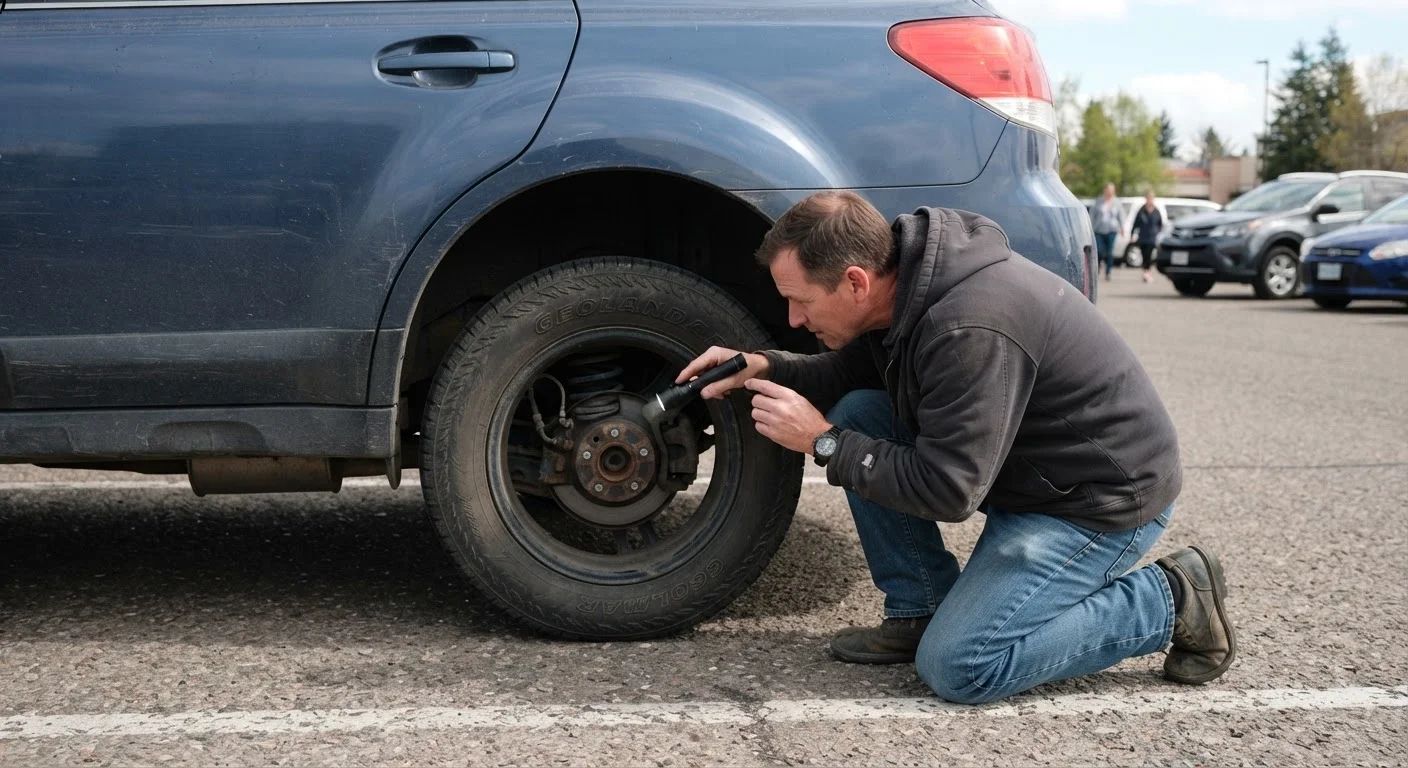
Flashlight or inspection light
Illuminates the undercarriage, engine bay, and wheel wells to reveal rust, leaks, and frame damage that daylight misses.
OBD-II scanner
Reads stored and pending fault codes from the vehicle's onboard diagnostic system before the seller clears them.
VIN history report service
Provides title history, accident records, odometer data, and open recall status tied to the vehicle's VIN.
Tire tread depth gauge
Measures remaining tread depth at multiple points across each tire to identify uneven wear patterns accurately.
Inspection mirror (telescoping)
Extends your line of sight under the vehicle and behind components without requiring a lift or pit.
Licensed pre-purchase mechanic
Conducts a professional mechanical inspection - essential for confirming drivetrain and structural findings before any purchase decision.
The Full Inspection Checklist
Work through each group in order. The exterior and undercarriage checks should be completed before you enter the cabin or start the engine - a dirty engine bay or running vehicle can mask fluid leaks and unusual sounds. Cross-reference your findings with a vehicle history report, and flag any inconsistencies for follow-up. The pre-purchase inspection checklist provides a complementary general framework you can run in parallel.
Exterior and Structural
Undercarriage and Frame
Drivetrain and Four-Wheel-Drive System
Suspension and Steering
Engine and Cooling
Interior, Electronics, and Documentation
Don't Skip the Professional Inspection
A buyer-conducted walkthrough identifies red flags but cannot replace a lift-supported inspection by a qualified mechanic. Transfer case wear, frame micro-cracks, and internal transmission damage are not reliably detectable without professional tools. Budget for a pre-purchase inspection from an independent shop - not the seller's preferred dealer - before finalizing any used SUV purchase.
Flood and Salvage Titles Carry Long-Term Risk
SUVs with flood or salvage title branding may be legally sold in some states but carry significant unknown risks related to electrical systems, hidden corrosion, and compromised structural repairs. A clean vehicle history report does not guarantee a vehicle was never flood-damaged - always correlate the report with physical evidence such as musty odors, sand deposits in trim crevices, and corrosion on wiring connectors.
Connecting Findings to Value and Safety
Every deficiency you document has a dollar value and a safety implication. Suspension wear, for example, can range from a straightforward bushing replacement to a complete control-arm overhaul - a cost difference that should factor directly into any price discussion. Use the value verification checklist to map condition gaps to pricing benchmarks.
Safety history deserves equal attention. Deployed airbags, repaired crumple zones, and frame straightening can affect how an SUV performs in a subsequent collision. The used car inspection points guide and the occupant safety history checklist both address what to verify before you rely on a vehicle to protect its occupants.
This article is for general informational and educational purposes only. It does not constitute professional mechanical, legal, or financial advice. Always consult a qualified mechanic for a pre-purchase inspection before committing to any used vehicle purchase.