

Key Takeaways
Our Verdict
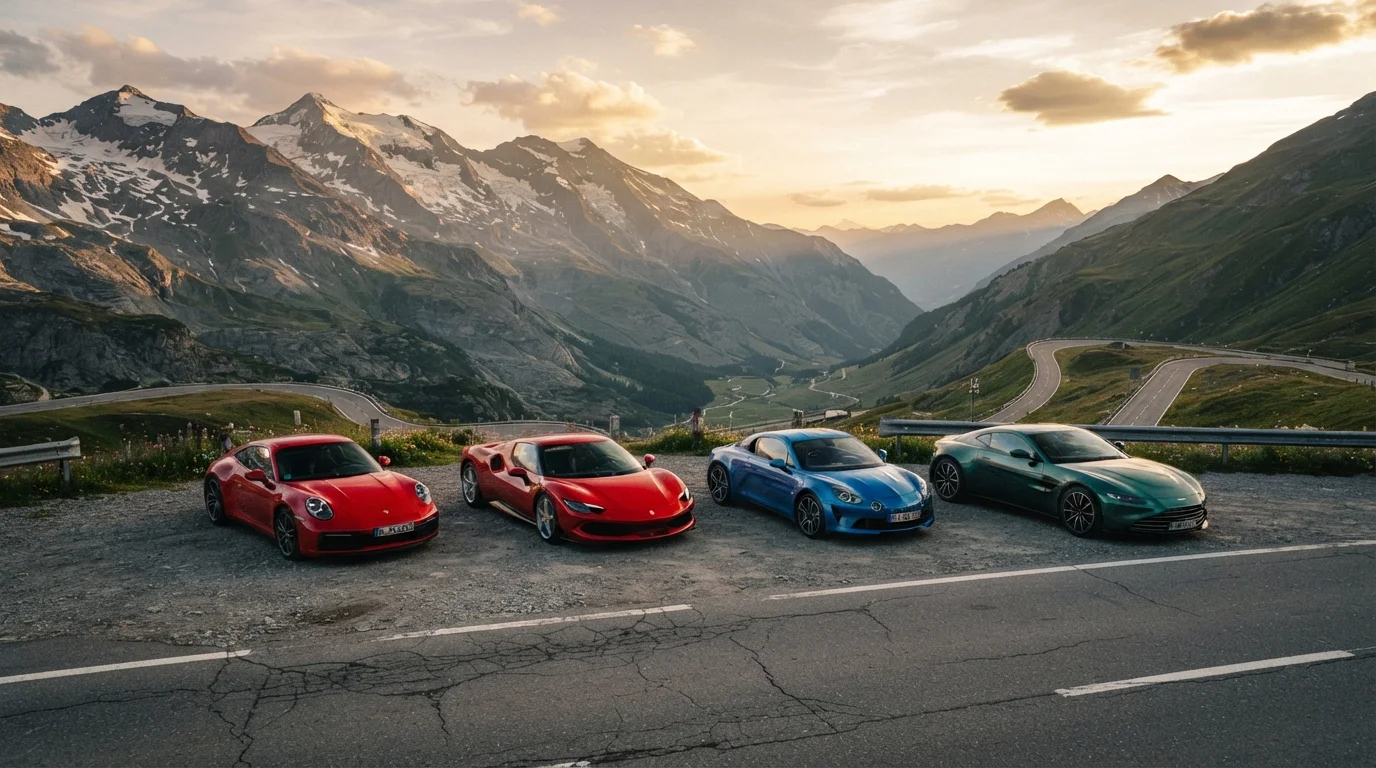
No single European automotive tradition is objectively superior - each reflects a deeply rooted national philosophy that shapes distinct strengths. German engineering rewards those who value systematic precision and all-condition capability. Italian and British traditions appeal to drivers who seek emotional engagement. French automakers remain distinct in their commitment to comfort-led, practical innovation.
| Best for | Recommended |
|---|---|
| Drivers who prioritize precision, reliability, and structured performance | German automotive tradition |
| Those who want emotional design and visceral driving character | Italian automotive tradition |
| Buyers seeking comfort-focused, practical everyday engineering | French automotive tradition |
| Enthusiasts wanting luxury refinement or pure sports car focus | British automotive tradition |
Germany: Engineering as an End in Itself
German automotive culture is grounded in the belief that technical excellence and measurable performance are inseparable from value. This philosophy, evident across manufacturers from Wolfsburg to Munich to Stuttgart, produces vehicles designed to perform consistently across a wide range of conditions rather than excel dramatically in one dimension.
The Autobahn - Germany's famously unrestricted highway network - has had a tangible influence on how German engineers approach chassis dynamics, powertrain cooling, and high-speed stability. Cars are expected to sustain demanding speeds without stress. That engineering discipline translates into structured, confidence-inspiring handling rather than raw excitement.
German brands also demonstrate a systematic approach to feature integration. Safety systems, infotainment architecture, and driver assistance technologies tend to be developed in-house and layered methodically rather than sourced piecemeal. As explored in our overview of European engineering philosophies, this vertical integration is a hallmark of the German approach.
| German | Italian | French | British | |
|---|---|---|---|---|
| Core philosophy | Systematic precision | Emotional drama | Practical innovation | Driver experience |
| Handling character | Stable, structured | Expressive, responsive | Comfort-biased | Communicative, direct |
| Design priority | Functional integration | Aesthetic and form | Ergonomics and space | Refinement or purity |
| Motorsport influence | High (touring/GT) | Very high (F1, endurance) | Moderate | High (sports/GT) |
| Luxury approach | Technology-led | Bespoke, artisanal | Understated comfort | Handcrafted insulation |
| Innovation style | Incremental, rigorous | Bold, dramatic | Unconventional | Specialist, focused |
Italy: Emotion, Aesthetics, and Mechanical Drama
Italian automotive culture operates on a fundamentally different axis. Where German tradition asks what a car should do, the Italian tradition asks how a car should feel - and how it should look doing it. Coachbuilding heritage, regional design studios, and a deep relationship with motorsport have shaped brands whose products are as much artistic statement as transportation.
The emotional dimension of Italian car design is not merely marketing language. It informs genuine engineering decisions: the tuning of an exhaust note, the angle of a windscreen, the tactile weight of a gear lever. These choices are deliberate. Italian engineers and designers have historically operated in close collaboration, with styling departments holding unusual influence over final form.
Italy's motorsport legacy - particularly in Formula 1 and endurance racing - has fed technical innovation directly into road car development. The connection between Italian racing programmes and road car engineering is especially pronounced in areas like aerodynamics and high-revving engine architecture.
Look Beyond the Badge When Comparing European Cars
National traditions explain tendencies, not absolutes. Individual models within each country's output can diverge significantly from the broad cultural archetype. Consulting our guide on why grouping all European brands together leads to poor decisions can sharpen how you evaluate specific vehicles. Always assess the individual model's engineering brief, not just its country of origin.
France: Comfort, Practicality, and Quiet Innovation
French automotive culture is frequently underappreciated in international comparisons, partly because its defining priorities - ride comfort, interior habitability, and unconventional problem-solving - are less dramatic than the German or Italian stories. Yet France produced some of the most technically inventive cars of the twentieth century, including hydropneumatic suspension systems and front-wheel-drive layouts adopted industry-wide decades later.
The French approach treats the car as a social and practical tool. Suspension tuning is historically biased toward absorbing road imperfections rather than maximizing cornering response. Interior space and ergonomic logic have long been prioritized. This philosophy has produced cars that genuinely excel in the daily European urban context, where road surfaces are variable and journey comfort matters more than lap times.
French brands have also shown a willingness to pursue unconventional solutions when orthodox engineering reaches its limits - a tradition that continues in their early and assertive commitment to electric vehicle development.
4
Distinct national engineering traditions in European motoring
Germany, Italy, France, and the UK each developed independent automotive philosophies rooted in geography, motorsport, and industrial history.
~100 years
Duration of European motorsport influence on road cars
European manufacturers have drawn on racing programmes dating to the early twentieth century to develop road-going technology.
Britain: Luxury Refinement and Driver-Focused Purity
British automotive culture is perhaps the most internally diverse of the four traditions, encompassing both the supreme refinement of luxury grand tourers and the stripped-back purity of lightweight sports cars. These two strands are less contradictory than they appear: both reflect a deep concern with the driver's experience as the central design criterion.
At the luxury end, British manufacturers have historically pursued a particular kind of insulation - a sense that the outside world's noise, vibration, and turbulence are held entirely at bay. Handcrafted interiors, low-frequency acoustic engineering, and bespoke specification options remain defining characteristics. This stands in contrast to American luxury traditions, which tend toward scale and technology demonstration rather than handcraft.
At the performance end, British sports car culture prizes low weight, communicative steering, and an almost mechanical transparency between driver and road. As our analysis of European driving character notes, this produces a fundamentally different sensation from the confidence-through-mass approach favored in Germany. Both are valid - they simply serve different driver priorities. Those weighing these traditions against one another will find more context in our guide to luxury versus performance in European motoring.