

Key Takeaways
The Big Three Automakers
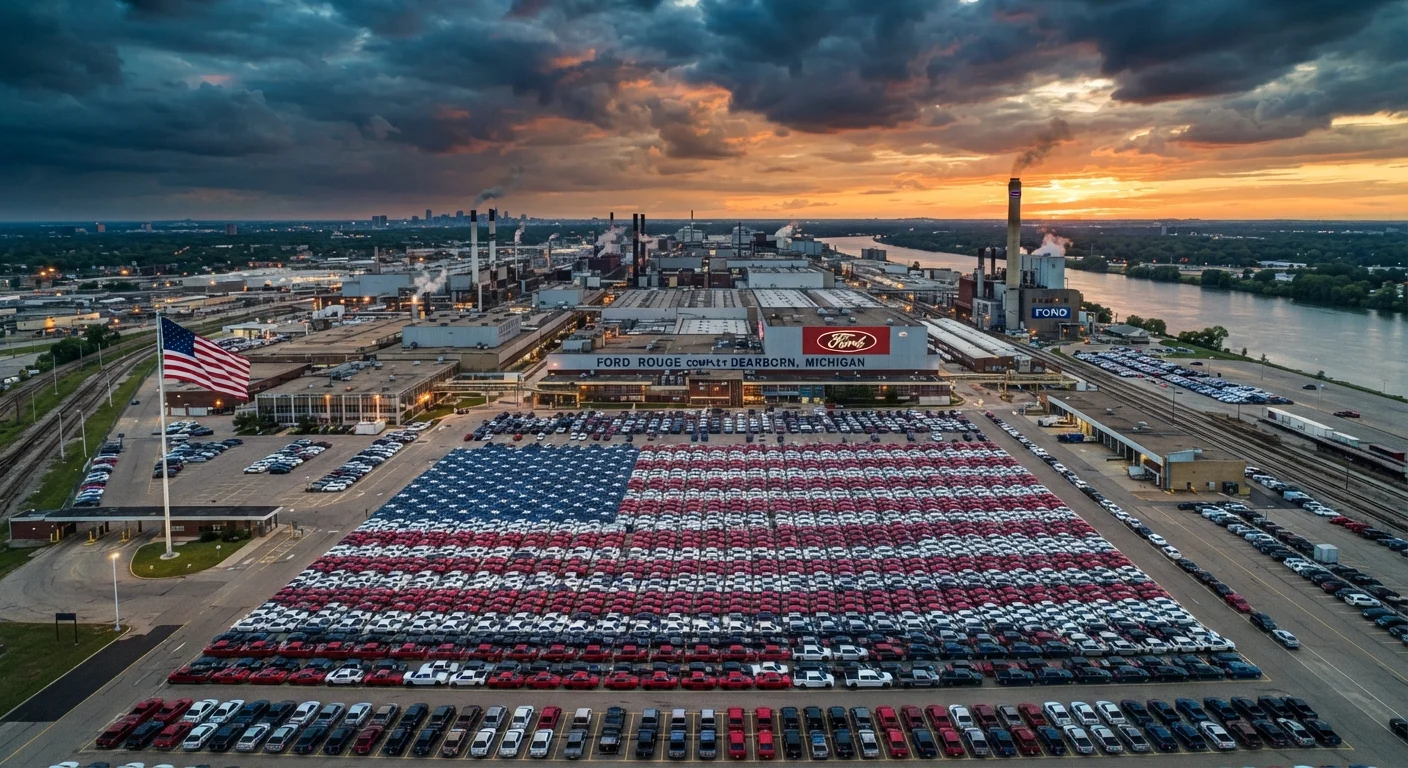
"The Big Three" refers to the three largest American automobile manufacturers: Ford Motor Company, General Motors (GM), and Stellantis (formerly Chrysler). These companies have dominated U.S. vehicle production for most of the 20th century and remain central to American manufacturing, employment, and automotive culture. Each operates multiple brands under a single corporate umbrella.
Stellantis is technically a transatlantic conglomerate formed by the 2021 merger of Fiat Chrysler Automobiles and PSA Group, though its core American brands - Jeep, Ram, Dodge, and Chrysler - trace their roots to Detroit.
A Century of Dominance - and Disruption
For most of the 20th century, the phrase "the Big Three" needed no explanation for American drivers. Ford, General Motors, and Chrysler (now operating under Stellantis) collectively shaped how the country moved - from the Model T's democratization of personal transport to the muscle car era, the pickup truck wars, and today's electric vehicle pivot.
Understanding these three companies is foundational to understanding the American automotive market. Their histories, structures, and strategies differ considerably, yet all three are navigating the same fundamental pressures: shifting consumer demand, tightening emissions standards, and the global rise of electric mobility.
For buyers comparing American brands against European automakers or Asian manufacturers, knowing what each Big Three company actually represents - and which brands sit under each umbrella - is the essential starting point.
40+ years
Ford F-Series as best-selling U.S. vehicle
The Ford F-Series has held the position of best-selling vehicle in the United States for more than four consecutive decades by unit sales.
4
Active U.S. consumer brands under GM
Following its 2009 restructuring, General Motors consolidated its U.S. consumer lineup to Chevrolet, GMC, Buick, and Cadillac.
4
American nameplates under Stellantis
Stellantis manages four U.S.-origin brands - Jeep, Ram, Dodge, and Chrysler - alongside numerous European and other global marques.
Ford Motor Company: Independence and Iconography
Founded by Henry Ford in 1903, Ford Motor Company remains the only Big Three automaker that stayed independent - never filing for bankruptcy or requiring a federal bailout during the 2008-2009 financial crisis. That independence carries cultural weight with a significant portion of its customer base.
Ford operates fewer brands than its rivals, concentrating its consumer lineup under the Ford nameplate and the premium Lincoln brand. Its financial engine runs on the F-Series pickup truck, which has been the best-selling vehicle in the United States for over four decades by unit count - a remarkable commercial consistency.
Ford's identity is tightly woven with performance heritage. The Mustang, now in its seventh generation, remains one of the most recognizable nameplates in the world. See how that heritage connects to a broader story in our look at the origins of American muscle.
Understand the Brand Before the Model
When evaluating any vehicle from the Big Three, start by understanding the corporate brand's positioning - not just the individual model. Ford, Chevrolet, and Jeep each carry distinct reputations, buyer communities, and dealer network strengths that will affect your ownership experience well beyond the initial purchase.
General Motors: Scale, Breadth, and Brand Architecture
General Motors was founded in 1908 and grew through aggressive acquisition, assembling a portfolio of brands - Chevrolet, GMC, Buick, and Cadillac in its current U.S. lineup - each designed to target a distinct price point and buyer profile. At its peak in the mid-20th century, GM held roughly half the U.S. new-car market.
GM filed for Chapter 11 bankruptcy in 2009 and emerged as a restructured company with a leaner brand portfolio. It shed Pontiac, Saturn, Hummer, and Saab, refocusing investment on its four remaining domestic brands. Cadillac anchors the luxury segment, while Chevrolet and GMC dominate trucks and SUVs, and Buick bridges the gap between mainstream and premium.
GM has positioned itself as a technology-forward company with its Ultium battery platform, underpinning a broad slate of planned electric models across its brands. The scale of that ambition is reflected in its capital commitments, though execution timelines continue to evolve. Learn more about how these EV strategies compare in our analysis of American brands in the EV era.
Stellantis: A Global Company With American Roots
Stellantis is the newest corporate name in the group, formed in January 2021 through the merger of Fiat Chrysler Automobiles (FCA) and PSA Group. Its American brands - Jeep, Ram, Dodge, and Chrysler - descend from the Chrysler Corporation founded in 1925, and their Michigan roots remain intact even as the parent company is structured and listed internationally.
Among these four nameplates, Jeep and Ram carry the heaviest sales volume in the U.S. Jeep has become a globally recognized off-road brand, while Ram competes directly with Ford's F-Series and GM's Silverado in the fiercely contested full-size pickup segment. Dodge has leaned into performance identity - its Challenger and Charger models built a devoted following - while Chrysler's lineup has narrowed considerably in recent years.
The merger created both opportunity and complexity. Stellantis benefits from global platform sharing and broader R&D investment, but the four American brands must maintain distinct identities within a large multinational structure. Our deeper look at Stellantis and the reinvention of its American brands examines how that balancing act is unfolding.
What Distinguishes American Brands in Practice
Across all three corporations, certain characteristics have historically set American brands apart. Trucks and large SUVs are the clearest expression - all three excel in full-size and heavy-duty segments where domestic manufacturers hold commanding market positions that foreign rivals have found difficult to penetrate.
American brands have also cultivated strong identity through performance heritage. The muscle car lineage - Mustang, Camaro, Challenger - represents a distinctly American approach to performance motoring built around large-displacement engines and accessible pricing. That legacy is explored in depth in our article on how American brands built their identities.
Buyers new to navigating these multi-brand portfolios will find overlapping model types that can create genuine confusion. For a practical guide to sorting through the options, see navigating an American brand lineup.
Reliability Perceptions Vary by Segment
Industry reliability surveys - such as those conducted by J.D. Power and Consumer Reports - often show that Big Three brands perform unevenly across segments. Trucks and large SUVs from American manufacturers frequently score well, while some car and crossover models have historically trailed Japanese competitors in long-term dependability ratings. Checking segment-specific data is more useful than relying on broad brand generalizations.