

Key Takeaways
What the TPMS Light Is Actually Telling You
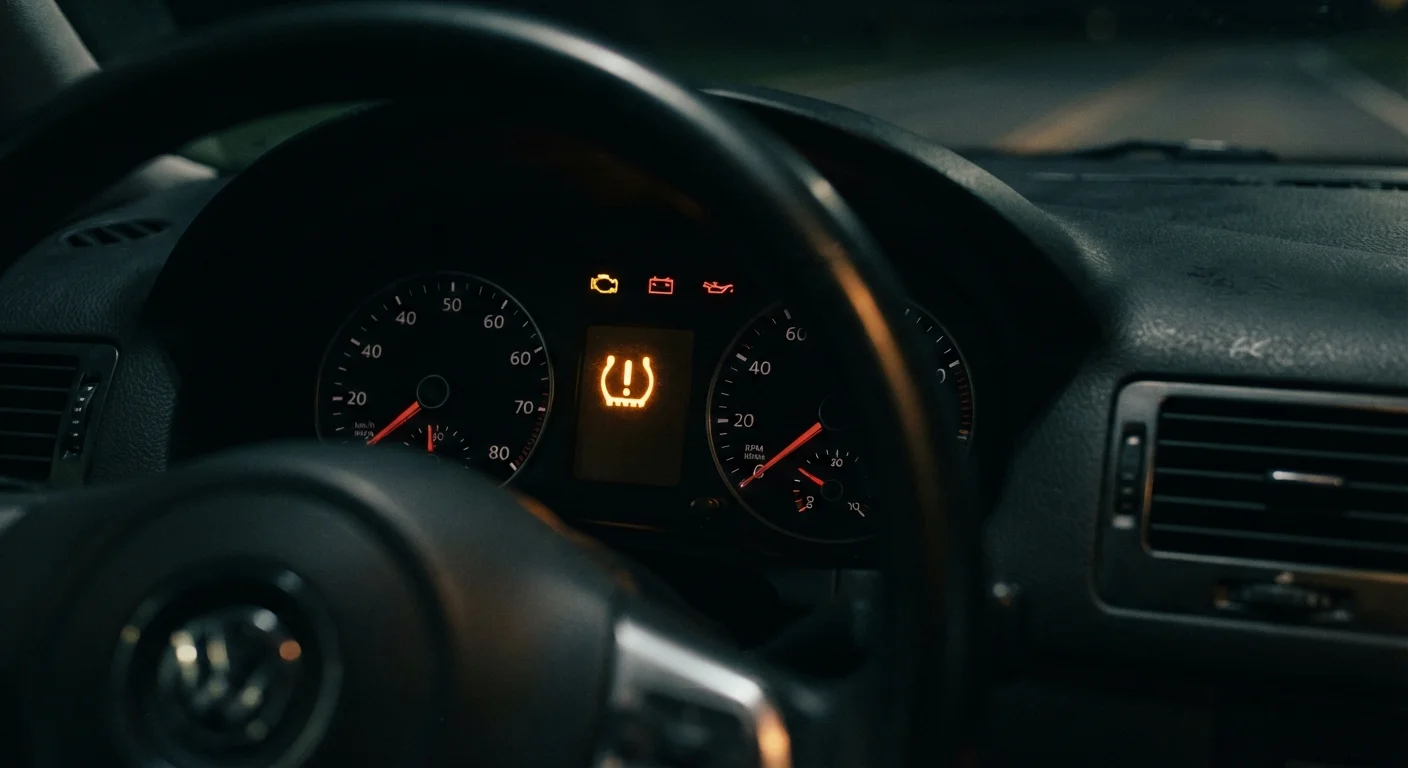
The TPMS warning light is one of the most misread indicators on a modern dashboard. Most drivers treat it as a simple prompt to add air - and when the light returns days later, frustration follows. But a recurring TPMS light is a signal worth decoding, not just dismissing with another trip to the air pump.
Your vehicle's TPMS system monitors pressure in each tyre using sensors mounted inside the wheels. When pressure in any tyre drops roughly 25% below the recommended level, the warning activates. The system is designed to catch gradual leaks and temperature-driven drops before they become safety hazards. See our guide to reading your TPMS light for a fuller breakdown of what different light behaviours signal.
Never Ignore a Solid TPMS Light While Driving
A steadily illuminated TPMS warning means at least one tyre is significantly underinflated right now. Driving on an underinflated tyre generates excess heat and can lead to sudden tyre failure at speed. Check pressures before continuing to drive, and do not assume the light will self-correct.
Understanding why the light keeps returning requires looking past the symptom - low pressure - and identifying the actual cause. The mistakes below cover the most common reasons drivers stay stuck in this cycle.
Common Mistakes That Keep the Light Coming Back
Inflating tyres to the pressure printed on the tyre sidewall rather than the vehicle placard.
Why it happens: The number moulded into the tyre sidewall is the maximum allowable pressure - not the recommended operating pressure. Many drivers assume these are the same thing.
Not resetting the TPMS system after correcting tyre pressures.
Why it happens: Most drivers expect the warning light to turn off automatically once pressure is corrected, but many vehicles require a manual reset - either through a dashboard menu or a physical reset button.
Ignoring a slow leak because the light only appears occasionally.
Why it happens: An intermittent light feels less urgent than a constant one, leading drivers to top up the air and assume the issue is resolved - often repeatedly.
Overlooking temperature-related pressure drops as a non-issue.
Why it happens: Drivers who inflate their tyres on a warm afternoon may find the TPMS light on the next cold morning and assume something is wrong. Tyre pressure drops approximately 1 PSI for every 10°F decrease in ambient temperature.
Assuming the TPMS light refers to all four tyres equally.
Why it happens: The standard TPMS warning light does not indicate which specific tyre is low - it only signals that at least one is outside the acceptable range. Drivers sometimes inflate one tyre and consider the job done.
Failing to replace a dead or damaged TPMS sensor after a tyre change or repair.
Why it happens: TPMS sensors sit inside the wheel and can be damaged during tyre mounting, or their batteries (which are sealed and not replaceable on most units) simply wear out after roughly 5-10 years.
Addressing these errors systematically is the fastest way to break the cycle. If you've worked through all of them and the light persists, the issue may involve a sensor fault or a problem that requires professional diagnosis. For broader context on how dashboard warnings work together, the complete dashboard warning light guide is a useful reference.
A Flashing TPMS Light Means Sensor Fault
If your TPMS light flashes for 60-90 seconds after startup and then stays on solid, this typically indicates a sensor malfunction rather than a pressure problem. Do not rely on the TPMS system to alert you to pressure changes until the sensor issue is diagnosed and resolved. Have the system inspected by a qualified technician.
When to See a Mechanic Instead of Handling It Yourself
Many TPMS issues - seasonal pressure adjustments, a proper reset, or a single slow puncture - are straightforward to address. But some causes genuinely require professional tools and expertise.
1 PSI
Pressure lost per 10°F temperature drop
This relationship between ambient temperature and tyre pressure is a well-established principle in tyre engineering and is cited by tyre manufacturers and the NHTSA.
5-10 years
Typical TPMS sensor battery lifespan
Most TPMS sensor batteries are sealed units that cannot be replaced independently; the sensor itself must be replaced when the battery fails.
Take your vehicle to a qualified technician if: the light continues to return after correcting all four tyre pressures and completing a reset; the light flashes on startup (indicating a sensor fault); you've had a tyre recently replaced and the light appeared shortly after; or you suspect a sensor battery has reached end of life. TPMS sensors require a programming tool to sync a new unit to your vehicle's receiver - this isn't a roadside fix.
Persistent or unexplained dashboard warnings are rarely one-dimensional. If your TPMS light coincides with other unusual readings, the complete guide to car warning signs can help you assess whether multiple systems may be involved.
This article provides general educational information about tyre pressure monitoring systems. It is not a substitute for advice from a qualified automotive technician. Always consult your vehicle's owner's manual and seek professional diagnosis for persistent or unclear warning light behaviour.