

Key Takeaways
Option A
Coolant Top-Up
The quick fix for a low reservoir.
Best for: Drivers whose coolant level has dropped slightly but whose fluid is still clean, in-date, and free of contamination.
Option B
Coolant Flush
The periodic reset for the whole cooling system.
Best for: Vehicles due for a scheduled service interval or showing signs of degraded, discolored, or contaminated coolant.
If your coolant level is slightly low and the fluid looks clean and clear
Coolant Top-Up
Adding the correct pre-mixed or concentrate-and-distilled-water blend restores protection quickly without the cost or time of a full flush.
If your coolant is due at your manufacturer's service interval
Coolant Flush
Coolant additives degrade over time regardless of appearance; a flush replaces spent inhibitors and removes corrosion byproducts from the system.
If the fluid looks brown, rusty, or has visible particles
Coolant Flush
Discoloration signals additive breakdown and potential corrosion. Topping up contaminated fluid dilutes fresh coolant and doesn't remove the source of the problem.
If the level keeps dropping week after week
Coolant Flush
A recurring low level almost certainly means a leak somewhere in the system. Have a qualified mechanic diagnose the source before adding any fluid - see our guide on cooling system failures.
What Each Service Actually Does
A coolant top-up is exactly what it sounds like: adding fresh coolant to the reservoir to bring the level back up to the marked maximum line. It takes a few minutes and addresses one specific condition - low fluid volume. It does nothing to the existing coolant in the system.
A coolant flush (sometimes called a coolant drain-and-fill or system flush) drains the old fluid from the radiator and, in a more thorough service, from the engine block passages as well. The system is typically rinsed and then filled with fresh coolant. This removes degraded additives, corrosion inhibitors that have been used up, and any particulate matter that has accumulated over time.
Understanding this distinction matters because they are not interchangeable. One manages volume; the other manages fluid quality and system health. Mixing up the two can lead to either overspending on unnecessary services or under-maintaining a critical system. For a broader look at why coolant matters to engine longevity, see how small coolant problems escalate when left unaddressed.
Side-by-Side: Top-Up vs. Flush
The table below contrasts the two services across the criteria that matter most to a typical driver.
| Criterion | Coolant Top-Up | Coolant Flush |
|---|---|---|
| Primary purpose | Restore fluid level | Replace degraded fluid, remove deposits |
| Time required | 5-10 minutes | 30-90 minutes (professional) |
| Typical trigger | Low reservoir level | Mileage/age interval or contamination |
| Addresses old additives | No | Yes |
| Removes corrosion byproducts | No | Yes |
| DIY-friendly | Generally yes | Partial - disposal requires care |
| Recommended frequency | As needed (check monthly) | Every 30,000-50,000 miles or 2-5 years |
One detail worth noting: coolant type matters during a top-up. Mixing an OAT (Organic Acid Technology) coolant with an older HOAT or IAT formula can reduce corrosion protection. Check your owner's manual or the reservoir cap for the specified type before adding anything.
Never Mix Coolant Types Without Checking First
Coolant formulas - OAT, HOAT, IAT - use different corrosion inhibitor chemistries. Mixing incompatible types can cause the inhibitors to react, reducing protection and potentially forming a gel-like deposit. Always confirm the coolant type specified in your owner's manual before topping up, and use a pre-mixed product or distilled water (not tap water) when diluting concentrate.
Reading the Warning Signs
Your car will usually give you clear signals about which service it needs - if you know what to look for.
Signs a top-up is appropriate
- The reservoir reads below the minimum line but the fluid is the correct color (typically bright green, orange, pink, or blue depending on type).
- No visible debris or cloudiness in the reservoir.
- The level drop happened gradually and you can't identify a leak.
Signs a flush is needed
- Fluid appears brown, rusty, or murky rather than its original color.
- A sweet smell from the engine bay, especially after the car warms up.
- You've reached or passed the manufacturer's recommended interval (typically 30,000-50,000 miles or 2-5 years - check your owner's manual).
- Visible particles or oily film in the reservoir, which can indicate a head gasket issue.
- The level consistently drops despite topping up - almost always a leak, not an evaporation issue.
If you notice a puddle beneath the vehicle, our colour-by-colour fluid leak guide can help you determine what you're looking at before calling a mechanic.
30,000-50,000 mi
Typical coolant flush interval
Most manufacturer maintenance schedules recommend a full coolant replacement within this range, though interval varies by vehicle and coolant type.
−34°F to 265°F
Protection range of a properly mixed coolant
A 50/50 blend of ethylene glycol coolant and distilled water provides freeze and boil-over protection across this temperature range under normal operating pressure.
~2 years
Useful life of standard green (IAT) coolant
Older inorganic additive technology (IAT) coolants typically deplete their corrosion inhibitors within about two years, regardless of mileage.
A Note on DIY vs. Professional Service
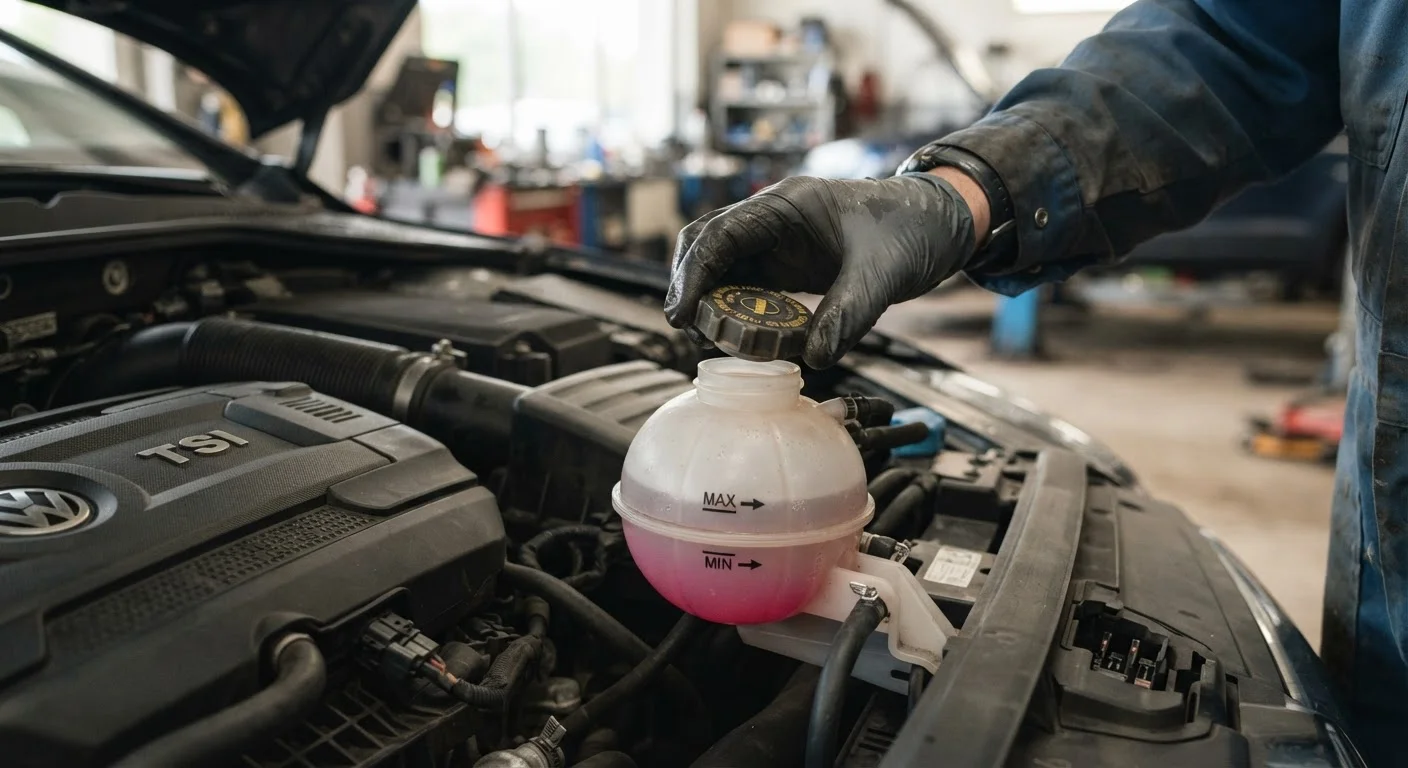
Topping up the coolant reservoir is a straightforward task most drivers can do safely at home: engine cold, cap off, add the correct pre-mixed coolant to the marked line, cap on. Always work on a cold engine - a pressurized hot cooling system can cause serious burns if opened.
A full flush is more involved. Draining the system, flushing the block passages, and properly disposing of old coolant (which is toxic to animals and should never be poured down a drain) are tasks many owners prefer to leave to a qualified mechanic. If your vehicle has a history of overheating or suspected contamination, professional diagnosis before any coolant work is a sensible precaution.
Either way, keeping an eye on all your under-hood fluids as a routine habit pays dividends. The monthly fluid check walkthrough covers coolant alongside brake fluid, power steering, and washer fluid in one practical routine. And if you're wondering how coolant service compares to other periodic fluid jobs, the same logic applies to transmission fluids - see our breakdown of transmission service vs. repair for a similar framework.
This article is for general informational and educational purposes only. Always consult your vehicle's owner's manual and, where in doubt, a qualified mechanic before performing or authorising any maintenance work.