

Key Takeaways
Cooling System Cascade Failure
A cooling system cascade failure occurs when one small problem — like a minor coolant leak — goes unaddressed and triggers a series of increasingly serious engine issues. Each failure makes the next one more likely, eventually threatening major components like the head gasket. Understanding this chain helps drivers catch problems early before they become expensive repairs.
The head gasket seals the combustion chamber from the engine's coolant and oil passages. When sustained overheating warps the cylinder head or engine block, the head gasket can no longer hold that seal, leading to coolant-oil mixing or combustion gas leaks.
How a Coolant Leak Starts the Chain Reaction
Coolant — sometimes called antifreeze — circulates through your engine to absorb heat and carry it to the radiator, where it disperses into the air. This loop is a closed system, meaning coolant loss in any amount is a sign that something has failed. Leaks commonly originate from a cracked hose, a worn radiator cap, a failing water pump, or a hairline crack in the radiator itself.
Many drivers don't notice a slow coolant leak until the temperature gauge climbs or a warning light appears. By that point, the engine may have already experienced significant thermal stress. For a practical guide to spotting what's pooling beneath your vehicle, see our colour-by-colour fluid leak guide.
~50%
Engine failures linked to cooling system issues
Industry mechanics and technical training materials consistently cite cooling system problems as a leading cause of roadside breakdowns and engine damage in passenger vehicles.
220–240°F
Typical safe engine operating range
Most passenger vehicle engines are designed to operate safely within this temperature range; sustained temperatures above this threshold accelerate component wear and gasket stress.
5–10x
Cost difference: leak repair vs. head gasket repair
Automotive repair professionals commonly note that addressing a coolant leak at the hose or radiator stage typically costs a fraction of a full head gasket replacement, which involves significant labor hours.
What Happens When an Engine Overheats
When coolant levels drop low enough, the engine can no longer shed heat effectively. Temperatures climb beyond the design range — typically above 220–240°F in most passenger vehicles — and metal components begin to expand beyond their tolerances. Aluminum cylinder heads are especially vulnerable because aluminum expands more rapidly than the cast iron or steel of the engine block it bolts to.
This differential expansion places enormous stress on the head gasket, which is sandwiched between the two surfaces. Even a single severe overheating event can compromise a head gasket's seal. Repeated moderate overheating — caused by a slow, ongoing coolant leak — produces the same result over a longer timeline.
Check Coolant Level Monthly
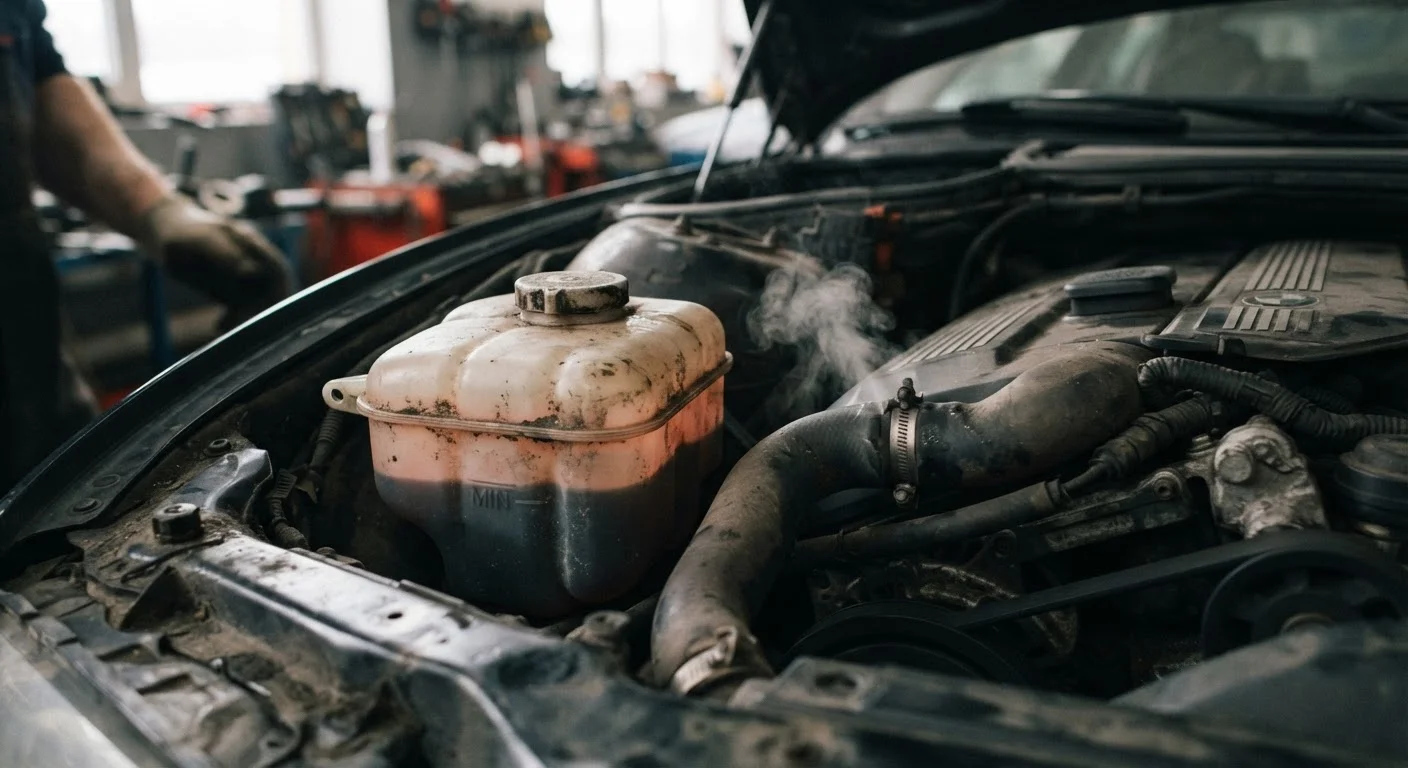
A 60-second visual check of the coolant reservoir when the engine is cold can reveal a slow leak before it causes overheating. The reservoir is typically a translucent plastic tank near the radiator with MIN and MAX markings. If the level is dropping between checks, have it inspected — don't just top it off and move on.
Recognizing the Warning Signs at Each Stage
The key to breaking the chain is recognizing warning signs before one problem triggers the next. Here's how each stage typically presents itself:
- Early coolant leak: Sweet smell near the engine or under the car, a slight drop in the coolant reservoir level, or a visible puddle that is green, orange, or pink depending on coolant type.
- Approaching overheating: The temperature gauge rises toward the red zone, especially in stop-and-go traffic or on hills. The cabin heater may blow cold air because there isn't enough coolant circulating.
- Head gasket failure: White smoke from the exhaust (coolant burning in the combustion chamber), a milky film on the oil dipstick, rapid coolant loss with no visible external leak, or bubbling in the coolant reservoir.
Our related article on engine bay warning signs covers many of these visual cues in detail, including what fresh versus dried coolant residue looks like around hoses and the reservoir.
What to Do — and What Not to Do
If your temperature gauge is climbing or you notice any of the warning signs above, the safest course of action is to pull over safely, turn off the engine, and allow it to cool completely before opening the hood. Never open a hot radiator cap — pressurized coolant can cause serious burns. Once cooled, check the coolant reservoir level as a first diagnostic step.
A confirmed coolant leak should be inspected by a qualified mechanic promptly. Sourcing the leak is straightforward for most shops and far less costly than the labor involved in a head gasket replacement. If a head gasket failure is already suspected — based on symptoms like white exhaust smoke or oil contamination — a mechanic can perform a combustion leak test to confirm before any teardown begins.
The underlying message is simple: cooling system problems compound quickly. Addressing a $50 hose or a $20 radiator cap today may prevent a repair that costs many times more.