

Key Takeaways
Option A
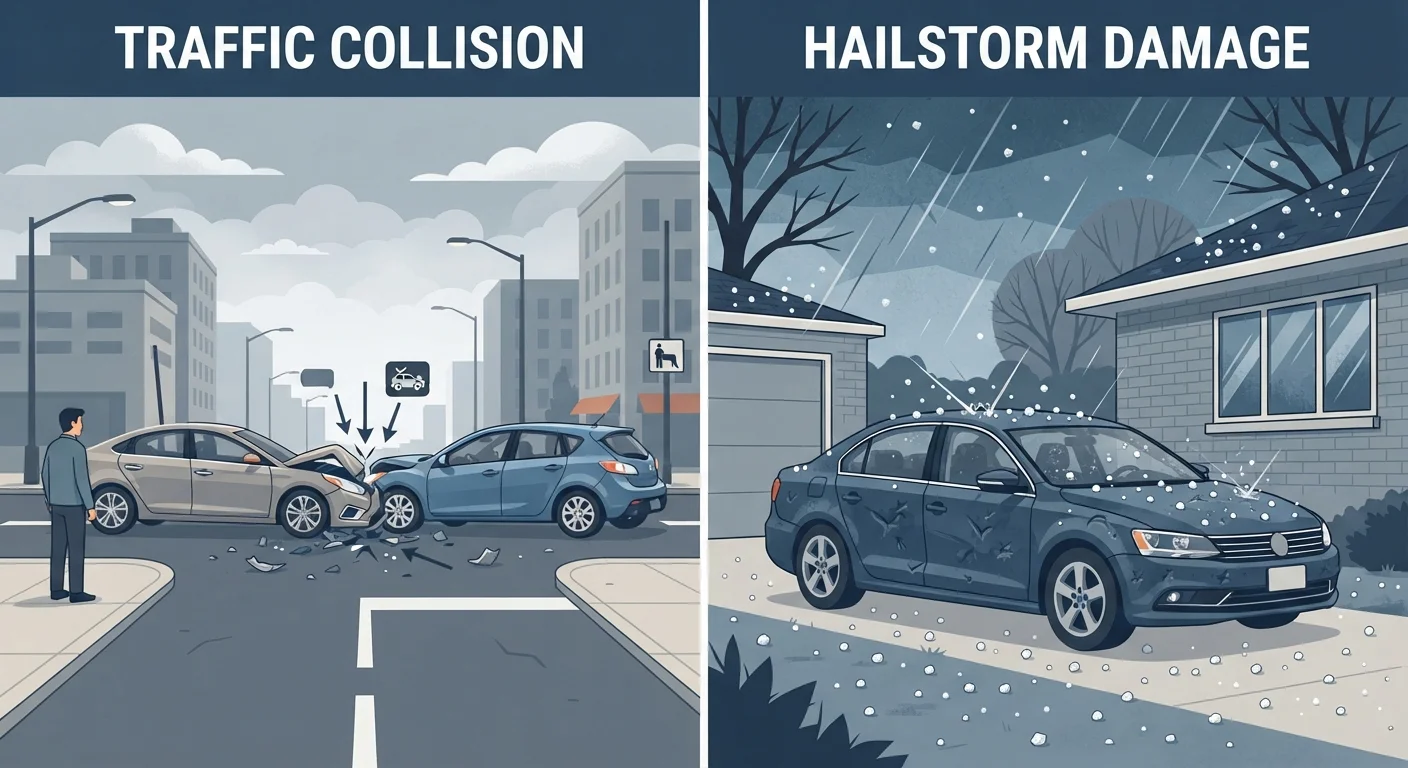
Collision Coverage
The coverage that pays when your car hits something.
Best for: Drivers who want protection for vehicle damage resulting from accidents involving another car or object.
Option B
Comprehensive Coverage
The coverage that pays when the world happens to your car.
Best for: Drivers who want protection against theft, weather events, and other non-collision damage outside their control.
If you're financing or leasing your vehicle
Both Collision and Comprehensive
Most lenders and leasing companies contractually require both coverages for the duration of the loan or lease term.
If you drive in areas prone to severe weather or high theft rates
Comprehensive Coverage
Comprehensive is the only coverage that protects against hail, flooding, fire, and vehicle theft - none of which collision covers.
If you frequently drive in heavy traffic or on congested roads
Collision Coverage
Higher exposure to traffic increases the likelihood of an at-fault or multi-vehicle accident, where collision coverage pays for your vehicle's repairs.
If your car's market value is low and you own it outright
Neither may be cost-effective
When a vehicle's actual cash value is low, the maximum payout may not justify paying premiums and a deductible. Review this periodically as your car depreciates.
Why These Two Coverages Get Confused
Collision and comprehensive are almost always sold together and are frequently bundled under the informal term "full coverage." That grouping, while convenient, obscures a meaningful difference: each coverage responds to an entirely separate category of loss. Understanding which is which can prevent costly surprises after an incident.
For a broader look at how these two fit alongside liability protection, see our plain-language breakdown of all three core coverage types. This article focuses specifically on what separates collision from comprehensive - and when each one actually applies.
| Criterion | Collision Coverage | Comprehensive Coverage |
|---|---|---|
| What triggers a claim | Impact with another vehicle or object | Theft, weather, fire, animals, vandalism |
| Covers parked-car damage | Generally no | Yes, in most cases |
| Fault requirement | Not required - covers regardless of fault | Fault is not a factor |
| Deductible applies | Yes | Yes |
| Required by law | No - optional under state law | No - optional under state law |
| Often required by lenders | Yes | Yes |
| Covers theft | No | Yes |
| Covers flood damage | No | Yes |
What Collision Coverage Actually Covers
Collision coverage pays to repair or replace your vehicle when it is damaged in an impact - regardless of who is at fault. Covered scenarios typically include:
- A crash with another vehicle
- Striking a stationary object, such as a guardrail, pole, or fence
- A single-car rollover
If you are at fault in an accident, collision is the coverage that addresses damage to your own vehicle. If another driver is at fault, their liability coverage may pay for your repairs instead - but if that process is delayed or disputed, you can file under your own collision coverage and let your insurer handle the recovery process (called subrogation).
Collision does not cover damage from weather, animals, theft, or any cause that doesn't involve a physical impact your vehicle caused or experienced while moving.
~76%
Of insured drivers carry collision coverage
According to the Insurance Research Council, the majority of insured U.S. drivers opt into collision coverage, though rates vary significantly by state.
~80%
Of insured drivers carry comprehensive coverage
Comprehensive coverage is slightly more common than collision among insured drivers, partly because its per-claim cost is often lower relative to premiums.
What Comprehensive Coverage Actually Covers
Comprehensive coverage - sometimes called "other than collision" coverage - addresses damage to your vehicle that occurs outside of a driving accident. Common covered events include:
- Theft or vandalism
- Hail, flooding, or other severe weather
- Fire
- Falling objects (tree branches, debris)
- Animal strikes, including hitting a deer
A useful mental model: if your car was damaged while parked and no collision occurred, comprehensive is the coverage likely in play. Flooding from a hurricane, a broken windshield from flying gravel, or a stolen catalytic converter would all fall under comprehensive - not collision.
Because many drivers assume their policy covers more than it does, it's worth reviewing common misconceptions about what auto insurance covers before assuming a specific loss is included.
Deductibles, Premiums, and the Decision to Keep or Drop Coverage
Both collision and comprehensive coverages come with a deductible - the amount you pay out of pocket before your insurer pays the rest. Deductibles are chosen at the time of purchase and directly affect your premium: a higher deductible generally means a lower monthly cost, but more exposure when a claim occurs.
Comprehensive deductibles are often set lower than collision deductibles because comprehensive claims tend to involve smaller repair amounts. However, this varies by insurer and policy design.
Whether to carry one or both coverages often comes down to your vehicle's actual cash value (ACV) - what your car is worth in the current market. If your car's ACV is close to or below the combined cost of annual premiums plus your deductible, the financial case for maintaining the coverage weakens. Life events - paying off a loan, buying a newer vehicle, or moving to a lower-risk area - can all shift this calculation. See why your coverage needs can change over time for a detailed look at those triggers.
The 'Full Coverage' Misnomer
When lenders or agents refer to 'full coverage,' they typically mean a policy that includes liability, collision, and comprehensive - not a policy that covers every possible loss. Gaps still exist: mechanical breakdown, personal belongings inside the car, and certain customizations are usually excluded. See what drivers commonly get wrong about their auto insurance to understand those gaps more clearly.
This article provides general educational information about auto insurance coverage types. It is not personalized insurance, financial, or legal advice. Coverage terms, exclusions, deductibles, and eligibility vary by insurer and by state. Always read your policy documents carefully and consult a licensed insurance agent for guidance specific to your situation.