

Key Takeaways
Option A
Fault Claims
The liability-based, at-fault-determined path.
Best for: Drivers in tort states who want the at-fault party's insurer to cover damages and medical costs.
Option B
No-Fault Claims
The first-party, coverage-regardless-of-blame path.
Best for: Drivers in no-fault states seeking faster, simpler medical cost reimbursement through their own insurer.
If you live in a no-fault state and want faster medical reimbursement
No-Fault Claims
Your own PIP coverage pays your medical expenses promptly without requiring a fault determination, reducing delays tied to liability disputes.
If you were injured by a clearly at-fault driver in a tort state
Fault Claims
Filing against the at-fault driver's liability insurance can cover both your medical costs and vehicle damage without tapping your own policy.
If minimising your own premium impact after an accident is a priority
Fault Claims
If you were not at fault, a fault-based claim against the other driver's insurer typically carries less risk of raising your own renewal premium.
If you want consistent coverage regardless of who caused the accident
No-Fault Claims
No-fault systems provide a predictable baseline for medical coverage without the uncertainty of proving or disputing liability.
What Fault and No-Fault Actually Mean
When an auto accident occurs, how responsibility is assigned - and who pays - depends on the insurance framework your state has adopted. The United States is split between tort (fault) states and no-fault states, and that distinction shapes every step of the claims process.
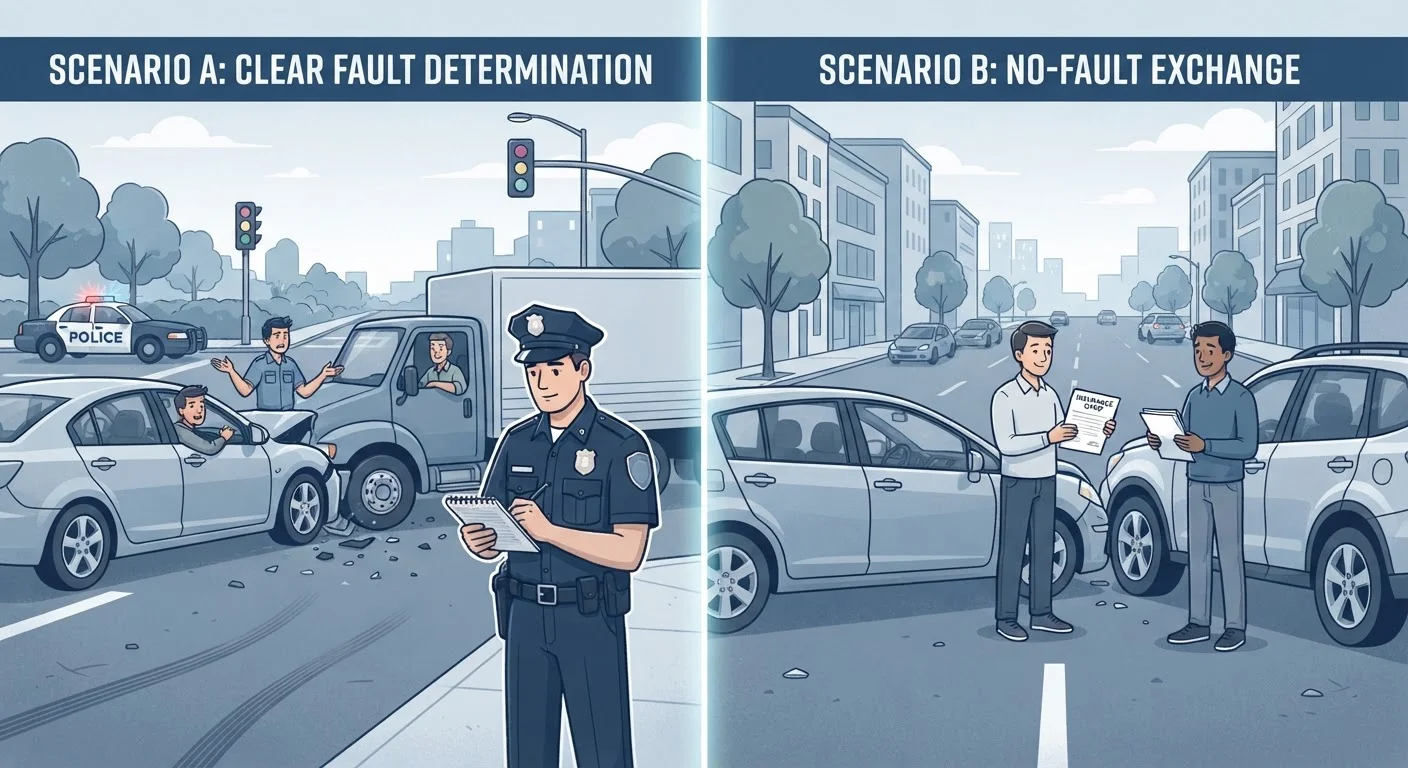
In a fault state, the driver determined to be responsible for causing the accident bears financial liability for damages. That driver's bodily injury and property damage liability coverage is the primary source of compensation for the injured party. Establishing fault often involves police reports, witness statements, and insurer investigations - a process that can take time but can also result in more complete compensation for documented losses.
In a no-fault state, each driver turns to their own insurer first - specifically their Personal Injury Protection (PIP) coverage - to pay for medical expenses and certain lost wages, regardless of who caused the crash. The goal is to speed up medical reimbursement and reduce the volume of minor injury lawsuits. However, no-fault laws typically restrict when you can sue the other driver; you usually must meet a defined injury threshold before litigation is permitted.
It's worth noting that no-fault refers specifically to how medical costs are handled - property damage claims, such as vehicle repairs, are still often handled on a fault basis even in no-fault states. Understanding this nuance matters when deciding how to file. See our guide to filing directly vs. through the other driver's insurer for a closer look at your options after an accident.
No-Fault Is a State-Level Choice
As of the most recent regulatory landscape, a minority of U.S. states operate under a true no-fault framework, while most are tort (fault) states. A few states offer a hybrid or choice system. Because state laws change, always verify your state's current framework with your insurer or your state's department of insurance - especially if you've recently moved.
How Each System Affects Your Premiums and Coverage Choices
The type of claim system in your state has real implications for which coverages you need - and how a claim filing might affect your renewal rates.
| Criterion | Fault Claims | No-Fault Claims |
|---|---|---|
| Who pays first | At-fault driver's liability insurer | Your own insurer (via PIP) |
| Fault determination required | Yes - central to the process | No - for medical costs |
| Medical cost coverage | Covered by liable party's insurer | Covered by your own PIP policy |
| Property damage handling | Fault-based in all states | Often still fault-based |
| Right to sue other driver | Generally unrestricted | Restricted; threshold must be met |
| Claims processing speed | Can be slower; liability disputed | Generally faster for medical bills |
| Premium impact if at fault | Typically significant rate increase | PIP claim may still affect rates |
| Key coverage to carry | Strong liability limits | Adequate PIP coverage |
In fault states, liability coverage is the cornerstone protection: if you cause an accident, your liability policy pays the other party's costs. Carrying higher liability limits provides greater protection if you're found responsible. In no-fault states, PIP coverage becomes just as essential, since it funds your own medical recovery. Some no-fault states mandate minimum PIP limits, though the required amounts vary widely.
For premium impact, a fault claim filed against you as the at-fault driver typically triggers the most significant rate increases at renewal. But even in no-fault states, filing a PIP claim may influence your insurer's view of your risk profile. How a claim history affects your future premiums explains the factors insurers typically weigh when adjusting rates after a claim.
Your deductible structure also interacts with these systems. PIP claims in no-fault states may be subject to a deductible, while liability claims paid to a third party typically are not. For a broader look at how deductibles function across coverage types, see how deductibles work across different coverage types.
Understanding which coverages apply - collision vs. comprehensive, liability, and PIP - helps you build a policy suited to your state's framework. The coverage types hub offers a structured overview of each option.
This article provides general educational information about auto insurance concepts and is not personalised insurance, financial, or legal advice. Coverage terms, exclusions, and state regulations vary significantly by provider and location. Always review your policy documents carefully and consult a licensed insurance agent or adviser for guidance specific to your situation.