

Key Takeaways
Our Verdict
Neither route is universally superior - the right choice depends on fault clarity, your deductible, and how quickly you need your vehicle repaired. When fault is disputed or the other driver's insurer is unresponsive, filing with your own insurer usually provides a more predictable path. When liability is clear and you want to avoid a deductible, pursuing the at-fault driver's insurer can make sense.
| Best for | Recommended |
|---|---|
| Drivers who need fast repairs and predictable service | First-party claim (your own insurer) |
| Those seeking to avoid paying a deductible when the other driver is clearly at fault | Third-party claim (other driver's insurer) |
| Situations where fault is disputed or the other driver is uninsured | First-party claim (your own insurer) |
| Minor damage with clear liability and a patient timeline | Third-party claim (other driver's insurer) |
Understanding Your Two Main Options
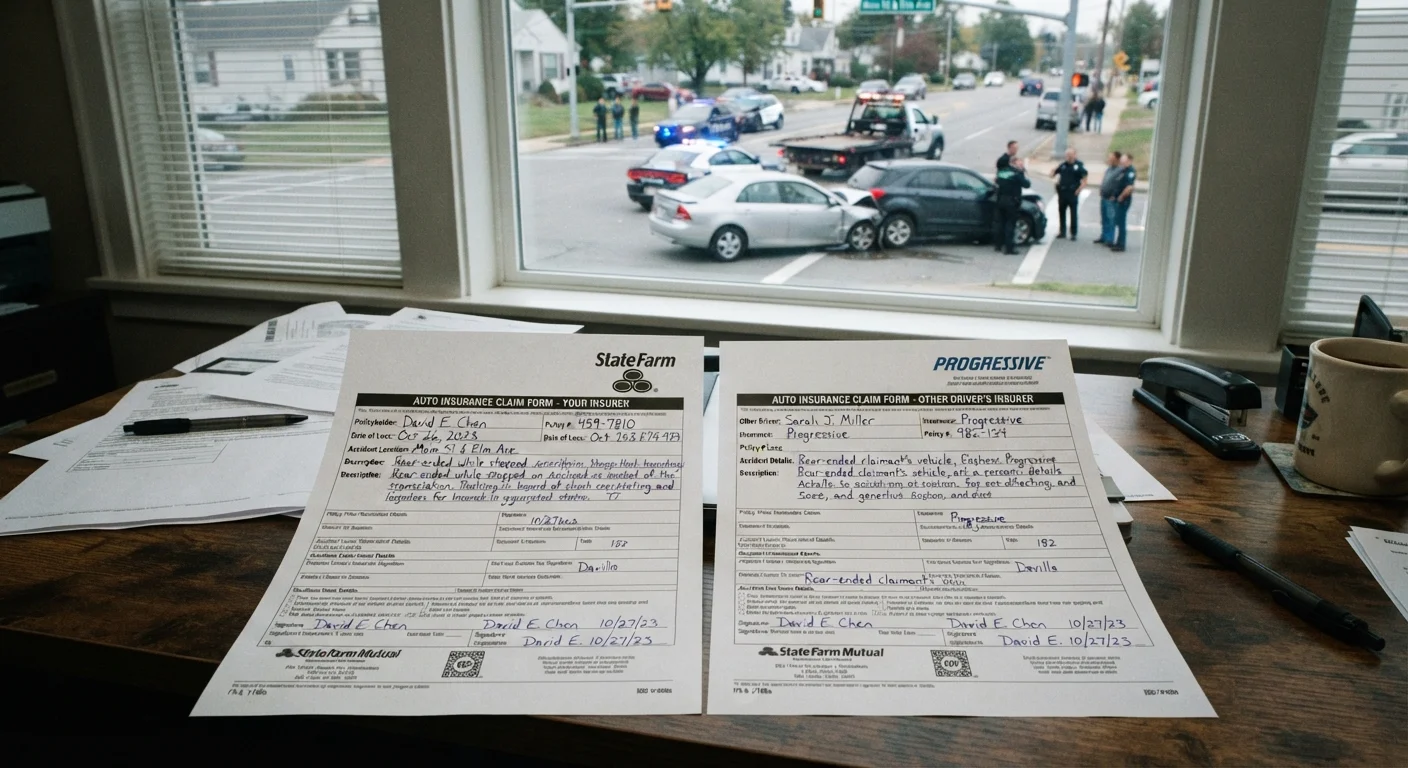
After a collision that wasn't your fault, most drivers face a fork in the road: file a claim with their own auto insurer or pursue a claim directly against the at-fault driver through that driver's liability coverage. Understanding how each path works is the first step to making an informed decision.
A first-party claim goes through your own policy - typically under your collision coverage. Your insurer handles the process, and you pay your deductible upfront. A third-party claim, sometimes called a liability claim, is filed with the at-fault driver's insurer. You deal directly with a company that has no contractual obligation to you and whose primary client is the other driver.
For a broader walkthrough of what a claim involves at each stage, see our Auto Insurance Claims from Start to Finish guide. And if you're unsure how fault rules apply in your state, Fault vs. No-Fault Claims: Why the Difference Matters explains the key distinctions.
First-Party Claim: Speed and Control, at a Cost
Filing with your own insurer puts you in familiar territory. Your insurer has a contractual duty to handle your claim promptly and in good faith. This typically means faster scheduling of adjuster visits, quicker access to rental car coverage if your policy includes it, and a clearer timeline for settlement.
The main drawback is your deductible - the amount you pay out of pocket before your insurer covers the rest. If your deductible is $1,000 and your repair estimate is $2,400, you'll pay $1,000 upfront even if the accident was entirely the other driver's fault. Your insurer may later pursue the at-fault driver's insurer for reimbursement through a process called subrogation. If subrogation is successful, you may recover part or all of your deductible - but this can take months and is not guaranteed.
Another consideration is your premium. Insurers handle this differently: some do not raise rates when a first-party collision claim is filed for a not-at-fault accident, while others may. Review your policy terms or speak with a licensed agent to understand how a claim might affect your specific policy.
Notify Your Own Insurer Either Way
Even if you plan to file a third-party claim, most policies require you to report accidents to your own insurer promptly. Failing to do so can complicate your coverage if the third-party route doesn't work out. A report is not the same as filing a claim - check your policy language or ask your agent.
Third-Party Claim: No Deductible, Less Certainty
Filing directly with the at-fault driver's insurer means you bypass your own deductible entirely - if the claim is accepted. The other insurer pays repair costs and related losses up to the at-fault driver's liability limits. This route can be financially appealing when fault is straightforward and the other driver carries adequate coverage.
The significant trade-off is control. The at-fault driver's insurer has no direct contractual relationship with you. Response times can vary, and the insurer may dispute fault, challenge your repair estimates, or offer a settlement you believe is too low. If that happens, you have options - our article on When an Insurer Disputes Your Claim Amount covers what steps are available. Third-party claims can also stall if the other driver's insurer is conducting its own investigation.
| First-Party Claim | Third-Party Claim | |
|---|---|---|
| Filed with | Your own insurer | At-fault driver's insurer |
| Deductible required | Yes (may be recovered via subrogation) | No |
| Processing speed | Generally faster | Can be slower or unpredictable |
| Insurer obligation to you | Contractual duty of good faith | No direct contractual relationship |
| Premium impact risk | Possible, varies by policy | Typically none to your own policy |
| If fault is disputed | Your insurer advocates on your behalf | Resolution may stall or be denied |
| If other driver is uninsured | Uninsured motorist coverage may apply | Third-party route not viable |
Before contacting either insurer, gather documentation. Photos, a police report number, and repair estimates form the foundation of any strong claim. See The Paper Trail That Protects Your Claim for a practical checklist.
Factors to Weigh Before You Decide
Several practical variables should guide your choice:
- Clarity of fault: If fault is contested, your own insurer provides a more reliable advocate. If a police report clearly places fault on the other driver, a third-party claim may move smoothly.
- Your deductible amount: A high deductible makes the third-party route more financially attractive, assuming the other driver's coverage is adequate.
- Urgency: If you need your vehicle repaired quickly, your own insurer typically offers a faster, more predictable process.
- The other driver's coverage: If the at-fault driver is uninsured or underinsured, a third-party claim may not be viable. Your own uninsured/underinsured motorist coverage would then become relevant.
- Your state's rules: No-fault states require drivers to file with their own insurer for injury claims up to a threshold, regardless of fault. Property damage may still be handled differently. Confirm the rules that apply where you live.
Once you've filed, understanding what happens next matters just as much. What Actually Happens After You File a Claim walks through adjuster visits, damage assessments, and how payouts are calculated. You may also find Good Practices When Dealing With an Insurance Adjuster useful as you navigate communications with any insurer.
This article provides general educational information about auto insurance claims and is not personalized insurance, financial, or legal advice. Coverage terms, exclusions, and claims processes vary by insurer and by state. Read your actual policy documents carefully and consult a licensed insurance agent or attorney for guidance specific to your situation.