

Key Takeaways
EV Battery Degradation
EV battery degradation is the gradual reduction in a battery pack's ability to hold a full charge over time. As an EV accumulates miles and charge cycles, its maximum range shrinks relative to the new-vehicle figure. This is a normal, unavoidable process - not a defect - but the rate and financial impact vary significantly by vehicle, climate, and charging behavior.
Degradation is primarily driven by lithium-ion chemistry changes: lithium plating, electrolyte decomposition, and loss of active electrode material reduce the battery's usable capacity (measured in kilowatt-hours) over hundreds of charge cycles.
How Battery Degradation Works
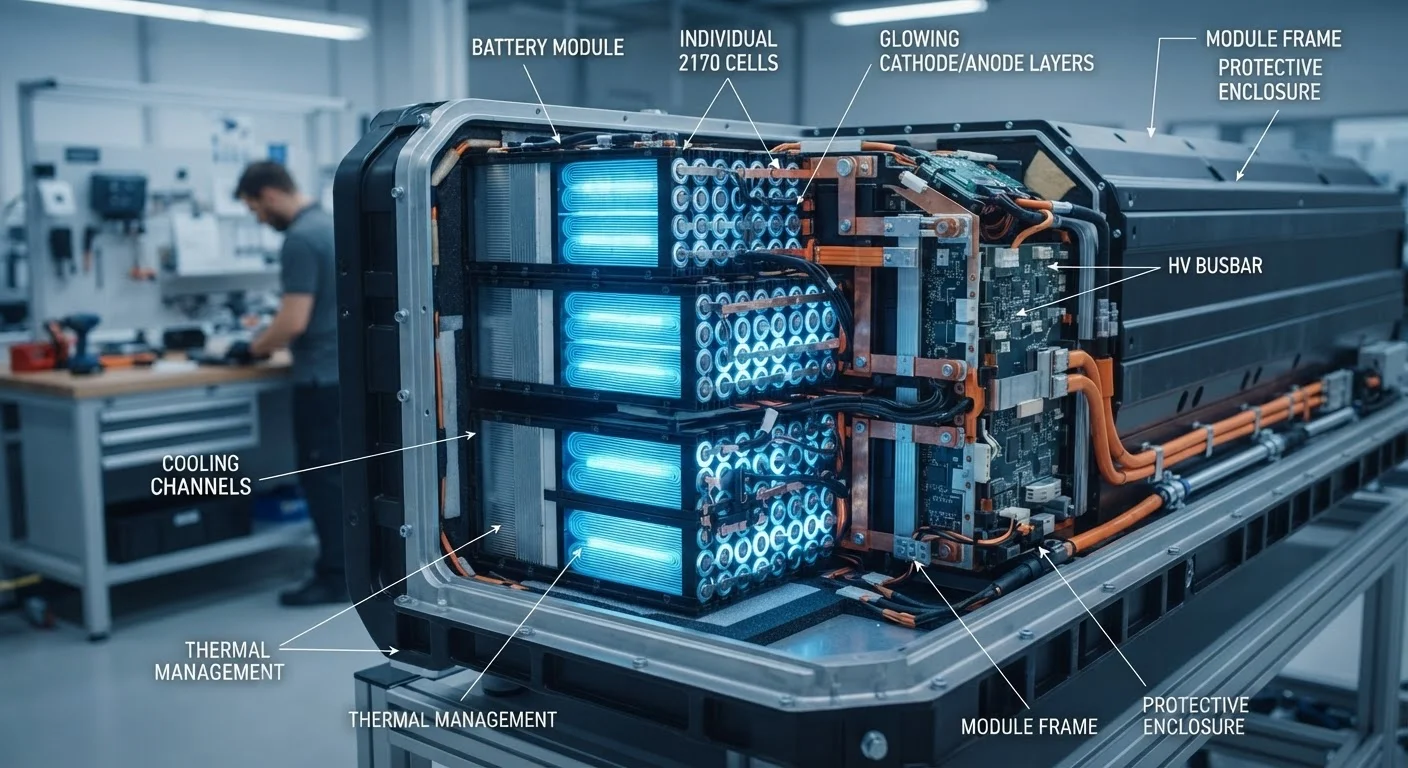
Every rechargeable lithium-ion battery - whether in a smartphone or a full-size electric truck - loses some capacity with each charge cycle. Inside an EV battery pack, thousands of individual cells undergo repeated expansion and contraction as lithium ions move between electrodes. Over time, this mechanical stress, combined with chemical side reactions, reduces the number of lithium ions available to store energy.
The result is a gradual shrinkage in usable capacity. A vehicle that originally delivered 300 miles of rated range might offer 270 miles after several years of regular use. That gap widens slowly rather than all at once, which is why many drivers don't notice it early on.
Several variables influence the speed of degradation. High ambient temperatures accelerate chemical breakdown inside cells - a key reason EVs in hot climates tend to degrade faster than those in mild ones. Charging to 100% frequently, or discharging to near zero, also stresses cells more than staying within a middle range. For a deeper look at how cold affects range in a different way, see how winter temperatures affect EV range.
Battery Degradation vs. Range Loss Are Not Identical
Degradation refers to permanent capacity loss in the battery pack itself. Day-to-day range variation - caused by temperature, speed, climate control use, and terrain - is a separate phenomenon. A battery that loses 10% range on a cold day has not degraded; a battery that permanently holds 10% less charge than when new has. Understanding the difference helps avoid misinterpreting normal range fluctuation as long-term damage.
Warranty Protections and What They Cover
Federal regulations require all EV manufacturers selling vehicles in the U.S. to provide a battery warranty of at least 8 years or 100,000 miles. This warranty must cover not just outright failure but also excessive capacity loss - generally defined as the battery dropping below 70% of its original rated capacity within the warranty period.
In practice, this protection is significant. If your battery degrades unusually fast within those parameters, the manufacturer is obligated to repair or replace it at no cost. Some automakers voluntarily exceed the federal minimums, offering longer coverage periods or higher capacity-retention thresholds.
What the warranty does not cover is normal, gradual degradation that stays above the threshold. If your pack retains 78% capacity after seven years, that's within typical ranges and outside warranty scope, even if it's noticeable to you as a driver. Reading your specific warranty documentation carefully - particularly the capacity threshold language - is essential before purchase.
Check the Capacity Threshold in Your Warranty
Not all EV warranties define 'excessive degradation' the same way. Some cover drops below 70% capacity; others set the threshold at 60%. Before purchasing, locate the specific language in the warranty document - this threshold determines whether a degraded pack qualifies for covered replacement.
The Real Cost Implications Over Time
Battery degradation factors into long-term EV ownership in three concrete ways: out-of-pocket replacement risk, resale value, and the real-world utility of the vehicle.
Out-of-warranty replacement remains the most financially significant concern. Full pack replacements have historically cost $10,000-$20,000 depending on pack size, though the per-kilowatt-hour cost of cells has fallen substantially over the past decade. Module-level repairs, available on some platforms, can reduce costs when only a portion of the pack needs attention.
Resale value is a related pressure point. As discussed in understanding EV depreciation, battery age and remaining range are key inputs into used-EV pricing. A car with demonstrably healthy battery state-of-health data can command a premium on the secondary market. Conversely, a degraded pack is a significant negotiating point for buyers.
Finally, reduced range changes the practical utility of the vehicle. A commuter who bought an EV with comfortable range margin may find that margin eroded after a decade, making certain trips less convenient. This is worth modeling against your driving patterns when evaluating the long-term picture alongside EV maintenance costs over time.
~2.3%
Average annual EV battery capacity loss
Recurrent's analysis of real-world EV fleet data suggests most battery packs lose approximately 2-3% of capacity per year under typical ownership conditions.
8 yrs / 100K mi
Minimum federal EV battery warranty
U.S. federal regulations mandate this minimum warranty covering defects and excessive capacity loss for all EVs sold in the country.
$10K-$20K+
Typical out-of-warranty pack replacement cost
Full battery pack replacement costs vary by model and pack size; per-kWh costs have declined significantly over the past decade but remain a substantial potential expense.
Slowing Degradation Through Better Habits
While some degradation is inevitable, charging and storage practices meaningfully influence the rate. Most manufacturers recommend daily charging to 80% rather than 100% for regular use, reserving full charges for long trips. Similarly, avoiding prolonged periods at very low states of charge reduces stress on cells.
Limiting DC fast charging to situations where it's genuinely needed - road trips, for instance - rather than using it as a primary charging method is another evidence-backed strategy. Level 2 home charging is gentler on battery chemistry and should be the default for most drivers.
Thermal management also matters. Parking in shade or a garage in extreme heat, and pre-conditioning the battery before fast charging sessions (a feature many EVs now offer), helps the pack maintain temperature within its optimal range. For a comprehensive guide to protecting battery health across the ownership period, see getting the most from an EV over the long term.
If you've encountered claims that EV batteries fail quickly or unpredictably, common EV battery myths addressed offers a grounded look at what the data actually shows.