

Key Takeaways
EV Depreciation
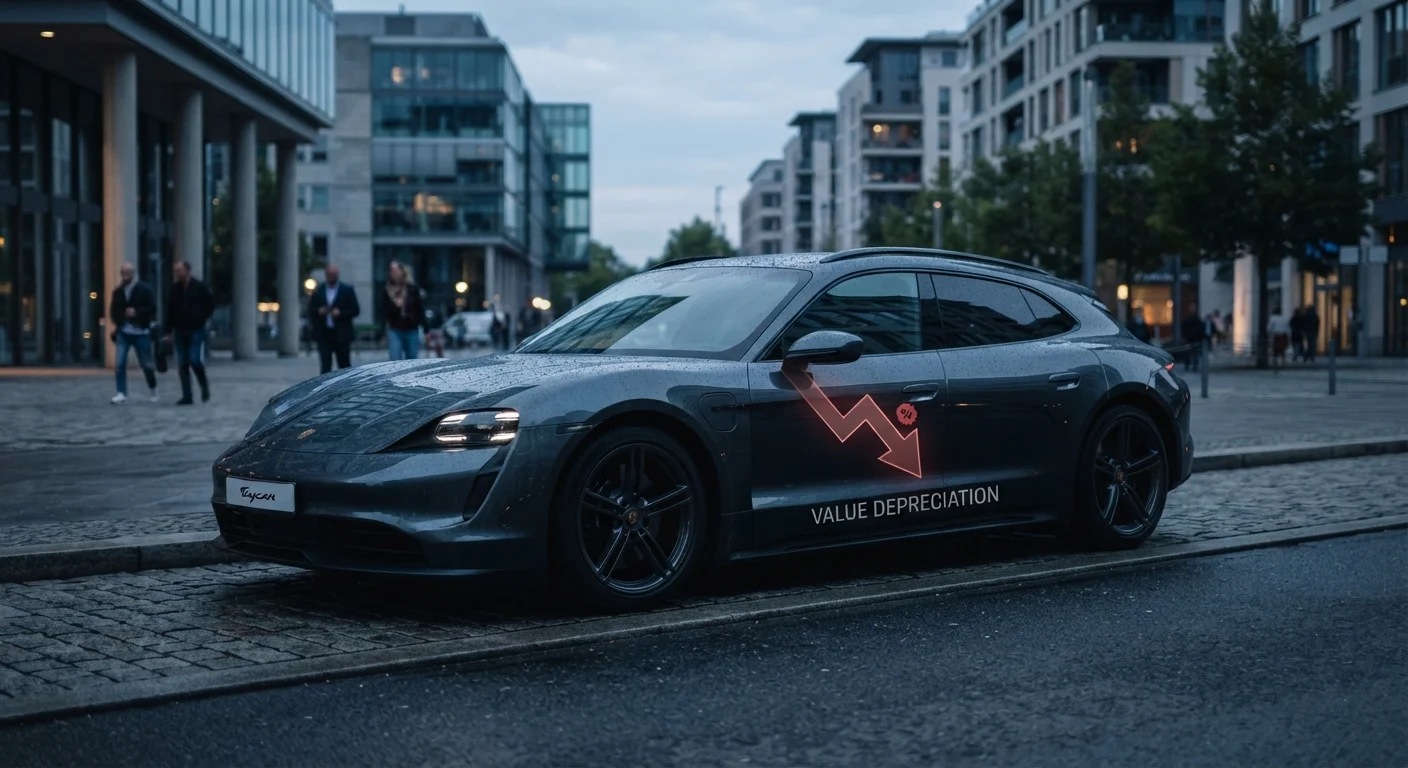
EV depreciation refers to the rate at which an electric vehicle loses its monetary value over time. Unlike conventional petrol cars, EVs are influenced by unique factors such as battery health, the pace of technological advancement, and the rapid release of newer models with longer ranges. Understanding how EVs depreciate helps buyers assess the true long-term cost of ownership.
Depreciation is typically measured as the percentage of original MSRP lost over a set period — commonly one, three, or five years — and varies significantly across EV segments and brands.
Why EVs Depreciate Differently
Depreciation is the single largest cost for most vehicle owners, yet it's often the least visible. For electric vehicles, the depreciation story is shaped by forces that simply don't apply to petrol cars. To understand the full financial picture of switching to an EV, it helps to first understand how depreciation works broadly before examining what makes EVs distinct.
The EV market is still maturing rapidly. Manufacturers routinely release updated models with meaningfully longer range, improved software, and new charging capabilities within 12 to 18 months of a previous generation. Each new release can make an existing model feel technologically dated faster than a comparable petrol vehicle update would. This technology-cycle pressure is one of the most significant depreciation factors unique to EVs.
Technology Cycles Move Faster Than Model Years
Unlike petrol vehicles, where a model year refresh is typically cosmetic or minor, EV updates can involve substantial range improvements, new battery chemistry, or revised charging speeds. This means an EV can feel significantly dated within two to three years, even if the physical vehicle remains in excellent condition. Buyers weighing long-term ownership should factor in how actively a manufacturer supports its existing fleet through software updates.
Battery Health: The Hidden Value Driver
In a conventional vehicle, engine condition matters enormously to resale value. In an EV, the battery pack plays that role — and then some. Battery degradation is a natural process; lithium-ion cells lose a small percentage of their capacity with each charge cycle. Over time, this results in a measurable reduction in real-world driving range.
Used-car buyers are acutely aware of this. A vehicle that originally offered 280 miles of EPA-estimated range but now delivers 230 miles is a fundamentally different proposition than a newer model offering the same 280 miles. This range gap is often reflected in lower resale prices. Buyers should request battery health reports where available and check whether the vehicle is still covered under the manufacturer's battery warranty, which typically covers capacity falling below a defined threshold — commonly 70% of original capacity over eight years or 100,000 miles.
~50%
Average 3-year depreciation for many EVs
Industry analysis from iSeeCars and similar automotive data providers has found that many electric vehicles lose roughly half their original value within three years, though this varies significantly by model and segment.
8 years / 100,000 mi
Federal minimum EV battery warranty requirement
U.S. federal regulations require automakers to warranty EV battery packs for at least 8 years or 100,000 miles, providing some protection against rapid capacity loss for original and subsequent owners.
$4,000
Maximum used EV federal tax credit
Under the Inflation Reduction Act, qualifying used EVs purchased from a licensed dealer may be eligible for a federal tax credit of up to $4,000, subject to buyer income and vehicle price limits.
How New Model Releases and Incentives Influence the Used Market
The federal government's clean vehicle tax credit program allows qualified buyers of new EVs to claim a credit of up to $7,500 at the point of sale (subject to income, vehicle price, and assembly requirements). When this credit effectively lowers the out-of-pocket cost of a new EV, it reduces the price premium buyers are willing to pay for a comparable used model, exerting downward pressure on used EV values.
A separate used clean vehicle tax credit — capped at $4,000 or 30% of sale price, whichever is lower — applies to qualifying pre-owned EVs sold by licensed dealers, partially offsetting this dynamic. Still, the combined effect of technology advancement and new-vehicle incentives means original owners often face steeper depreciation curves than they might expect.
Understanding these dynamics is essential when evaluating the total cost of running an electric vehicle, where depreciation frequently exceeds fuel and maintenance expenses combined.
“Depreciation is the elephant in the room for EV economics. Buyers focus on fuel savings, but in the first three years, the value drop can dwarf everything else in the cost calculation.”
— Phred Dvorak, Automotive industry journalist and EV market analyst
Segments and Models That Hold Value Better
Not all EVs depreciate at the same rate. Segment and demand play a significant role. Electric pickup trucks and full-size SUVs have generally demonstrated stronger residual values than smaller sedans or hatchbacks, partly because supply has been constrained relative to consumer demand in those categories.
Brand reputation for software support also matters. Vehicles that receive ongoing over-the-air updates — adding features, improving efficiency, and extending useful life — tend to age more gracefully in buyers' eyes. This is one reason the perception that luxury EVs depreciate catastrophically deserves more nuance; premium models with robust software ecosystems and long warranties can hold value more predictably than their initial depreciation rates suggest.
For a detailed look at how EV running costs shift over time beyond depreciation, see our guide to EV maintenance costs over time. And for broader context on used vehicle pricing, the used car value hub covers depreciation trends across vehicle types.
Protect Resale Value From Day One
Keeping detailed service and charging records, avoiding consistently charging to 100% when not needed for long trips, and maintaining the battery within recommended temperature ranges can all help preserve capacity over time. A vehicle with documented battery health history is easier to sell and may command a higher price on the used market.
This article provides general educational information about EV depreciation and is not personalized financial or purchasing advice. Vehicle values vary by market, condition, mileage, and other factors. Consult current market data and a qualified automotive professional before making buying or selling decisions.