

Car Safety

Safety Ratings Checklist: What to Verify Before Finalising a Vehicle Choice

Share
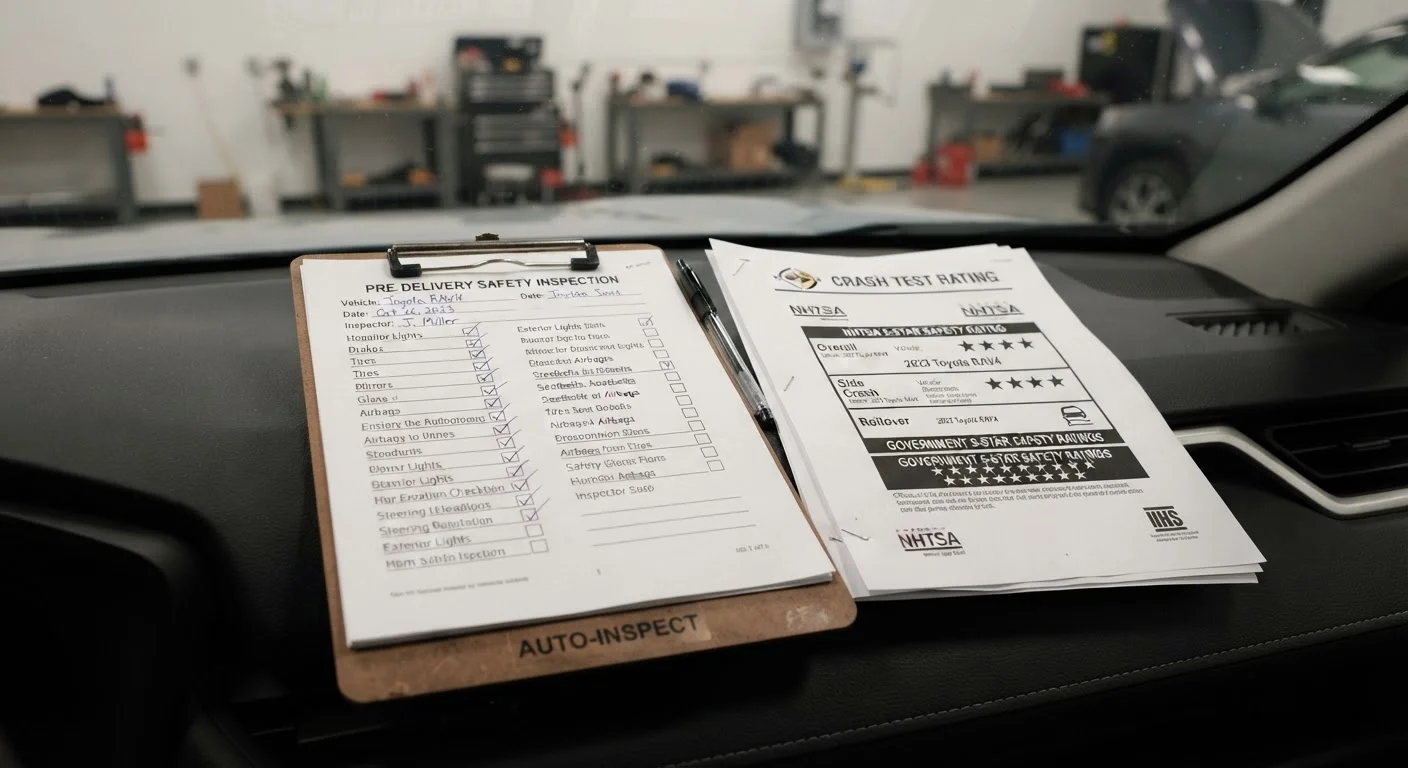
Checklist on a car dashboard next to printed vehicle safety rating documents ready for review.

Key Takeaways

NHTSA and IIHS use different methodologies — check both before drawing conclusions about a vehicle.
Ratings apply to specific model years and body styles; always verify the exact trim and model year.
Advanced driver-assistance system (ADAS) evaluations are scored separately from crashworthiness tests.
A vehicle's overall score can mask weak performance in one critical sub-category.
Used vehicles may have structural repairs that ratings data cannot reflect — a physical inspection matters.
30–60 min

Summary

22 items · 30–60 minutes

Why a Checklist Approach to Safety Ratings Matters

Vehicle safety ratings are among the most objective tools available when comparing cars, but they are easy to misread. An impressive headline score can obscure a marginal result in a specific crash scenario. A model year change can alter ratings without changing the vehicle's appearance. And the two primary U.S. rating programmes — the National Highway Traffic Safety Administration (NHTSA) and the Insurance Institute for Highway Safety (IIHS) — test different scenarios using different scales, making side-by-side comparisons non-trivial.

If you are new to interpreting these scores, our first-time buyer's roadmap to crash test ratings explains every term and rating system before you reach this stage. For a deeper walkthrough of official results pages, see Reading a Vehicle Safety Report.

The checklist below is designed to ensure nothing slips through. Work through each group systematically before finalising any vehicle decision.

Required

NHTSA SaferCar.gov

Access official U.S. government star ratings, recall data, and safety investigation records for any vehicle.

Required

IIHS Vehicle Ratings (iihs.org)

Look up crashworthiness test results, headlight evaluations, and Top Safety Pick designations by model year.

Required

NHTSA VIN Lookup Tool

Check whether the specific vehicle you are considering has any open safety recalls tied to its VIN.

Optional

Vehicle History Report Service

For used vehicles, verify whether the car has been in a reported collision or has structural repair records.

The Safety Ratings Verification Checklist

The groups below progress from foundational data verification through to real-world limitations. Complete them in order — earlier steps establish context that shapes how you interpret later findings.

Confirm the Exact Vehicle Scope

Identify the precise model year and body style being rated, since ratings can differ between a sedan and an SUV variant with the same nameplate. Must
Confirm the trim level covered by the rating, because safety features — and therefore scores — may vary between base and higher trims. Must
Note the model year of the tested vehicle versus the year you intend to purchase, and check whether any mid-cycle safety updates have occurred. Must

NHTSA Star Ratings

Look up the vehicle's overall NHTSA star rating at safercar.gov and record the score out of five stars. Must
Review sub-category scores for frontal crash, side crash, and rollover separately — do not rely solely on the combined overall rating. Must
Check whether the vehicle carries any open NHTSA safety investigations or active recalls via the NHTSA recall database before proceeding. Must
Note the Dynamic Rollover Risk percentage (a statistical supplement to the rollover star rating) for SUVs, pickups, and vans. Should

IIHS Crashworthiness Ratings

Locate the IIHS ratings page for the specific model year and verify each crashworthiness test result: small overlap front (driver and passenger sides), moderate overlap front, side, roof strength, and head restraints. Must
Identify any test rated Acceptable or Poor — a single weak result in a critical area warrants careful consideration even if the overall designation is strong. Must
Check whether the vehicle has achieved IIHS Top Safety Pick or Top Safety Pick+ designation for the relevant model year, and note the specific criteria met. Should
Review headlight ratings, which are scored separately and can significantly affect night driving safety without affecting the overall crashworthiness designation. Should

ADAS and Active Safety Evaluations

Confirm whether front crash prevention (automatic emergency braking) is standard or only available as an option on the trim you are considering. Must
Review the IIHS vehicle-to-vehicle and vehicle-to-pedestrian front crash prevention scores to understand how the system performs across scenarios. Must
Check NHTSA's 5-Star Safety Ratings data for any supplemental ADAS testing results published alongside crash scores. Should
Determine whether lane-keeping assist, blind-spot monitoring, and rear cross-traffic alert are included — and whether they have been independently evaluated. Nice to have

Cross-Reference and Contextualise

Compare NHTSA and IIHS results side by side, noting any significant divergence that may indicate testing scenario differences rather than overall vehicle quality. Must
Read the full narrative on any test rated below Good or below four stars, rather than relying solely on the summary score. Should
Review the limitations of standardised testing — for a structured overview, see where crash scores fall short — and factor in real-world conditions the tests do not capture. Should
Consult the comprehensive reference at Vehicle Safety Ratings: The Complete Reference if any test methodology or score interpretation is unclear. Nice to have

Final Verification Before Decision

Confirm no open recalls affect the specific vehicle identification number (VIN) using the NHTSA VIN lookup tool. Must
Verify that any optional safety packages required for the rated score are actually included in the specific vehicle being purchased. Must
Document all ratings and sources reviewed so you have a reference record for your decision. Nice to have

Overall Scores Can Mask Critical Weaknesses

A high aggregate safety rating does not guarantee strong performance in every test scenario. A vehicle could earn four NHTSA stars overall while recording a lower score in a specific crash direction. Always examine individual sub-category results, not just the headline figure, before treating a vehicle as comprehensively safe.

If you are assessing a pre-owned vehicle, ratings data alone is insufficient. Structural repairs after a collision can compromise occupant protection in ways that published scores cannot reflect. See assessing a used car's occupant safety history for a dedicated pre-purchase process, and consult the Evaluating and Inspecting hub for broader condition assessment guidance.

For shoppers evaluating a luxury electric vehicle, our structured luxury EV assessment checklist addresses range, charging, and warranty considerations alongside safety.

Ratings Are Model-Year and Trim Specific

Safety data published for one model year may not apply to another, even when the vehicles look identical. Manufacturers sometimes add or remove standard safety equipment between production years, which can alter test outcomes. Always confirm that the rating you are referencing corresponds to the exact model year and trim level of the vehicle you intend to purchase.

Car Safety Editorial Team is the collective byline for our editorial team and contributor network. Articles published under this byline or an editorial pen name are researched, written, and reviewed according to our editorial standards for clarity, consistency, and independence before publication.

View all articles by Car Safety Editorial Team →
Disclaimer: The content on this site is for informational purposes only and is not a substitute for professional advice. Always consult a qualified professional for guidance specific to your situation.