

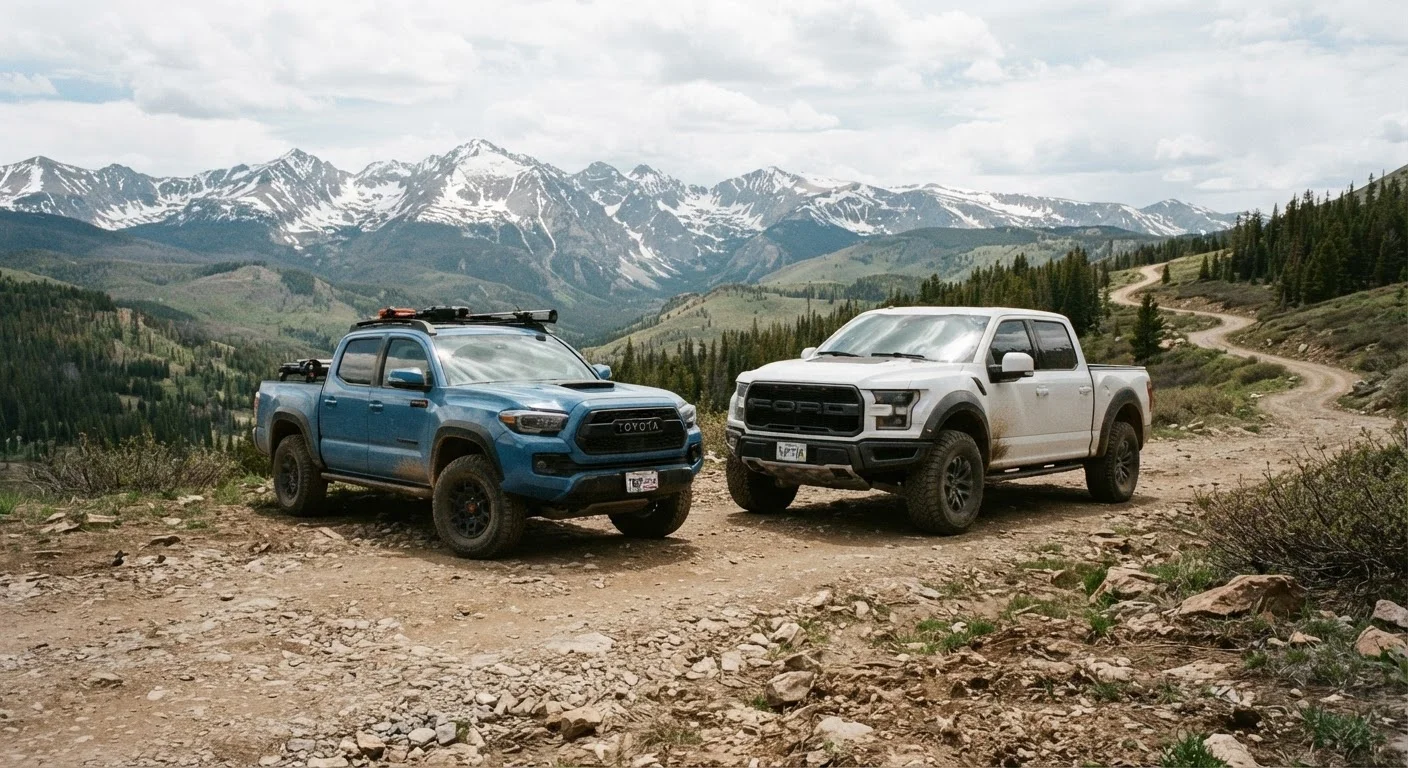
Key Takeaways
Option A
Midsize Pickup Truck
The nimble, versatile everyday hauler.
Best for: Drivers who want truck utility in a more manageable package for urban driving, lighter hauling, and recreational off-road use.
Option B
Full-Size Pickup Truck
The high-capacity workhorse of the segment.
Best for: Buyers who regularly tow trailers, haul heavy loads, or need maximum cab and bed space for demanding work and family use.
If you regularly tow a boat, fifth-wheel, or heavy trailer
Full-Size Pickup Truck
Full-size trucks deliver tow ratings that can exceed 13,000 lbs with proper configuration, a margin midsize trucks simply cannot match for sustained, heavy-duty towing.
If you primarily use a truck for weekend adventures and light hauling
Midsize Pickup Truck
Midsize trucks handle camping gear, mountain bikes, and trail access routes with ease, while returning better fuel economy and fitting standard parking spaces more reliably.
If your work site demands heavy payload capacity
Full-Size Pickup Truck
Payload ratings on full-size trucks can surpass 2,000 lbs in work-oriented trims, which matters for safety and legality when loading tools, materials, or equipment.
If you navigate urban environments daily alongside weekend use
Midsize Pickup Truck
Shorter overall length and tighter turning radius make midsize trucks notably easier to maneuver in city traffic, parking garages, and dense suburban areas.
Capability: Payload and Towing by the Numbers
Payload and towing capacity are the two metrics that define how much real work a truck can do. Full-size trucks hold a decisive advantage in both categories. Typical full-size half-ton trucks offer payload ratings ranging from roughly 1,500 to over 2,200 lbs depending on configuration, while most midsize trucks fall in the 1,100-1,760 lb range. Towing capacity follows a similar pattern: full-size trucks commonly handle 10,000-13,000 lbs with a properly equipped drivetrain, while midsize competitors generally peak closer to 7,000-8,000 lbs.
These aren't abstract numbers. As our editorial team details in why payload matters more than towing capacity, exceeding published payload limits affects vehicle handling, braking distances, and legal liability - not just mechanical wear. If your use case pushes toward those limits regularly, full-size headroom provides a meaningful safety buffer.
| Criterion | Midsize Truck | Full-Size Truck |
|---|---|---|
| Typical Payload Rating | 1,100-1,760 lbs | 1,500-2,200+ lbs |
| Typical Max Towing | Up to ~8,000 lbs | Up to ~13,000 lbs |
| Overall Length (crew cab) | ~210-225 inches | ~230-250 inches |
| Combined Fuel Economy | Low-to-mid 20s mpg | High teens-low 20s mpg |
| Base Price Range | Lower starting MSRP | Higher starting MSRP |
| Urban Maneuverability | Easier, shorter turning radius | More challenging in tight spaces |
| Bed Length Options | Short and mid-length | Short, standard, and long-bed |
| Powertrain Variety | Moderate | Extensive (V6, V8, diesel, hybrid) |
Everyday Usability: Size, Fuel Economy, and Maneuverability
Full-size trucks typically measure 230-250 inches in overall length for crew cab long-bed configurations. Midsize trucks generally run 210-225 inches. That 15-35 inch difference translates directly into parking ease, garage fit, and urban maneuvering. Turning circles on midsize trucks are often 4-6 feet tighter than their full-size counterparts - a real-world advantage in crowded lots and narrow work sites.
Fuel economy favors midsize trucks across the board. A four-cylinder turbocharged midsize engine commonly returns EPA estimates in the low-to-mid 20s mpg combined, while full-size V8 and larger V6 powertrains typically land in the high teens to low 20s combined. The gap has narrowed as full-size manufacturers have adopted cylinder deactivation and hybrid assist systems, but midsize trucks retain an efficiency edge for most driving profiles.
~6 ft
Typical turning radius advantage of midsize trucks
Midsize trucks commonly have turning circles 4-6 feet tighter than full-size crew cab configurations, aiding city and lot navigation.
2,000+ lbs
Peak payload on work-spec full-size trucks
Certain full-size half-ton configurations with work-package options are rated above 2,000 lbs payload by manufacturers.
3-5 mpg
Estimated combined economy gap between segments
EPA estimates for four-cylinder midsize trucks typically exceed V8 full-size truck ratings by approximately 3-5 mpg combined in comparable configurations.
Bed and cab configurations also differ. Full-size trucks offer more options - including long beds that exceed eight feet - and generally provide more rear legroom in crew cab form. For a detailed breakdown of how configurations affect cargo and passenger space, see our truck bed dimensions and cab styles reference guide.
Cost of Ownership and Market Positioning
Base prices for midsize trucks typically start several thousand dollars below full-size equivalents, though heavily optioned midsize trucks can overlap with entry-level full-size trims. The more significant cost gap often appears in fuel, insurance, and depreciation. Larger trucks carry higher operating costs over time, particularly for buyers who don't regularly use peak capacity.
The full-size segment remains the dominant force in US auto sales - a dynamic we explore in depth in why the full-size pickup segment defines the US market. That sales volume means robust dealer inventory, wide trim availability, and a deep used-market supply. Midsize trucks have grown in sophistication and now compete credibly on features and off-road capability, but the full-size segment's scale keeps it central to automaker strategy and buyer familiarity.
Configuration Affects Every Rating
Published payload and towing figures always reflect a specific truck configuration - engine choice, axle ratio, cab style, and added equipment all influence the final rating. Always consult the actual window sticker or owner's manual for the configuration you're considering, as advertised maximum ratings may apply only to specific trim and option combinations.
Buyers weighing trucks against enclosed alternatives may also find value in our honest look at full-size SUV ownership, which covers overlapping towing and space trade-offs in a different body style.