

Key Takeaways
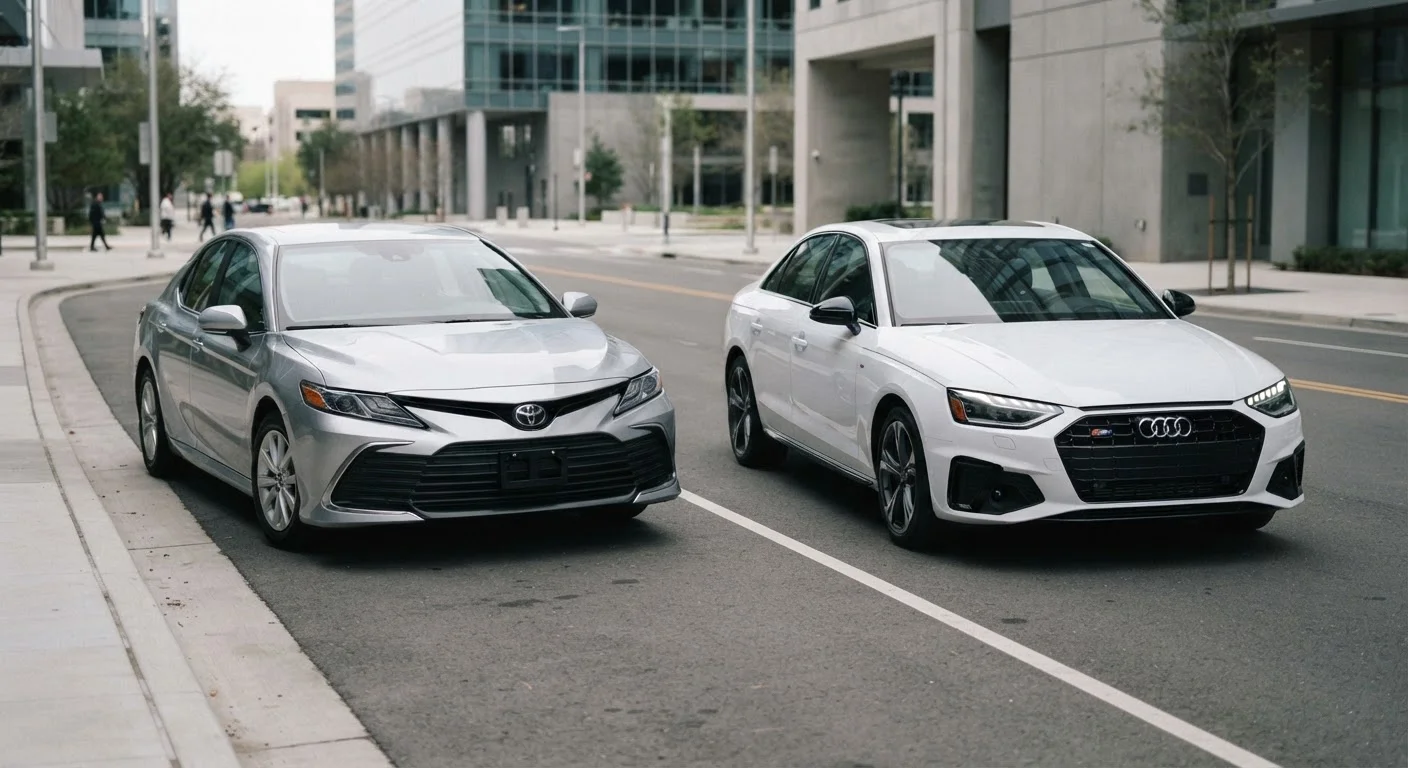
Option A
Mainstream Sedan
The proven, value-focused everyday choice.
Best for: Buyers who prioritize low ownership cost, reliability, and straightforward technology over premium amenities.
Option B
Entry-Level Luxury Sedan
The refined step up with measurable engineering differences.
Best for: Buyers who want elevated NVH refinement, premium interior materials, and brand-tier features without stepping into full luxury pricing.
If you prioritize low total cost of ownership
Mainstream Sedan
Lower purchase price, cheaper routine maintenance, and slower depreciation make mainstream sedans the more cost-efficient choice over a five-year ownership window.
If daily cabin refinement matters most to you
Entry-Level Luxury Sedan
Acoustic insulation, premium seat materials, and tighter NVH tuning produce a noticeably quieter, more composed driving and riding experience.
If advanced safety and tech features are your priority
Mainstream Sedan
Modern mainstream sedans now offer driver-assistance suites and large infotainment screens that closely rival entry-luxury equivalents at a lower price point.
If you plan to keep the car beyond seven years
Mainstream Sedan
Mainstream models generally carry lower long-term repair costs and have more widely available, affordable service networks across the US.
If brand perception and interior ambiance factor into your decision
Entry-Level Luxury Sedan
The tactile quality of materials, fit-and-finish consistency, and brand heritage of an entry-luxury nameplate deliver a measurably different ownership experience.
NVH Tuning: The Engineering Gap You Can Hear and Feel
NVH engineering is where mainstream and entry-level luxury sedans diverge most noticeably. Entry-luxury models invest heavily in acoustic laminated glass, additional body cavity insulation, and vibration-damping mounts that mainstream models either omit or apply selectively to higher trim levels. The result is a cabin that feels more isolated from road and wind noise - not a subtle difference on a highway drive.
Mainstream sedans have narrowed the gap in recent years. Aerodynamic improvements and better door sealing have lifted the baseline experience. But a direct back-to-back comparison on a concrete interstate typically reveals a measurable decibel difference in favor of the luxury segment. For buyers who spend significant time in highway commutes, this distinction is real and persistent. To understand the full framework of what separates these segments, see what actually makes a car 'luxury' - many of those criteria apply equally to internal-combustion sedans.
| Criterion | Mainstream Sedan | Entry-Level Luxury Sedan |
|---|---|---|
| NVH Insulation | Standard; improved at higher trims | Acoustic glass, added dampening standard |
| Interior Materials | Mixed hard/soft plastics, cloth or basic leather | Premium leather, soft-touch surfaces throughout |
| Driver-Assistance Tech | Full suite now standard on most models | Full suite, better-calibrated integration |
| Typical Price Premium | Baseline | $8,000-$15,000 above comparable mainstream |
| Depreciation Rate (3-year) | Moderate; more stable residuals | Faster; larger initial value drop typical |
| Maintenance Costs | Lower; broad service network | Higher; OEM-focused service requirements |
| Ride Tuning | Comfort-oriented, some harshness at limits | Refined damping, more composed over imperfections |
Interior Materials and Fit-and-Finish: Where the Price Shows
Slide into the front seat of an entry-luxury sedan and then step into its mainstream counterpart at the same price tier. The difference in material quality is tactile and immediate. Entry-luxury interiors use genuine or high-grade synthetic leather, soft-touch door panels, metal or real-wood trim accents, and tighter panel gaps. Mainstream sedans rely more heavily on hard plastics in secondary touch zones - door lower panels, lower dash areas - even in well-equipped trims.
This matters because interior surfaces are what you interact with for every minute behind the wheel. Steering wheel texture, the resistance of HVAC controls, and the sound of closing a door all communicate quality in ways that performance specs do not. Entry-luxury brands engineer these sensory details deliberately. Mainstream brands are improving, but they are optimizing for value at scale, which means trade-offs.
~30-50%
Typical entry-luxury price premium over mainstream
Industry segment pricing comparisons consistently show entry-luxury sedans carry a 30-50% purchase price premium over well-equipped mainstream equivalents in the same size class.
~15-25%
Average 3-year depreciation gap favoring mainstream
Automotive valuation analyses generally show luxury sedans depreciate at a faster rate in the first three years than mainstream models, affecting trade-in value.
Technology and Safety Features: A Narrowing Gap
A decade ago, adaptive cruise control, lane-keeping assist, and automatic emergency braking were luxury-segment exclusives. Today, these systems appear as standard equipment on most mainstream sedans. The technology gap has meaningfully compressed at the feature-list level.
Where entry-luxury still leads is in integration quality. Sensor calibration, the responsiveness of driver-assistance interventions, and the coherence of the infotainment ecosystem tend to be more polished. Head-up displays, surround-view cameras, and over-the-air update capability remain more common in the luxury segment, though mainstream brands are introducing them progressively. For buyers primarily motivated by safety ratings and driver-assistance breadth, mainstream sedans now represent strong value - the marginal tech benefit of stepping up to entry-luxury has declined. See our guide to choosing a sedan segment for how these technology trade-offs interact with size category decisions.
Long-Term Ownership Costs: What the Sticker Price Doesn't Show
The purchase price gap between a well-equipped mainstream sedan and a comparable entry-luxury model typically ranges from $8,000 to $15,000. That gap doesn't close after the sale - it compounds. Entry-luxury models carry higher insurance premiums, more expensive scheduled maintenance (specialized fluids, OEM-only parts requirements, dealer-network servicing), and costlier out-of-warranty repairs.
Depreciation adds another layer of complexity. Luxury sedans often shed a larger share of their value in the first three years than mainstream models, which can benefit buyers who purchase used but disadvantages those buying new and planning to trade in. The structural reasons behind this pattern are worth understanding before committing - luxury sedan depreciation patterns explains the dynamics in detail. Mainstream sedans, by contrast, tend to hold residual value more steadily and cost less to insure and service across a five-year window. Neither outcome is guaranteed - ownership costs vary by model, region, and driving habits - but the directional difference is consistent across segment data.
Certified Pre-Owned Changes the Equation
Buyers considering an entry-luxury sedan should evaluate certified pre-owned (CPO) programs carefully. A two- to three-year-old CPO luxury sedan can offer significantly reduced purchase price and remaining factory-backed warranty coverage. This narrows the ownership cost gap versus a new mainstream sedan, though insurance and maintenance costs remain higher. CPO availability and terms vary by brand and model year.