

Car Models

Before You Test Drive an Electric Model: A Practical Checklist

Share
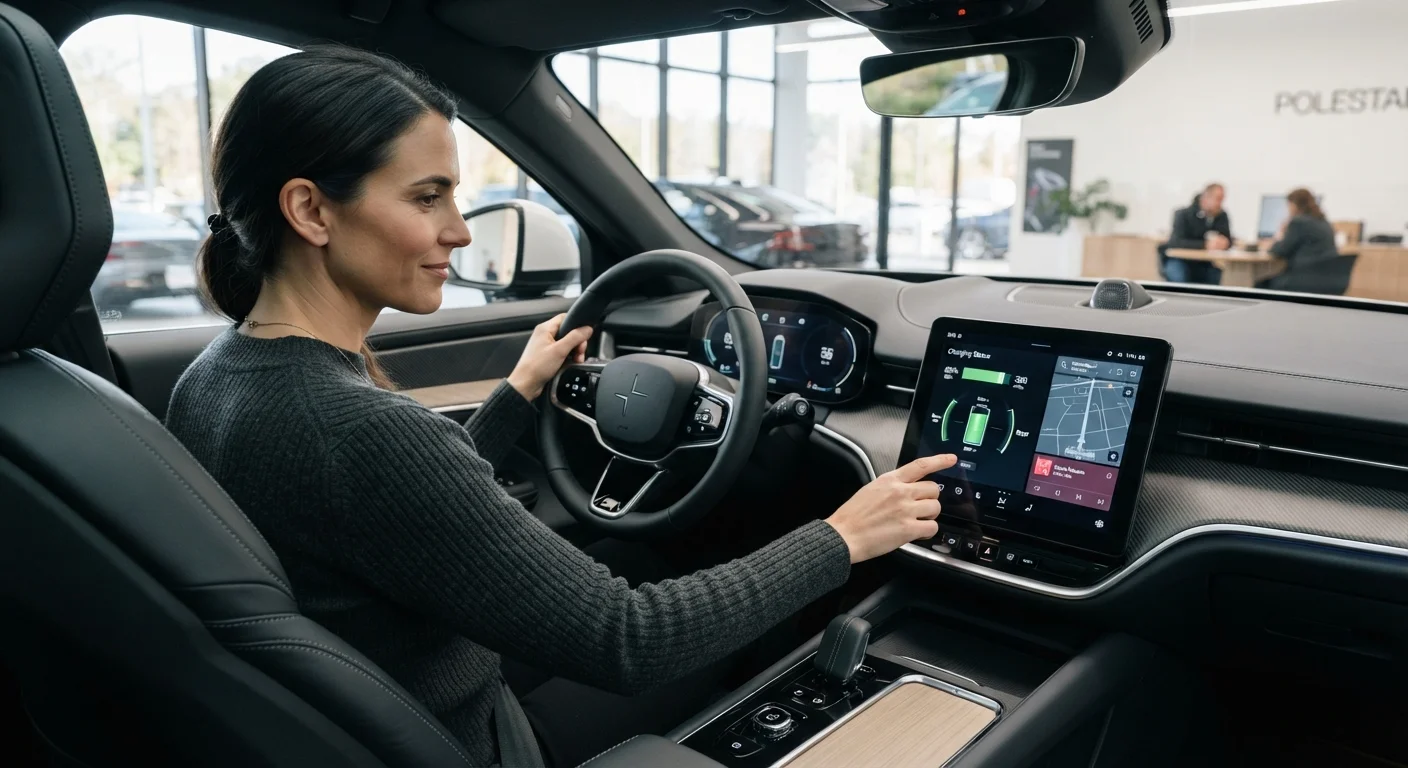
Person reviewing the digital dashboard of an electric vehicle during a showroom test drive

Key Takeaways

Verify real-world range against your actual daily commute, not EPA estimates alone.
Test charging port compatibility and charging speed tiers before committing.
Evaluate one-pedal driving, regenerative braking strength, and driving mode options in person.
Assess cabin tech, software responsiveness, and over-the-air update capability.
Confirm warranty coverage for the battery pack and powertrain separately from the base vehicle.
30–60 min

Summary

22 items · 30–60 minutes

Why EV Test Drives Demand a Different Approach

Test driving an electric vehicle is a fundamentally different exercise from evaluating a combustion-engine car. Beyond ride quality and cabin comfort, you need to probe range behavior, charging logistics, software responsiveness, and ownership infrastructure — all before you leave the lot. Skipping this preparation is one of the most common reasons buyers end up disappointed after signing. If you want a deeper grounding in how range and charging work in practice, our EV range and charging guide is worth reviewing first.

The checklist below is organized into four practical groups. Work through each one systematically — ideally with a printed or phone-screen copy in hand during the appointment.

Optional

NACS/CCS Adapter (if applicable)

Verify physical charging port compatibility between your intended charging network and the vehicle you're evaluating.

Required

Notepad or checklist app

Record observations from each checklist group in real time so nothing is forgotten between the drive and your final decision.

Required

PlugShare or similar charging map app

Check the density of compatible public chargers along your regular routes before arriving at the dealership.

Optional

Your home electricity bill

Confirm your current electrical panel capacity and rate tier to estimate realistic home charging costs and hardware needs.

The Full Pre-Drive Checklist

Use the groups below to cover every critical dimension of the EV ownership experience, not just the 15-minute drive around the block. If you are evaluating a premium trim or luxury model specifically, the luxury EV assessment checklist adds criteria specific to that segment.

Range & Charging Compatibility

Confirm the vehicle's EPA-estimated range and ask the sales representative for real-world range data under mixed driving conditions. Must
Identify the charging port standard (e.g., CCS, NACS) and verify it is compatible with the public charging networks most available in your area. Must
Ask what Level 2 charging speed (in kilowatts) the vehicle accepts and confirm whether your home electrical panel can support a compatible charger. Must
Request the DC fast-charging acceptance rate and ask how long a 20–80% charge takes at a compatible fast-charger. Should
Check whether the vehicle includes any complimentary public charging credits or network membership, and note expiration terms. Nice to have

Driving Dynamics & Powertrain Feel

Activate one-pedal driving mode if available and assess how natural or abrupt the deceleration feels for your driving style. Must
Test regenerative braking strength at multiple settings and note whether each mode can be saved as a preference. Should
Evaluate acceleration from a standstill and at highway merging speeds to confirm the power delivery suits your needs. Must
Drive at freeway speed for at least 10 minutes and note wind noise, tire noise, and overall cabin isolation. Should
Test multiple drive modes (e.g., Eco, Normal, Sport) and observe how each affects throttle response and estimated remaining range. Nice to have

Cabin Technology & Software

Navigate the infotainment menus for climate, media, and navigation to assess touch response and menu logic without assistance. Must
Confirm whether the vehicle supports wireless Apple CarPlay, Android Auto, or both — and test the connection during the drive. Should
Ask whether the vehicle receives over-the-air software updates and how frequently they have been issued on this model. Should
Review the driver-assistance features available and activate at least one (such as adaptive cruise control) during the test drive. Should
Test voice command recognition with a realistic phrase and note the accuracy and latency of the response. Nice to have

Warranty, Ownership & After-Sale Support

Confirm the battery and powertrain warranty terms separately from the bumper-to-bumper vehicle warranty, noting years and mileage limits. Must
Ask what battery capacity retention is guaranteed under the warranty (commonly 70% of original capacity over the stated term). Must
Inquire about mobile service or over-the-air diagnostics availability to understand how routine service appointments would work. Should
Ask how many service centers or authorized technicians are within a reasonable distance of your home address. Should
Request written documentation on any included roadside assistance and confirm whether it covers EV-specific scenarios such as charging-related breakdowns. Nice to have

Don't Rely on the Demo Vehicle's Charge State

Dealership demonstrators are often charged to only 50–70% capacity, which can distort your perception of real-world range. Ask what the current state of charge is before the drive, and factor that into any range estimates the vehicle displays during your session. If possible, request a drive on a vehicle with at least 80% charge.

After completing the test drive, your next step should be working through the financial picture. Our financial questions guide for EV switchers covers tax credits, home charging installation costs, and total cost of ownership factors to resolve before you commit.

Interpreting What You Find

Not every concern discovered during a test drive is a dealbreaker — context matters. A shorter EPA range figure is less significant if your round-trip commute is well within the vehicle's realistic daily capability. Software that feels unfamiliar often improves with use or over-the-air updates. Conversely, a battery warranty shorter than five years on a mainstream EV or charging speeds that don't match your home charger tier are structural mismatches that won't resolve themselves.

Battery Warranty Terms Vary Significantly

Battery pack warranties differ meaningfully across manufacturers in both duration and capacity-retention guarantees. A shorter or less protective battery warranty can translate into significant out-of-pocket exposure over a typical ownership period. Always request the warranty documentation in writing — not just a verbal summary — and compare the specific capacity-retention language before making any financial commitment.

Bring your driving patterns into the evaluation: note how the vehicle handles at highway speeds, in stop-and-go traffic, and with climate control active — all of which affect real-world range more than manufacturer figures suggest. For more on what a thorough in-person evaluation should surface, see why skipping the test drive leads to regret.

Car Models Editorial Team is the collective byline for our editorial team and contributor network. Articles published under this byline or an editorial pen name are researched, written, and reviewed according to our editorial standards for clarity, consistency, and independence before publication.

View all articles by Car Models Editorial Team →
Disclaimer: The content on this site is for informational purposes only and is not a substitute for professional advice. Always consult a qualified professional for guidance specific to your situation.