

Key Takeaways
Option A
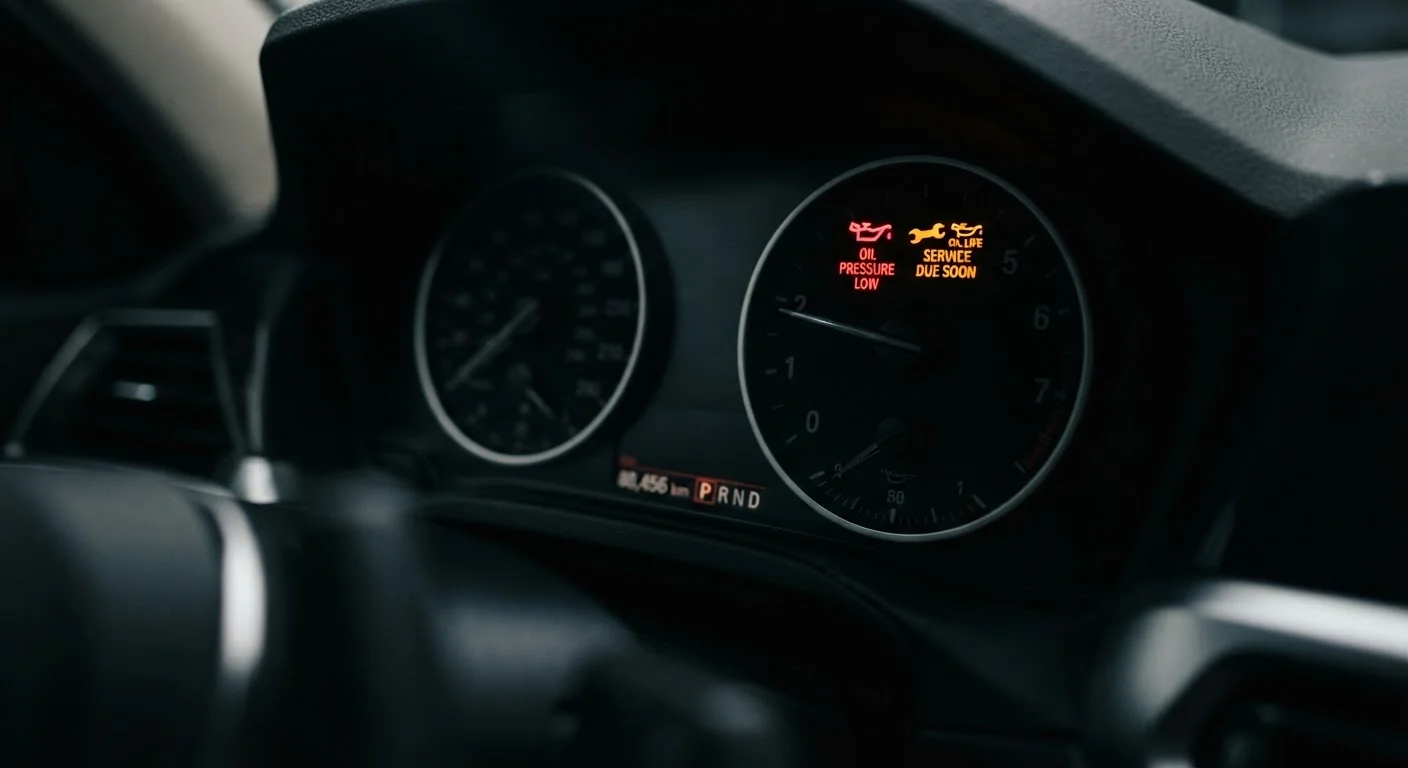
Oil Pressure Warning
The stop-immediately emergency signal.
Best for: Alerting drivers to a critical loss of oil circulation that can destroy an engine within minutes if ignored.
Option B
Oil Life Indicator
The routine maintenance reminder.
Best for: Prompting drivers to schedule an oil change before degraded oil causes long-term engine wear.
If a red oil can symbol lights up while driving
Oil Pressure Warning
This is an emergency. Stop the vehicle as soon as it is safe, shut off the engine, and do not restart it until the cause is diagnosed by a qualified mechanic.
If an amber light or percentage display appears at startup
Oil Life Indicator
This is a scheduled maintenance prompt. Plan an oil change soon - most indicators give you a reasonable window of miles or days before wear becomes a concern.
If you are unsure which warning has appeared
Oil Pressure Warning
When in doubt, treat any oil-related warning as urgent. Pull over safely, consult your owner's manual to identify the symbol, and seek professional diagnosis before driving further.
Why the Mix-Up Happens - and Why It Matters
Both warnings involve oil, both appear on the dashboard, and both use similar iconography. It is easy to see why drivers sometimes treat a critical oil pressure alert the way they would a routine maintenance reminder - and then keep driving. That mistake can total an engine in under five minutes.
Oil pressure and oil life measure entirely different things. Oil pressure tells you whether oil is actively circulating through the engine right now. Oil life estimates how much useful service life remains in the oil currently in your engine. One is a real-time safety monitor; the other is a degradation tracker. Understanding the distinction is one of the most practical warning-sign skills a driver can have - similar in importance to knowing when a check engine light demands an immediate stop versus a workshop visit. Learn how to read dashboard warnings more broadly for additional context on urgency levels.
| Criterion | Oil Pressure Warning | Oil Life Indicator |
|---|---|---|
| What it measures | Real-time oil circulation pressure | Estimated remaining oil quality |
| Typical indicator color | Red | Amber or percentage display |
| Urgency level | Stop immediately | Schedule service soon |
| Engine risk if ignored | Catastrophic damage within minutes | Accelerated long-term wear |
| Common causes | Low oil level, pump failure, blocked passages | Mileage and heat cycles accumulating |
| Correct immediate action | Pull over, shut engine off, do not restart | Plan an oil change at next opportunity |
| How it works | Pressure sensor with set threshold | Computer algorithm tracking usage patterns |
Oil Pressure Warning: What It Means and What to Do
The oil pressure warning - typically a red symbol resembling an oil can with a drop - activates when the engine's oil pressure sensor detects pressure below the safe operating threshold. Oil pressure is what forces lubricant into the tight clearances between moving metal parts. Without adequate pressure, those surfaces make direct metal-to-metal contact.
Engine bearings, camshafts, and crankshafts can sustain permanent damage within minutes under these conditions. Common causes include:
- Low oil level - the most frequent culprit; oil has leaked or burned off
- Oil pump failure - the pump can no longer build adequate pressure
- Blocked oil passages - sludge or debris restricts circulation
- A faulty pressure sensor - less common, but possible
The correct response: Signal, pull over safely, and shut the engine off. Do not restart the vehicle to "drive it to a shop." Check the oil level on the dipstick once the engine has cooled slightly - if the level is normal, the pump or sensor may be the issue and the vehicle needs to be towed. If the level is critically low, adding oil may restore pressure, but a mechanic should still inspect for the source of the loss before further driving.
~5 min
Time for engine damage without oil pressure
Automotive engineers and mechanics broadly recognize that running an engine with no oil pressure can cause irreparable bearing and crankshaft damage in just a few minutes of operation.
15%
Typical oil life threshold that triggers a reminder
Many manufacturer oil life monitoring systems are calibrated to alert drivers when estimated remaining oil life falls to around 15%, providing a reasonable window to arrange a service appointment.
Oil Life Indicator: What It Measures and When to Act
The oil life indicator - often an amber light, a wrench symbol, or a percentage display - is generated by the vehicle's onboard computer using an algorithm. It tracks factors such as engine temperature cycles, rpm patterns, mileage, and load to estimate how much protective capacity remains in the oil. It does not directly measure oil quality with a sensor.
When the indicator reaches a low threshold (commonly around 15% or 0%), the vehicle is reminding you to schedule an oil change. You are not in immediate danger. The oil is still lubricating the engine - it is simply becoming less effective over time and should be replaced soon to prevent accelerated wear.
Understanding oil change intervals can help you interpret what your specific vehicle's algorithm is telling you. The type of oil used also influences how long it maintains effective lubrication - conventional vs. full synthetic oil have meaningfully different service lives. For a broader look at oil change folklore that may be shaping your habits, reviewing common oil change myths is worthwhile.
The correct response: Schedule an oil change within the timeframe your owner's manual recommends after the indicator appears. Resetting the indicator without changing the oil does not reset oil degradation - it simply removes the reminder.
Oil Life Monitors Are Estimates, Not Sensors
Despite the precise-sounding percentage, your vehicle's oil life monitor does not chemically analyze the oil. It uses a mathematical model based on driving patterns and engine conditions. Severe driving - frequent short trips, towing, or extreme temperatures - can degrade oil faster than the algorithm predicts. Manual dipstick checks every few weeks remain a sound habit regardless of what the monitor reads.
Telling Them Apart at a Glance
In practice, the fastest way to distinguish between the two warnings is color and symbol. Oil pressure warnings are almost universally red and shaped like an oil can. Oil life reminders are typically amber, orange, or may display a percentage or wrench icon. Red always signals stop-now urgency in automotive warning systems.
Your owner's manual is the definitive reference - it contains the exact symbols for your vehicle and their recommended responses. Spending five minutes with that section before a warning appears is far better than trying to decode an unfamiliar symbol while driving.
If you drive a vehicle without a dedicated oil life monitor, manual tracking of mileage and time since the last oil change is the reliable alternative. Do not assume that because no light is on, the oil is fine - pressure warnings only appear when pressure has already dropped, and many vehicles lack oil life monitors entirely.