

Key Takeaways
Option A
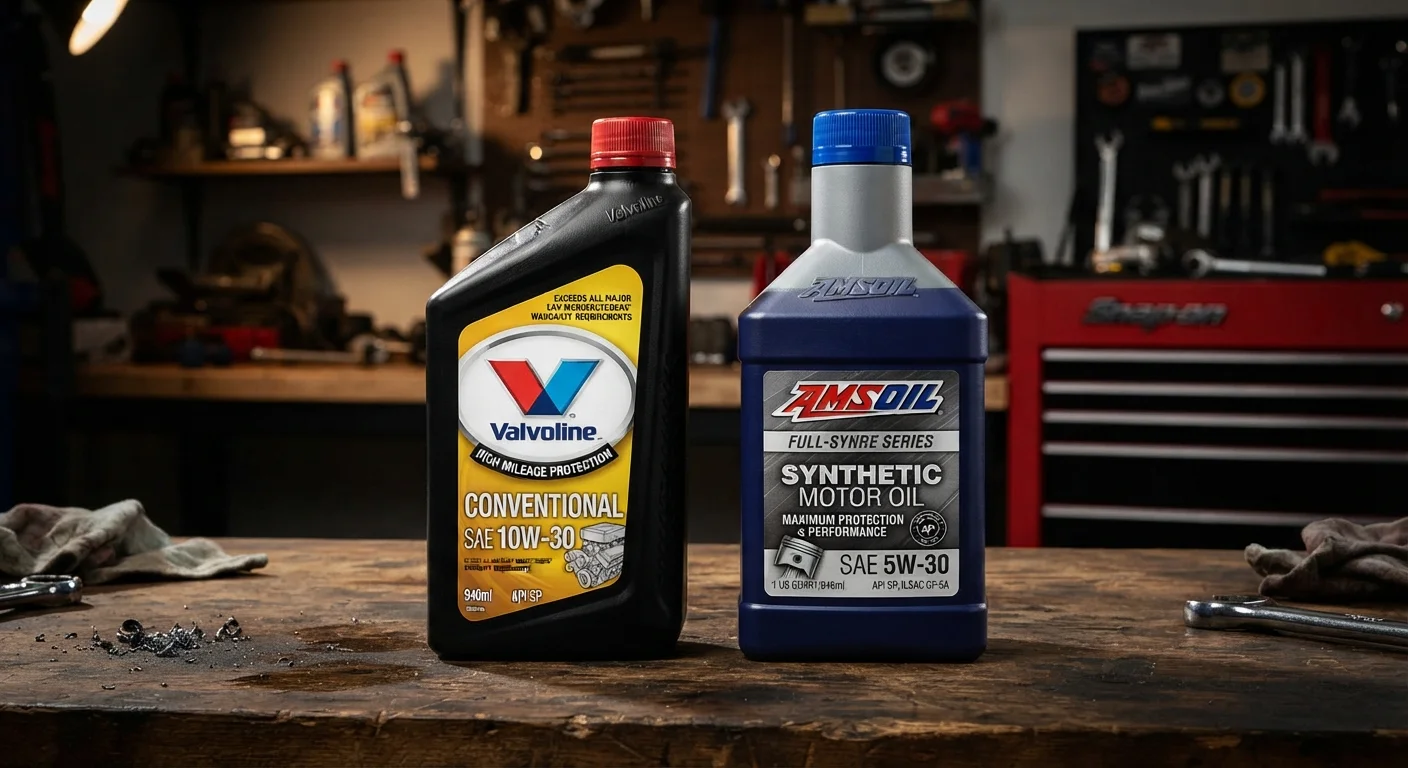
Conventional Motor Oil
The time-tested, widely available baseline lubricant.
Best for: Older vehicles with simple engine designs, low-mileage drivers, and engines that have always run on conventional oil.
Option B
Full Synthetic Motor Oil
The engineered, high-performance lubricant for modern demands.
Best for: Modern engines with tight tolerances, turbocharged powerplants, extreme-temperature climates, and extended drain intervals.
If you drive an older, naturally aspirated engine with no manufacturer synthetic requirement
Conventional Motor Oil
Older engines with wider tolerances often perform adequately on conventional oil, and switching may not provide a meaningful benefit without a clear need.
If your vehicle has a turbocharged or high-output engine
Full Synthetic Motor Oil
Turbochargers run extremely hot and demand oil that resists thermal breakdown - full synthetic handles these conditions far more reliably.
If you want fewer oil changes and longer service intervals
Full Synthetic Motor Oil
Synthetic formulations resist oxidation and viscosity breakdown longer, supporting the extended intervals many manufacturers now specify.
If your vehicle is used for very short, infrequent trips in a mild climate
Conventional Motor Oil
Short-trip, low-stress use may not justify the added cost of synthetic if your engine and manufacturer guidance support conventional oil.
What Sets These Two Oils Apart at a Molecular Level
Conventional motor oil starts as crude oil pumped from the ground. Refiners remove most - but not all - impurities, leaving a base oil blended with additive packages. The result is functional but inconsistent: the molecular chain lengths vary, meaning the oil's behavior under heat and stress is less predictable than an engineered alternative.
Full synthetic oil takes a different path. Chemists build its base stock molecule by molecule - typically starting from a highly refined feedstock or purpose-made compounds - so the molecules are uniform in size and structure. That uniformity translates to more stable viscosity across temperature extremes, lower friction, and greater resistance to oxidation and sludge formation.
A third category, synthetic blend, sits between the two: conventional base oil mixed with some synthetic stock. It offers partial benefits at a moderate price point, but it is not the same as full synthetic.
Synthetic Blend: A Middle Ground Worth Knowing
Synthetic blend oil mixes conventional base stock with synthetic components, offering better heat resistance and cold-flow properties than straight conventional oil at a lower price than full synthetic. It can be a reasonable choice for light trucks or SUVs under moderate towing loads. However, it does not deliver the full performance or interval benefits of a true full synthetic formulation. Check your owner's manual before assuming a blend meets your manufacturer's specification.
Understanding the difference matters practically. See our guide on oil change myths for a breakdown of what outdated advice still circulates at service counters.
Performance in Real-World Conditions
The practical gap between conventional and full synthetic becomes most visible under two conditions: cold starts and sustained heat.
At cold temperatures, thicker oil takes longer to circulate - and most engine wear occurs in those first seconds before oil pressure builds. Synthetic oil flows measurably faster at low temperatures, which is why manufacturers in cold climates often specify it. At the other extreme, high operating temperatures cause conventional oil to thin and oxidize faster, potentially leaving deposits on pistons and valvetrain components. Synthetic resists this thermal breakdown significantly longer.
Turbocharged engines compound both challenges. The turbocharger's shaft spins at tens of thousands of RPM, bathed in oil. When the engine shuts off, heat soaks into the turbo housing and can carbonize oil that isn't heat-stable - a condition sometimes called coking. Full synthetic's thermal resilience makes it the appropriate choice for nearly all turbocharged applications, and most manufacturers of these engines specify it explicitly.
| Criterion | Conventional Oil | Full Synthetic Oil |
|---|---|---|
| Base stock origin | Refined crude oil | Chemically engineered compounds |
| Molecular consistency | Variable chain lengths | Uniform molecular structure |
| Cold-start flow | Slower at low temperatures | Faster, better low-temp circulation |
| Heat resistance | Degrades faster under sustained heat | Strong thermal stability |
| Typical drain interval | 3,000-5,000 miles (varies) | 7,500-10,000+ miles (varies) |
| Cost per change | Lower upfront cost | Higher upfront cost |
| Turbocharged engine suitability | Generally not recommended | Widely specified by manufacturers |
| Sludge and deposit resistance | Moderate | High |
For high-mileage vehicles already running on conventional oil, switching to full synthetic is generally safe. The concern about leaks is legitimate but often overstated: if an engine already has seals in good condition, synthetic won't cause new leaks. However, if seals are already worn or seeping, the higher detergency of synthetic may make existing leaks more apparent. Check for any signs of oil seepage before making the switch.
Drain Intervals and Long-Term Cost
One of the most common reasons drivers consider full synthetic is the promise of extended drain intervals. Many manufacturers now specify 7,500 to 10,000 miles - or longer - for vehicles using full synthetic, whereas conventional oil has historically been associated with 3,000- to 5,000-mile intervals. The key word is specify: your owner's manual and the oil life monitoring system built into your vehicle are the authoritative guides for your specific engine.
7,500-10,000 mi
Typical synthetic oil change interval
Many automakers now specify these extended intervals for vehicles using full synthetic oil, per manufacturer owner's manual guidance.
3,000-5,000 mi
Typical conventional oil change interval
Traditional guidance for conventional oil, though actual intervals depend on engine type, driving conditions, and manufacturer specifications.
~30 seconds
Critical cold-start lubrication window
Engine wear is disproportionately concentrated in the first seconds after a cold start, before oil fully circulates - a period where synthetic's faster flow provides a clear advantage.
The higher per-change cost of synthetic is real. However, if synthetic allows two fewer oil changes per year than conventional, the annual cost difference narrows considerably. Factor in time, labor (if you use a shop), and the environmental impact of used oil disposal, and the cost gap often closes further.
For a deeper look at how mileage, time, and driving conditions all interact, our oil change interval guide covers the full picture. And if you're unsure whether the warning light on your dash is an oil life reminder or something more urgent, the distinction matters - see our article on oil pressure vs. oil life warnings.
Which Oil Does Your Engine Actually Require?
The single most reliable source for this answer is your vehicle's owner's manual. Manufacturers specify oil viscosity grade (such as 0W-20 or 5W-30) and, increasingly, whether full synthetic is required rather than merely recommended. Many modern engines - particularly those built after 2010 with tighter manufacturing tolerances - are engineered around the flow characteristics of synthetic oil.
If your manual specifies full synthetic, using conventional is not an acceptable substitute regardless of price or availability. If it lists conventional as acceptable and your driving profile involves normal temperatures and modest mileage, conventional oil remains a reasonable choice. When in doubt, or if your vehicle is under warranty, following the manufacturer's specification exactly protects both the engine and any warranty coverage.
Common misconceptions about when to switch, whether to mix oil types, or how long conventional oil truly lasts are addressed in our persistent oil change myths article. The goal is always the same: give your engine the right lubricant, changed at the right interval, before breakdown and deposit buildup begin.