

Key Takeaways
Spark Plug
A spark plug is a small device threaded into each engine cylinder that delivers an electrical spark at precisely the right moment to ignite the air-fuel mixture. That ignition is what pushes the piston down and generates power. Without a functioning spark plug, a cylinder cannot fire - and the engine loses performance, efficiency, or the ability to start.
The spark jumps across a gap between a center electrode and a ground electrode. As the plug ages, this gap widens due to electrode erosion, requiring higher voltage to fire - which stresses the ignition coil and can lead to misfires.
What a Spark Plug Actually Does
Every gasoline engine relies on controlled explosions - thousands of them per minute. The spark plug is the trigger. Mounted in the cylinder head, it receives a high-voltage pulse from the ignition coil and produces a spark that ignites the compressed air-fuel mixture inside the cylinder. That ignition drives the piston downward, turning the crankshaft and ultimately moving the vehicle.
Timing matters enormously. The spark must fire at a precise moment in the piston's cycle. The engine control unit (ECU) manages this timing, but if the plug is too worn to fire reliably, the spark can arrive late, weakly, or not at all - any of which disrupts combustion.
Each cylinder has its own plug, so a four-cylinder engine has four, a V6 has six, and so on. Some performance engines use two plugs per cylinder. A single degraded plug affects one cylinder's output, but that's enough to cause noticeable symptoms across the whole engine.
Spark Plugs Only Apply to Gasoline Engines
Diesel engines ignite fuel through compression heat rather than a spark, so they don't use spark plugs at all. Battery-electric vehicles (BEVs) have no combustion engine, so plug maintenance is entirely absent from their service schedule. If you're comparing long-term ownership costs between gasoline and electric vehicles, this is one of several maintenance line items that disappear with an EV.
How Spark Plugs Wear Over Time
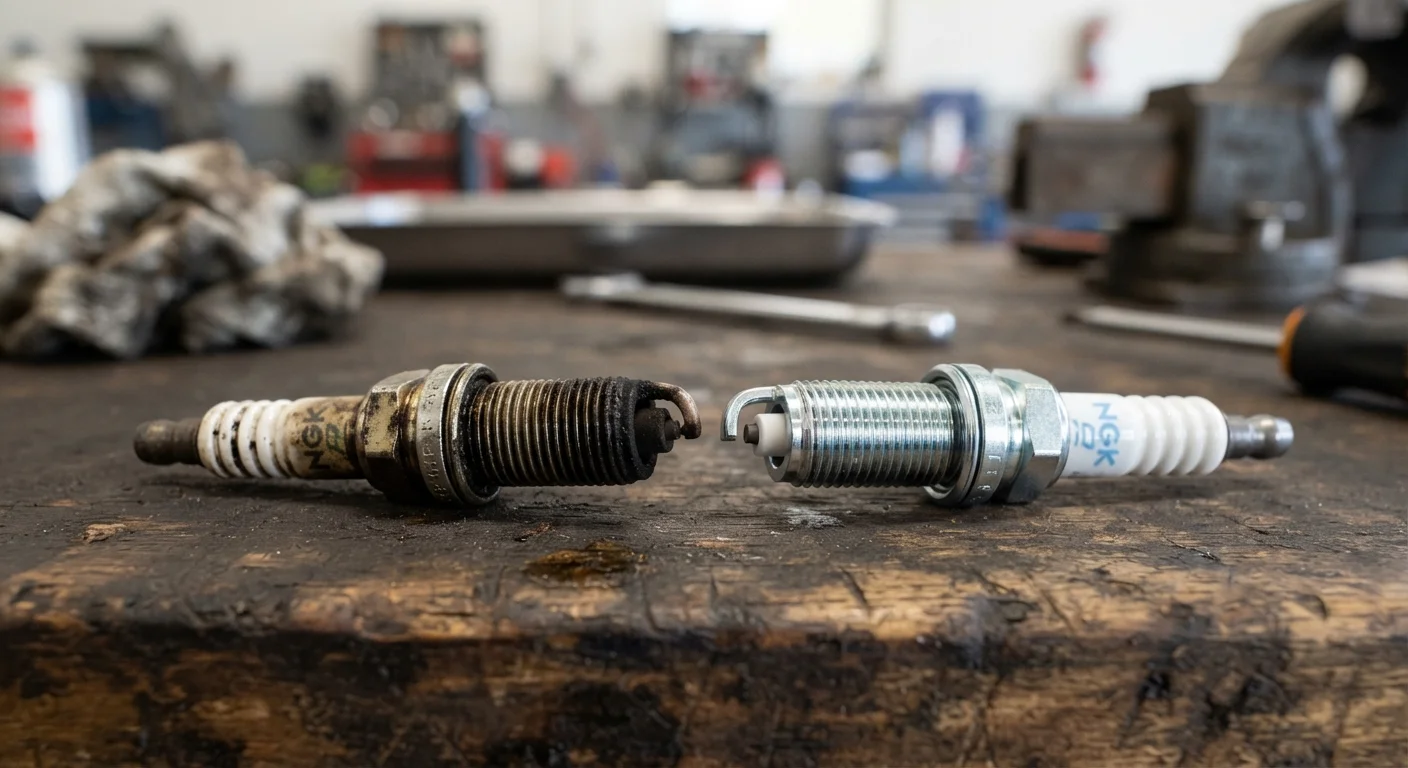
Spark plugs don't wear out in a single dramatic event. Degradation is gradual and chemical. Every time the plug fires, the electrical discharge erodes a tiny amount of the electrode material. Over tens of thousands of miles, this erosion widens the spark gap - the space the spark must jump. A wider gap demands more voltage to bridge it, putting strain on the ignition coil.
Simultaneously, combustion byproducts deposit carbon and other residue on the plug's insulator tip. These deposits can partially short-circuit the spark or absorb voltage, weakening the ignition event. Oil fouling - caused by worn piston rings or valve seals - accelerates this contamination significantly.
30K-100K
Miles between spark plug replacements
Service interval varies by plug type - copper plugs wear fastest, while iridium plugs can last up to 100,000 miles per manufacturer specifications.
Up to 30%
Potential fuel efficiency loss from worn plugs
The U.S. Department of Energy has cited misfiring spark plugs as a contributor to significant fuel economy reductions in gasoline-powered vehicles.
4-8
Plugs per typical gasoline engine
Most four- and six-cylinder engines use one plug per cylinder; some performance and larger engines use two plugs per cylinder.
Plug material determines longevity. Conventional copper plugs have a relatively soft electrode and wear fastest. Platinum and iridium plugs use harder metals that resist erosion, extending service life considerably. Your owner's manual specifies which type the manufacturer recommends for your engine.
The Real Cost of Ignoring Worn Plugs
Worn spark plugs impose costs that compound quietly. The most immediate is fuel economy. Incomplete or inconsistent combustion means the engine burns more fuel to achieve the same output. The U.S. Department of Energy has noted that worn spark plugs can reduce fuel efficiency noticeably - small on a single tank, but meaningful over thousands of miles.
The longer-term risk is collateral damage. When a cylinder misfires, raw unburned fuel passes into the exhaust stream. The catalytic converter - which processes exhaust gases - can overheat trying to combust that excess fuel. Catalytic converters are expensive components, and premature failure caused by persistent misfires is a preventable outcome.
Engine misfires also generate diagnostic trouble codes that trigger the check engine light. While the light alone doesn't confirm the cause, a mechanic reading fault codes will often find ignition misfire codes (P0300-P0308 range) pointing directly to spark plug condition.
For contrast, vehicles without spark plugs - like battery-electric vehicles - sidestep this entire maintenance category. If you're curious how EV ownership shifts the maintenance picture, see how maintenance spending shifts with an EV.
Check Your Owner's Manual for Plug Type
Not all spark plugs are interchangeable. Your vehicle's owner's manual specifies the correct heat range and electrode material for your engine. Installing the wrong plug type - even if it physically fits - can cause misfires, fouling, or engine damage. If you're unsure, a dealership parts department or trusted mechanic can confirm the correct specification.
Spark Plugs and the Broader Ignition System
Spark plugs don't operate in isolation. They work alongside ignition coils, ignition wires (on older vehicles), and the engine's fuel and air management systems. A worn plug that demands excess voltage can weaken or burn out an ignition coil prematurely. Replacing a failed coil without also addressing an overdue plug swap can mean the new coil fails sooner than expected.
The oxygen sensor provides another important link. The O2 sensor monitors combustion completeness and feeds data back to the ECU, which adjusts the fuel mixture. When spark plugs misfire, they can skew the O2 sensor's readings, compounding inefficiency. Oxygen sensors and their connection to fuel economy and emissions are worth understanding alongside plug maintenance.
The practical takeaway: treat spark plugs as part of a system. Checking plug condition during routine maintenance - and replacing them on schedule - protects adjacent components and keeps the ignition system firing cleanly at every mile.