

Key Takeaways
Deferred Repairs
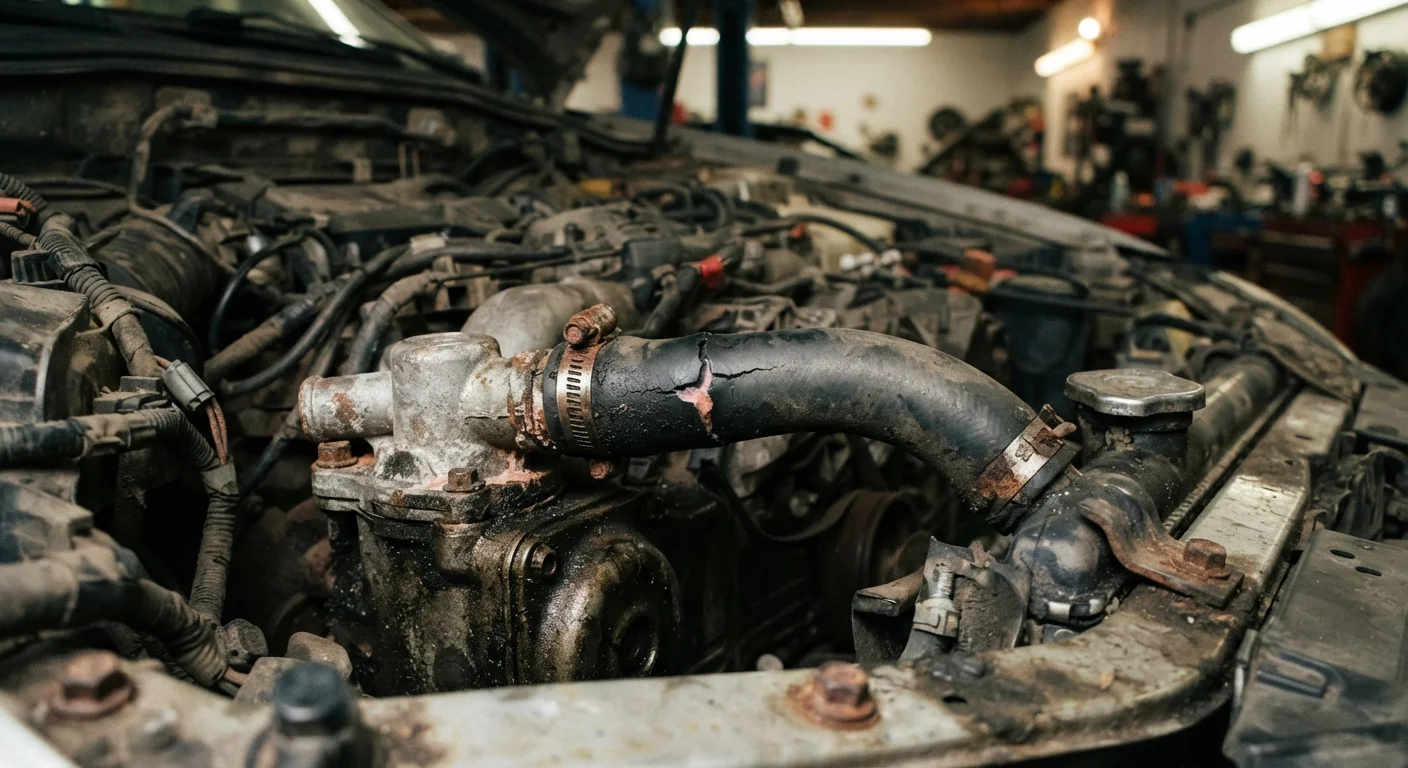
A deferred repair is any known vehicle problem that an owner chooses to delay addressing. While the delay may seem harmless in the short term, most mechanical systems are interdependent - meaning one failing component puts additional stress on the parts around it, accelerating their wear or failure.
Mechanics refer to this cascade effect informally as 'consequential damage' - secondary failures that are directly traceable to a primary repair that was not made in time.
The Mechanical Logic Behind Compounding Damage
Vehicles are not collections of isolated parts - they are systems in constant interaction. A brake caliper doesn't operate in isolation; it relies on clean fluid, functioning hardware, and an intact rotor surface. When one element degrades, the others compensate, and that compensation has a cost measured in accelerated wear.
Consider a worn engine mount. Left unaddressed, the extra movement it allows causes stress on nearby hoses, wiring harnesses, and even the transmission linkage. What began as a straightforward component swap can evolve into a multi-system repair, simply because the original problem was allowed to propagate.
This is the mechanical core of why deferred repairs compound: failure in one component changes the operating conditions for every connected component. Heat increases, tolerances shift, fluid pathways are stressed - and the clock on adjacent parts runs faster.
Not All Delays Carry Equal Risk
The compounding effect is most pronounced in systems involving fluids, heat, or structural loads - engines, cooling, brakes, and suspension. Cosmetic or comfort-related items generally do not cascade into safety or mechanical failures. Understanding which category a repair falls into is the key to making informed decisions about timing.
Real-World Examples of Repair Cascades
Abstract principles become clearer through concrete cases. Here are some of the most common compounding repair sequences mechanics encounter:
Brake system wear is one of the most frequently cited examples of deferred-repair escalation. Ignoring early warning signs - squealing, a slightly soft pedal, or longer stopping distances - allows pad wear to reach metal-on-metal contact, which scores the rotor surface. A pad replacement that might have cost a modest amount becomes a pad-and-rotor job, sometimes on all four corners. Learn more about the specific signals to watch for in our article on brake warning signs drivers frequently dismiss.
The Financial Arithmetic of Waiting
Repair costs don't scale linearly with delay - they tend to scale exponentially. The reason is labour overlap. When a mechanic is already inside a system to fix the original problem, addressing a related issue nearby costs relatively little in additional labour. Once that repair is closed up, reopening the same system for a second problem means paying full diagnostic and labour rates again from scratch.
3-5×
Cost multiplier when secondary damage occurs
Industry estimates suggest that consequential damage from deferred repairs commonly multiplies the original repair cost by three to five times, depending on the system involved.
~30%
Of major repairs trace to earlier deferred maintenance
Automotive service industry data consistently indicates that a significant share of major repair visits involve damage that could have been limited by earlier intervention.
There's also the matter of collateral damage. A leaking valve cover gasket allows oil to contact belts and sensors. A slow coolant leak, if it leads to a single overheating event, can warp a cylinder head - turning a gasket replacement into a significantly more involved repair. The original fault was inexpensive. The consequential damage was not.
If you're navigating the repair process for the first time, our walkthrough of what to expect during a major repair explains how estimates, parts sourcing, and timelines typically work.
Safety Implications Beyond the Repair Bill
Cost is one dimension of deferred repairs; safety is another. Brakes, steering components, tyres, and suspension parts all have direct bearing on a driver's ability to control the vehicle in an emergency. Deferring repairs in these systems doesn't just risk a larger bill - it can compromise the vehicle's response when it matters most.
This distinction matters when prioritising. Not all deferred repairs carry equal urgency. A cracked interior trim piece is not in the same category as a worn tie rod end or a brake fluid leak. Owners benefit from asking mechanics explicitly: Is this a safety issue, or is it a maintenance concern? That answer should guide how urgently the repair is scheduled.
Ask for an Urgency Breakdown in Writing
When a mechanic recommends multiple repairs, ask them to categorise each item as safety-critical, preventive, or cosmetic. A written estimate with this breakdown gives you a clear basis for prioritisation and helps you make informed decisions about timing - especially if budget requires phasing the work.
Understanding when to handle something yourself versus when to bring it to a professional is also part of managing repair timing effectively. Our article on DIY maintenance versus workshop servicing offers a balanced look at where each approach is appropriate.