

| Typical shop labour rate range (US) | $80-$175+ per hour (Varies significantly by region and shop type) |
| Labour time source | Industry flat-rate guides (e.g., Mitchell, AllData) |
| Shop supplies fee | Usually 5-15% of labour total (Common industry practice; not universally regulated) |
| Diagnostic fee waiver | Often waived if repair is authorised at same shop (Policy varies by shop - confirm before authorising) |
| Written estimate right | Required by law in most US states before work begins (Check your state's auto repair consumer protection statutes) |
| Warranty on repairs | Varies - ask for terms in writing (Neither federal law nor all states mandate a minimum repair warranty) |
The Anatomy of a Repair Invoice
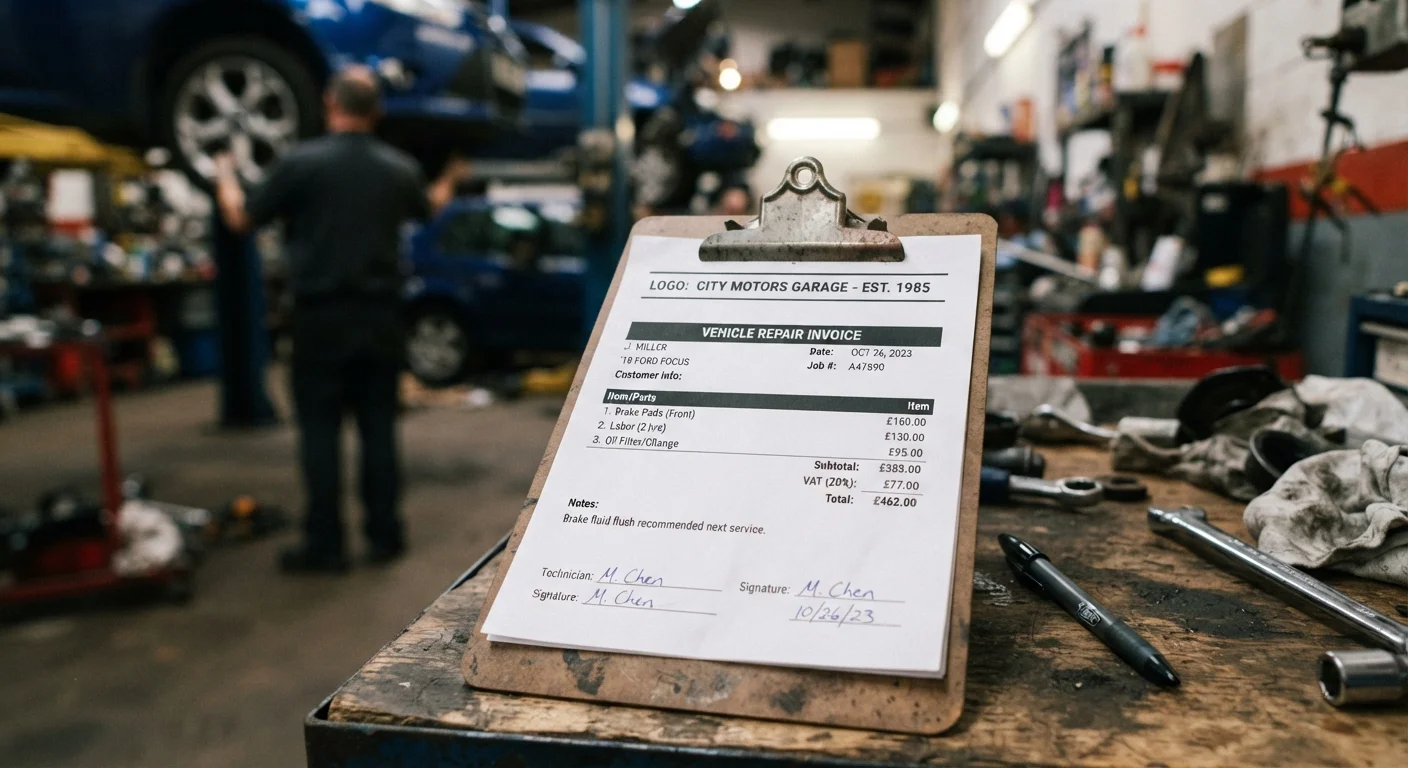
A repair invoice is a shop's formal record of every charge associated with your vehicle's service. Before approving any work, understanding the document's structure helps you verify that charges are reasonable and that nothing unexpected has been added. See what the full repair process involves if you're approaching a major job for the first time.
| Typical shop labour rate range (US) | $80-$175+ per hour (Varies significantly by region and shop type) |
| Labour time source | Industry flat-rate guides (e.g., Mitchell, AllData) |
| Shop supplies fee | Usually 5-15% of labour total (Common industry practice; not universally regulated) |
| Diagnostic fee waiver | Often waived if repair is authorised at same shop (Policy varies by shop - confirm before authorising) |
| Written estimate right | Required by law in most US states before work begins (Check your state's auto repair consumer protection statutes) |
| Warranty on repairs | Varies - ask for terms in writing (Neither federal law nor all states mandate a minimum repair warranty) |
Most invoices are divided into four core categories: labour, parts, shop supplies, and taxes and fees. Each deserves a closer look.
Labour Section
Labour charges reflect technician time billed at the shop's hourly rate. Most shops use flat-rate hours - a standardised estimate from industry labour guides - rather than clocking actual time on your specific job. This means a repair listed as 2.0 hours is billed as exactly 2.0 hours whether the technician finishes in 90 minutes or 2.5 hours. Look for the task description, the flat-rate hours assigned, and the hourly rate multiplied together to confirm the line total is mathematically correct.
Parts Section
Each part should be listed with a part number, a brief description, quantity, and unit price. The price shown is the shop's selling price - which includes a standard markup over their acquisition cost. Verify whether parts are OEM or aftermarket, as this affects both price and warranty coverage. Learn how OEM and aftermarket parts compare before deciding which you prefer.
Shop Supplies, Sublet Work, and Fees
Labour Rate
The hourly charge a shop applies for technician time. Rates vary by shop type, region, and technician specialisation - dealerships typically charge more than independent shops.
Flat-Rate Hour
A standardised time unit published in industry labour guides (such as Mitchell or AllData) for a specific repair task. The shop bills this predetermined time regardless of how long the actual job takes.
OEM Part
Original Equipment Manufacturer part - made to the same specification as the component installed at the factory. Usually carries the vehicle brand's label and a manufacturer warranty.
Aftermarket Part
A replacement component made by a third-party manufacturer rather than the vehicle's original maker. Quality and warranty terms vary widely across aftermarket suppliers.
Shop Supplies
A line-item fee covering consumable materials used during a repair - such as rags, cleaning solvents, fasteners, and lubricants - that are not itemised as individual parts.
Diagnostic Fee
A charge for the technician time and equipment used to identify the root cause of a problem before any repair is authorised. May or may not be waived if the repair proceeds.
Sublet Repair
Work your shop sends to a specialist outside their facility (e.g., transmission rebuilding, alignment). The invoicing shop marks up this cost and bills it to you.
Parts Markup
The percentage added to a shop's cost to acquire a part, representing their margin. Markups are standard practice and are rarely disclosed as a separate line item.
Shop Supplies
This line covers consumables the shop uses during your repair that aren't billed as individual parts - think shop rags, penetrating oil, cleaning solvent, and small fasteners. It's a legitimate charge in most shops, typically calculated as a percentage of labour. If the amount seems disproportionately high relative to the job's scope, it's reasonable to ask for clarification.
Sublet Repairs
If your shop sends work to an outside specialist - common for alignments, glass replacement, or transmission rebuilding - the cost appears as a sublet line. The shop marks up the outside vendor's price, which is standard. Ask who performed the work and whether that specialist provides their own warranty.
Diagnostic Fee
If your vehicle was assessed before a repair recommendation, a diagnostic fee may appear at the top of the invoice. Many shops credit this fee toward the repair cost if you authorise the work with them. Confirm this policy before leaving your vehicle. Review the questions worth asking before authorising any repair to go in prepared.
Your Right to a Written Estimate
Most US states require repair shops to provide a written estimate before beginning work and to obtain your authorisation before exceeding that estimate by a set threshold. Regulations vary by state - check your state attorney general's consumer protection resources for the specific rules in your area. Always ask for your estimate in writing before leaving your vehicle.
Taxes and Environmental Fees
Sales tax applies to parts in most states and, in some jurisdictions, to labour as well. Shops may also charge a separate fee for proper disposal of hazardous materials such as old motor oil, brake fluid, or refrigerant. These are regulated disposal costs, not arbitrary additions.
This article provides general educational information about auto repair invoices. It is not a substitute for personalised advice from a qualified mechanic or legal guidance about consumer rights in your specific state.