

Key Takeaways
Disc Brake System
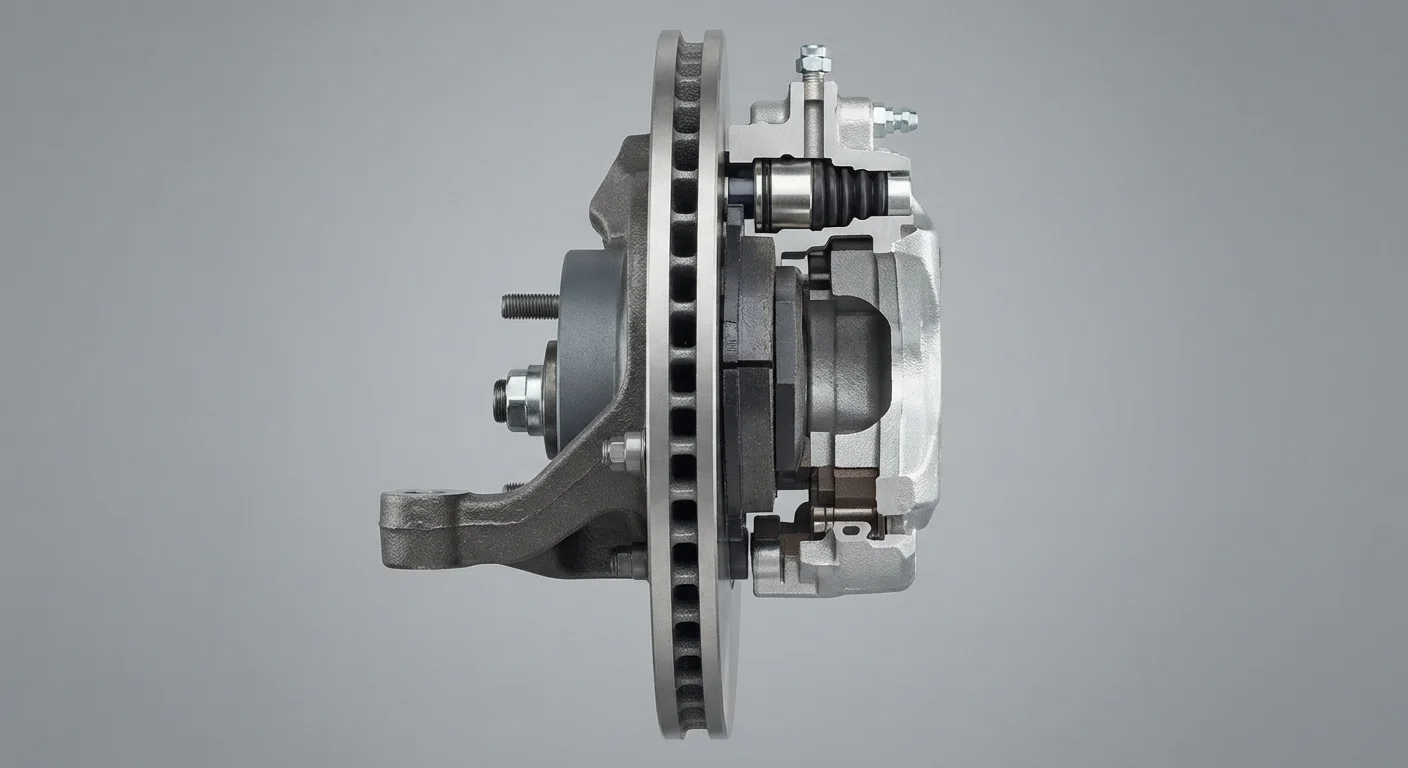
A disc brake system is the stopping mechanism used on most modern vehicles. It works by clamping friction material (brake pads) against a spinning metal disc (rotor) through a hydraulically actuated clamp (caliper). Together, these three parts convert your vehicle's kinetic energy into heat, slowing the wheels.
Most vehicles use disc brakes on the front axle and increasingly on all four wheels. Older vehicles and some light trucks may still use drum brakes at the rear, which operate on a different principle.
The Three Components and What Each One Does
Understanding your brake system starts with knowing what each part actually contributes. The three core components are the brake pad, the rotor (also called a disc), and the caliper. Remove any one of them and the system fails entirely.
Brake Pads
Pads are the sacrificial friction material pressed against the rotor to generate stopping force. They're bonded to a steel backing plate and made from one of several compounds - organic, semi-metallic, or ceramic - each offering different trade-offs in heat tolerance, noise, and wear rate. Because they're designed to wear down gradually, pads are the component replaced most frequently.
Rotors
The rotor is the large metal disc that rotates with the wheel. When the caliper squeezes the pads against it, friction slows the disc - and by extension, the wheel. Rotors must absorb and dissipate substantial heat with every stop. Over time they develop wear grooves, surface rust, or thickness variation (commonly called warping), all of which affect braking feel and efficiency.
Calipers
The caliper is the hydraulic clamp that pushes the pads into contact with the rotor when you press the brake pedal. Brake fluid pressure moves a piston (or multiple pistons) inside the caliper to apply force. Calipers are generally longer-lasting than pads or rotors, but the internal seals and pistons can corrode or seize, particularly in regions with road salt exposure.
Drum Brakes Are Still Common at the Rear
While this article focuses on disc brakes - the dominant design on modern vehicles - some cars and light trucks still use drum brakes at the rear axle. Drum systems use brake shoes pressing outward against a drum instead of pads clamping a rotor. If your vehicle has rear drums, service procedures and wear indicators differ from those described here. Check your owner's manual or ask your mechanic to confirm your vehicle's brake configuration.
How They Work Together in Real Time
When you press the brake pedal, you're triggering a hydraulic chain reaction. The master cylinder pressurises brake fluid, which travels through brake lines to each caliper. The caliper pistons extend, pressing the pads firmly against both faces of the spinning rotor. The friction converts kinetic energy into heat, and the wheel decelerates.
The system is designed so that every component is stressed in proportion. Heavy braking - emergency stops, downhill driving, towing - accelerates wear across all three parts simultaneously. This is why brake maintenance isn't simply about swapping pads on a schedule; the entire system should be evaluated together. See routine upkeep guidance for how brake inspection fits into a broader maintenance schedule.
25,000-65,000 mi
Typical brake pad lifespan range
Industry estimates vary widely based on pad compound, vehicle weight, and driving conditions.
~1 mm
Minimum safe pad thickness (general guidance)
Many manufacturers recommend replacement at or before 2-3 mm; 1 mm is considered critically worn by most service standards.
2-3 years
Common brake fluid replacement interval
Many vehicle manufacturers recommend brake fluid replacement every 2-3 years due to moisture absorption, regardless of mileage.
Wear Patterns and Warning Signs by Component
Each component tends to fail in characteristic ways, and recognising the difference helps you describe symptoms accurately to a mechanic and understand what you're being told.
Pad Wear Indicators
Most pads include a small metal tab called a wear indicator that contacts the rotor when pad material gets thin, producing a high-pitched squeal. This is a deliberate warning, not a sign that something has broken. Ignoring it until the squeal turns to grinding means the backing plate is now contacting the rotor - a far costlier outcome.
Rotor Problems
A pulsating brake pedal - a rhythmic vibration felt underfoot during braking - usually points to rotor thickness variation or surface warping. Visible grooves or scoring on the rotor face, which you can often see through the wheel spokes, indicate deep wear. Rotors have a minimum thickness specification stamped or cast into them; once worn past this, they must be replaced regardless of outward appearance.
Caliper Issues
A seized or sticking caliper may cause the vehicle to pull to one side under braking. Uneven pad wear - where one pad is significantly thinner than its partner - is another telltale sign. Brake fluid leaking from around the caliper body indicates a failing seal and requires immediate attention. For a broader look at how these sounds and symptoms relate, unusual car noises and what they mean is a useful companion reference.
Inspect Brakes at Every Tire Rotation
Tire rotations typically occur every 5,000 to 7,500 miles and require removing each wheel - making them an ideal opportunity for a visual brake inspection at no extra labour cost. Ask your shop to include pad thickness and rotor condition in the rotation report. Catching early wear at this stage almost always avoids the more involved repairs that come with delayed service.
What to Expect During a Brake Service
When a qualified mechanic inspects your brakes, they're measuring pad thickness (typically with a gauge), measuring rotor thickness with a micrometer, checking for rotor runout, examining caliper pistons and slides for corrosion, and inspecting brake lines and fluid condition. This is a system-level evaluation, not a single-part swap.
Depending on findings, service may involve replacing pads only, replacing pads and rotors together, rebuilding or replacing a caliper, or flushing brake fluid. Brake fluid absorbs moisture over time, which lowers its boiling point and can introduce corrosion internally - many manufacturers recommend replacement on a time or mileage interval regardless of brake component condition.
Drivers who notice any of the warning signs described above - or who want to understand the broader pattern of symptoms - should also review brake warning signs drivers frequently dismiss. The braking system is also an important part of vehicle safety overall; for context on how active and passive safety systems interact, see passive safety systems every car buyer should understand.
This article provides general educational information about vehicle brake systems. It is not a substitute for a professional inspection by a qualified mechanic. Brake system condition varies by vehicle, driving habits, and environment - consult a licensed technician for advice specific to your vehicle.